
Trifluoracetaldehyde monohydrate
Trifluoracetaldehyde monohydrate (CAS: 33953-86-5; Formula: C2HF3O · H2O; MW: 116.04) is a fluorinated aldehyde supplied by Tech Serve Solutions. This compound, primarily used as a building block and intermediate in chemical synthesis, offers unique reactivity due to the presence of the trifluoromethyl group. It is available as an aqueous solution, approximately 75% concentration, and is a valuable reagent for introducing trifluoroacetyl moieties into organic molecules.
- IUPAC
- 2,2,2-Trifluoro-1,1-ethanediol,Fluoral hydrate
- Synonyms
- 2,2,2-Trifluoro-1,1-ethanediol,Fluoral hydrate

Organic Synthesis Intermediate
Trifluoracetaldehyde monohydrate serves as a key intermediate in the synthesis of various fluorinated organic compounds. Its electrophilic nature allows for diverse reactions, including nucleophilic additions and condensations, facilitating the construction of complex molecular architectures.
Building Block for Fluorochemicals
As a versatile C2 building block, this compound is instrumental in creating speciality fluorochemicals. It enables the introduction of the trifluoroacetyl group, which can impart desirable properties such as increased lipophilicity, metabolic stability, and binding affinity in target molecules.
Reagent in Pharmaceutical Research
The unique properties conferred by fluorine make trifluoracetaldehyde monohydrate a useful reagent in medicinal chemistry research. It aids in the development of novel drug candidates by allowing for precise modification of lead compounds to enhance their pharmacological profiles.
| Molecular weight | 116.04 |
|---|---|
| Empirical formula | C2HF3O · H2O |
| Grade | technical |
| Boiling point | 104-106 °C(lit.) |
| Density | 1.44 g/mL at 20 °C(lit.) |
| Refractive index | n20/D 1.340 |
| Concentration | ~75% in H2O |


Hazard statements
- H225Highly flammable liquid and vapour
- H302Harmful if swallowed
- H315Causes skin irritation
- H317May cause an allergic skin reaction
- H319Causes serious eye irritation
Precautionary statements
- P210Keep away from heat, sparks and open flames. No smoking
- P280Wear protective gloves, clothing and eye/face protection
- P305IF IN EYES
| Protective equipment | Eyeshields, Faceshields, full-face respirator (US), Gloves, multi-purpose combination respirator cartridge (US), type ABEK (EN14387) respirator filter |
|---|---|
| Flash point | -23 °C / -9.4 °F |
| Transport (UN / ADR) | UN 1989BF 3 / PGII |
| Water hazard class (WGK, DE) | 3 |
| Hazard codes (EU) | F,Xn |
| Risk statements (R) | 11-22-36-43 |
| Safety statements (S) | 16-26-36/37 |
Hazard information is provided for guidance. Always consult the product Safety Data Sheet (SDS), available on request, before handling.
Documentation
Every batch ships with a Certificate of Analysis covering assay, identity and purity; the grade is confirmed against your enquiry. Safety Data Sheets and technical data sheets are available on request.
Supply & logistics
Samples for technical evaluation; bulk MOQ by grade and packaging. In-stock material ships in 7–10 working days, worldwide, with full export documentation.
What is Trifluoracetaldehyde monohydrate used for?
+
Trifluoracetaldehyde monohydrate is primarily used as a building block and intermediate in organic synthesis, particularly for the creation of fluorinated compounds and in pharmaceutical research.
What are the CAS number and formula for Trifluoracetaldehyde monohydrate?
+
The CAS number is 33953-86-5, and its formula is C2HF3O · H2O.
What grade and purity does Tech Serve Solutions supply?
+
Tech Serve Solutions supplies Trifluoracetaldehyde monohydrate in technical grade, typically as an approximately 75% concentration in water. We do not represent this product as USP, BP, or EP grade.
How should Trifluoracetaldehyde monohydrate be handled safely?
+
This compound is flammable and harmful if swallowed, causing skin irritation and potentially allergic skin reactions. Always handle with appropriate personal protective equipment, including safety glasses, face shields, and gloves, in a well-ventilated area. Refer to the Safety Data Sheet for comprehensive handling information.
Is Trifluoracetaldehyde monohydrate a controlled substance?
+
The provided data does not indicate that Trifluoracetaldehyde monohydrate is a controlled substance.
How is Trifluoracetaldehyde monohydrate shipped and exported?
+
Trifluoracetaldehyde monohydrate is shipped and exported according to relevant transportation regulations for hazardous materials, including UN 1989.
How can I request a sample or quote for Trifluoracetaldehyde monohydrate?
+
To request a sample or a quote, please contact our sales team through the website or via phone, providing the product name and CAS number (33953-86-5).
▶ Related products
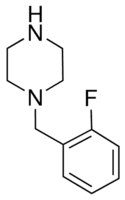
1-(2-Fluorobenzyl)piperazine
C11H15FN2
Chemical Synthesis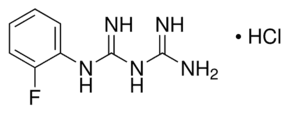
1-(2-Fluorophenyl)biguanide hydrochloride
Chemical Synthesis
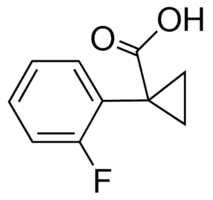
1-(2-Fluorophenyl)cyclopropanecarboxylic acid
C10H9FO2
Chemical Synthesis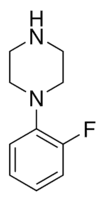
1-(2-Fluorophenyl)piperazine
C10H13FN2
Chemical Synthesis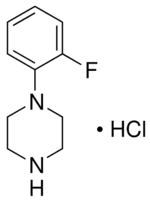
1-(2-Fluorophenyl)piperazine monohydrochloride
C10H13FN2 · HCl
Chemical Synthesis
1-(2-Furoyl)-1H-benzotriazole
C11H7N3O2
Chemical Synthesis
1-(2-Furoyl)piperazine
C9H12N2O2
Chemical Synthesis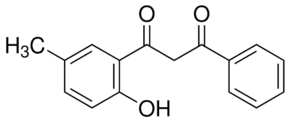
1-(2-Hydroxy-5-methylphenyl)-3-phenyl-1,3-propanedione
Chemical Synthesis
▶ Explore more

Bis(cyclopentadienyl)cobalt(III) hexafluorophosphate
C10H10CoF6P
Catalysis & Inorganic
1-(4-Chlorophenyl)biguanide hydrochloride
ClC6H4NHC(NH)NHC(NH)NH2 · HCl
Chemical Synthesis
Bis(cyclopentadienyl)dimethylzirconium(IV)
Catalysis & Inorganic

1-(4-Chlorophenyl)ethanol
ClC6H4CH(CH3)OH
Chemical Synthesis