
Triethylsilane
Triethylsilane (CAS: 617-86-7) is an organosilicon compound with the linear formula (C2H5)3SiH and a molecular weight of 116.28 g/mol. This flammable liquid is primarily utilized as a versatile reagent in chemical synthesis and reduction reactions. Its applications span diverse areas, including organic synthesis, polymerization catalysis, and studies related to organosilicon properties.
- IUPAC
- NSC 93579,Triethylhydrosilane,Triethylsilicon hydride
- Synonyms
- TriethylhydrosilaneTriethylsilicon hydrideNSC 93579

Catalysis in Organic Synthesis
Triethylsilane serves as a catalyst in the synthesis of complex organic molecules. Notably, it facilitates the creation of spiro-oxindole blockers for Nav1.7, targeting pain treatment, and plays a role in the regioselective reductive coupling of enones and allenes.
Polymerization Reactions
This silane is employed as a catalyst in redox-initiated cationic polymerization processes. It also finds application in reactivating catalysts following the polymerization of styrene.
Beckmann Rearrangement
Triethylsilane acts as a catalyst in the Beckmann rearrangement of cyclododecanone oxime, a key transformation in organic chemistry for producing caprolactam and other cyclic amides.
Organosilicon Property Studies
The compound is utilized in research studies aimed at predicting the flash points of organosilicon compounds, contributing to a better understanding of their physical and chemical behaviour.
| Molecular weight | 116.28 |
|---|---|
| Linear formula | (C2H5)3SiH |
| Assay | ≥97.0% (GC) |
| Boiling point | 107-108 °C(lit.) |
| Density | 0.728 g/mL at 25 °C(lit.) |
| Refractive index | n20/D 1.412(lit.)n20/D 1.412 |
| Application | Catalyst for:• Synthesis of a spiro-oxindole blocker of Nav1.7 for the treatment of pain1• Redox initiated cationic polymerization2,3• Beckmann rearrangement of cyclododecanone oxime4• Regioselective reductive coupling of enones and allenes5Catalyst reactivation after catalyst polymerization of styrene6Studies involving the prediction of organosilicon flash points7 |

Hazard statements
- H225Highly flammable liquid and vapour
- H412Harmful to aquatic life with long-lasting effects
Precautionary statements
- P210Keep away from heat, sparks and open flames. No smoking
- P273Avoid release to the environment
| Protective equipment | Eyeshields, Faceshields, full-face respirator (US), Gloves, multi-purpose combination respirator cartridge (US), type ABEK (EN14387) respirator filter |
|---|---|
| Flash point | -3 °C / 26.6 °F |
| Transport (UN / ADR) | UN 1993BF 3 / PGII |
| Water hazard class (WGK, DE) | 1 |
| Hazard codes (EU) | F |
| Risk statements (R) | 11-52/53 |
| Safety statements (S) | 9-16-29-33-61 |
Hazard information is provided for guidance. Always consult the product Safety Data Sheet (SDS), available on request, before handling.
Documentation
Every batch ships with a Certificate of Analysis covering assay, identity and purity; the grade is confirmed against your enquiry. Safety Data Sheets and technical data sheets are available on request.
Supply & logistics
Samples for technical evaluation; bulk MOQ by grade and packaging. In-stock material ships in 7–10 working days, worldwide, with full export documentation.
What is Triethylsilane used for?
+
Triethylsilane is used as a catalyst in various organic synthesis reactions, including the synthesis of spiro-oxindole blockers, redox-initiated cationic polymerization, Beckmann rearrangement, and reductive coupling of enones and allenes. It is also used in studies predicting organosilicon flash points.
What is the CAS number and formula for Triethylsilane?
+
The CAS number for Triethylsilane is 617-86-7, and its linear formula is (C2H5)3SiH.
What grade and purity does Tech Serve Solutions supply?
+
Tech Serve Solutions supplies Triethylsilane with an assay of ≥97.0% (GC). This product is supplied for laboratory and industrial use and is not represented as USP, EP, BP, or pharmacopoeia grade.
What are the safety considerations when handling Triethylsilane?
+
Triethylsilane is a highly flammable liquid (H225) and is harmful to aquatic life with long-lasting effects (H412). It requires careful handling in a well-ventilated area, away from ignition sources, using appropriate personal protective equipment such as eyeshields and gloves.
How is Triethylsilane packed and shipped?
+
Triethylsilane is packed and shipped according to international regulations for hazardous materials, including UN 1993 classification. TSS ensures compliance with all export and shipping requirements.
How can I request a quote or sample for Triethylsilane?
+
To request a quote or sample of Triethylsilane, please contact our sales department through the website or by phone. Our team will promptly assist you with your inquiry.
▶ Related products
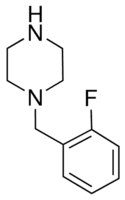
1-(2-Fluorobenzyl)piperazine
C11H15FN2
Chemical Synthesis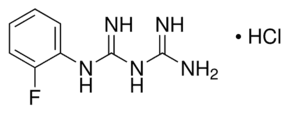
1-(2-Fluorophenyl)biguanide hydrochloride
Chemical Synthesis
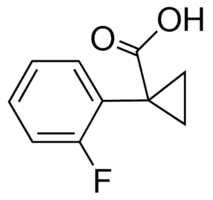
1-(2-Fluorophenyl)cyclopropanecarboxylic acid
C10H9FO2
Chemical Synthesis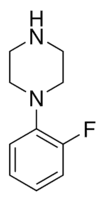
1-(2-Fluorophenyl)piperazine
C10H13FN2
Chemical Synthesis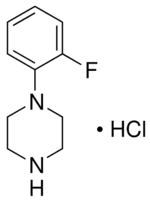
1-(2-Fluorophenyl)piperazine monohydrochloride
C10H13FN2 · HCl
Chemical Synthesis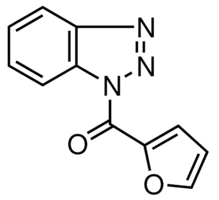
1-(2-Furoyl)-1H-benzotriazole
C11H7N3O2
Chemical Synthesis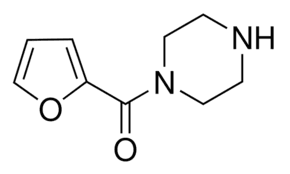
1-(2-Furoyl)piperazine
C9H12N2O2
Chemical Synthesis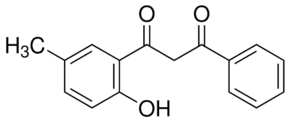
1-(2-Hydroxy-5-methylphenyl)-3-phenyl-1,3-propanedione
Chemical Synthesis
▶ Explore more

Bis(cyclopentadienyl)cobalt(III) hexafluorophosphate
C10H10CoF6P
Catalysis & Inorganic
1-(4-Chlorophenyl)biguanide hydrochloride
ClC6H4NHC(NH)NHC(NH)NH2 · HCl
Chemical Synthesis
Bis(cyclopentadienyl)dimethylzirconium(IV)
Catalysis & Inorganic

1-(4-Chlorophenyl)ethanol
ClC6H4CH(CH3)OH
Chemical Synthesis