
Triethyl 2-phosphonobutyrate
Triethyl 2-phosphonobutyrate (CAS: 17145-91-4) is a chemical compound with the molecular weight of 252.24 g/mol. It serves as a key reactant in various organic synthesis pathways. Its primary applications involve its use in the preparation of complex molecules, including pharmaceutical intermediates and biologically active compounds. This reagent is particularly valuable in C-C bond formation reactions, making it a versatile tool in synthetic chemistry.
- IUPAC
- α-Diethylphosphonobutanoic acid ethyl ester,Ethyl 2-(diethoxyphosphoryl)butanoate,NSC 22423
- Synonyms
- α-Diethylphosphonobutanoic acid ethyl esterEthyl 2-(diethoxyphosphoryl)butanoateNSC 22423

Preparation of Antitumor Agents
Triethyl 2-phosphonobutyrate is utilized in the synthesis of Furospinosulin-1 and related analogs. These compounds are investigated for their potential as hypoxia-selective antitumor agents, offering a targeted approach in cancer therapy.
Synthesis of Potential Anti-Alzheimer's Drugs
This compound acts as a reactant in the preparation of aminoquinolines. These derivatives are explored for their inhibitory effects on beta-site amyloid precursor protein cleaving enzyme 1 (BACE1), suggesting their potential as therapeutic agents for Alzheimer's disease.
Development of Nonalcoholic Steatohepatitis (NASH) Agents
It is employed in the synthesis of phenylpropanoic acid peroxisome proliferator-activated receptor (PPAR) α-selective agonists. These synthesized compounds are studied for their potential in preventing NASH.
Creation of PPAR Agonists
Triethyl 2-phosphonobutyrate is a precursor for the development of PPAR agonists featuring a phenethylphenylphthalimide skeleton, derived from thalidomide-related LXR antagonists.
Synthesis of Anticancer Agents
This reagent is involved in the preparation of Plakotenin through a Diels-Alder reaction. Plakotenin, originally found in Okinawan sponges, is being studied for its potential anticancer properties.
| Molecular weight | 252.24 |
|---|---|
| Linear formula | (C2H5O)2P(O)CH(C2H5)CO2C2H5 |
| Assay | 98% |
| Boiling point | 152-154 °C/14 mmHg(lit.) |
| Density | 1.064 g/mL at 25 °C(lit.) |
| Refractive index | n20/D 1.432(lit.) |
| Application | Reactant for preparation of:• Furospinosulin-1 and analogs as hypoxia-selective antitumor agents1• Aminoquinolines as beta-site amyloid precursor protein cleaving enzyme 1 (BACE1) inhibitors and potential anti-Alzheimer′s drugs2• Phenylpropanoic acid peroxisome proliferator-activated receptor (PPAR) α-selective agonists as nonalcoholic steatohepatitis (NASH)-preventive agents3• PPAR agonists with phenethylphenylphthalimide skeleton derived from thalidomide-related LXR antagonists4• Notch-sparing γ-secretase inhibitors derived from PPAR agonist library5• Plakotenin via Diels-Alder reaction, as a potential anticancer agent, naturally found in Okinawan sponge of the genus Plakortis6• Quinone/naphthoquinone-substituted propenoic acids as inhibitors of cell growth and redox function of apurinic/apyrimi |

Hazard statements
- H315Causes skin irritation
- H319Causes serious eye irritation
- H335May cause respiratory irritation
Precautionary statements
- P261Avoid breathing dust, fume, gas or vapours
- P305IF IN EYES
| Protective equipment | Eyeshields, full-face respirator (US), Gloves, multi-purpose combination respirator cartridge (US), type ABEK (EN14387) respirator filter |
|---|---|
| Flash point | 113 °C / 235.4 °F |
| Water hazard class (WGK, DE) | 3 |
| Hazard codes (EU) | Xi |
| Risk statements (R) | 36/37/38 |
| Safety statements (S) | 26-36 |
Hazard information is provided for guidance. Always consult the product Safety Data Sheet (SDS), available on request, before handling.
Documentation
Every batch ships with a Certificate of Analysis covering assay, identity and purity; the grade is confirmed against your enquiry. Safety Data Sheets and technical data sheets are available on request.
Supply & logistics
Samples for technical evaluation; bulk MOQ by grade and packaging. In-stock material ships in 7–10 working days, worldwide, with full export documentation.
What is Triethyl 2-phosphonobutyrate used for?
+
Triethyl 2-phosphonobutyrate is used as a reactant in organic synthesis, particularly for C-C bond formation and olefination reactions, contributing to the synthesis of complex molecules such as antitumor agents, potential anti-Alzheimer's drugs, and PPAR agonists.
What are the CAS number and chemical formula for Triethyl 2-phosphonobutyrate?
+
The CAS number for Triethyl 2-phosphonobutyrate is 17145-91-4, and its linear formula is (C2H5O)2P(O)CH(C2H5)CO2C2H5.
What grade and purity does Tech Serve Solutions supply?
+
Tech Serve Solutions supplies Triethyl 2-phosphonobutyrate with a minimum assay of 98%. We do not represent this product as USP, BP, or EP grade.
How should Triethyl 2-phosphonobutyrate be handled safely?
+
Triethyl 2-phosphonobutyrate is a Warning substance that can cause skin irritation (H315), serious eye irritation (H319), and respiratory irritation (H335). Handle with appropriate personal protective equipment, including eyeshields, gloves, and suitable respiratory protection, in a well-ventilated area.
Is Triethyl 2-phosphonobutyrate a controlled substance?
+
The provided data does not indicate that Triethyl 2-phosphonobutyrate is a controlled substance.
How is Triethyl 2-phosphonobutyrate packed and shipped?
+
Tech Serve Solutions exports chemicals globally. Please contact us for specific details regarding packing and shipping for Triethyl 2-phosphonobutyrate, as this can vary based on quantity and destination.
How can I request a sample or quote for Triethyl 2-phosphonobutyrate?
+
To request a sample or a quote for Triethyl 2-phosphonobutyrate, please use the contact form on our website or contact our sales department directly with your inquiry.
▶ Related products
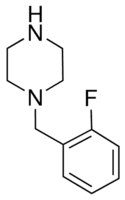
1-(2-Fluorobenzyl)piperazine
C11H15FN2
Chemical Synthesis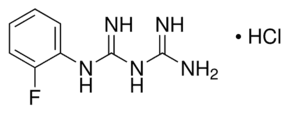
1-(2-Fluorophenyl)biguanide hydrochloride
Chemical Synthesis
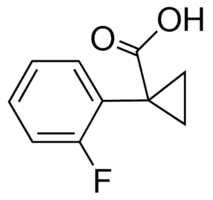
1-(2-Fluorophenyl)cyclopropanecarboxylic acid
C10H9FO2
Chemical Synthesis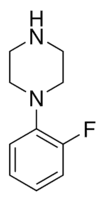
1-(2-Fluorophenyl)piperazine
C10H13FN2
Chemical Synthesis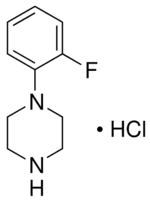
1-(2-Fluorophenyl)piperazine monohydrochloride
C10H13FN2 · HCl
Chemical Synthesis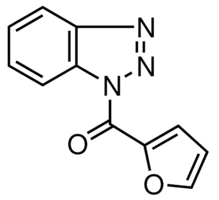
1-(2-Furoyl)-1H-benzotriazole
C11H7N3O2
Chemical Synthesis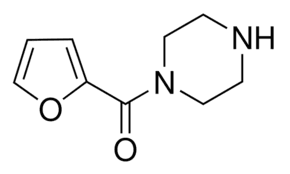
1-(2-Furoyl)piperazine
C9H12N2O2
Chemical Synthesis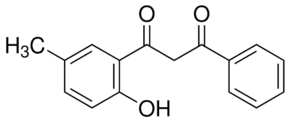
1-(2-Hydroxy-5-methylphenyl)-3-phenyl-1,3-propanedione
Chemical Synthesis
▶ Explore more

Bis(cyclopentadienyl)cobalt(III) hexafluorophosphate
C10H10CoF6P
Catalysis & Inorganic
1-(4-Chlorophenyl)biguanide hydrochloride
ClC6H4NHC(NH)NHC(NH)NH2 · HCl
Chemical Synthesis
Bis(cyclopentadienyl)dimethylzirconium(IV)
Catalysis & Inorganic

1-(4-Chlorophenyl)ethanol
ClC6H4CH(CH3)OH
Chemical Synthesis