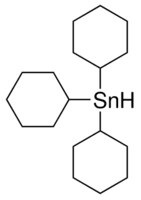
Tricyclohexyltin hydride
Tricyclohexyltin hydride (CAS: 6056-50-4) is an organometallic compound with the linear formula (C 6 H 11 )3SnH and a molecular weight of 369.17 g/mol. It serves as a valuable synthetic reagent, particularly in organic synthesis for reduction reactions. This tin hydride is also recognised for its utility as a precursor in materials science and micro/nanoelectronics, finding applications in chemical vapour deposition (CVD) and atomic layer deposition (ALD) processes.
Organic Synthesis
Tricyclohexyltin hydride is employed as a selective reducing agent in organic synthesis. It is particularly useful for the dehalogenation of alkyl and acyl halides and for the reduction of various functional groups.
Materials Science
This compound can function as a precursor in the development of advanced materials. Its organometallic nature makes it suitable for deposition techniques aimed at creating thin films with specific properties.
Micro/Nanoelectronics
As a CVD and ALD precursor, tricyclohexyltin hydride contributes to the fabrication of microelectronic and nanoelectronic devices. It can be used to deposit tin-containing thin films or as part of complex deposition chemistries.
Organometallic Chemistry
It is a key reagent in organotin chemistry, offering a means to introduce tin into organic frameworks or to perform specific tin-mediated transformations.
| Molecular weight | 369.17 |
|---|---|
| Linear formula | (C6H11)3SnH |
| Assay | 97% |
| Boiling point | 129 °C/0.05 mmHg(lit.) |
| Refractive index | n20/D 1.5409(lit.) |


Hazard statements
- H261In contact with water releases flammable gas
- H301Toxic if swallowed
- H312Harmful in contact with skin
- H315Causes skin irritation
- H319Causes serious eye irritation
- H372Causes damage to organs through prolonged exposure
- H410Very toxic to aquatic life with long-lasting effects
Precautionary statements
- P231Handle under inert gas
- P273Avoid release to the environment
- P280Wear protective gloves, clothing and eye/face protection
- P301IF SWALLOWED
- P305IF IN EYES
- P422
| Protective equipment | Eyeshields, Faceshields, full-face respirator (US), Gloves, multi-purpose combination respirator cartridge (US), type ABEK (EN14387) respirator filter |
|---|---|
| Flash point | 105 °C / 221 °F |
| Transport (UN / ADR) | UN 3130 4.3/PG 2 |
| Water hazard class (WGK, DE) | 3 |
| Hazard codes (EU) | T,N |
| Risk statements (R) | 21-25-36/38-48/23/25-50/53 |
| Safety statements (S) | 36/37/39-45-60-61 |
Hazard information is provided for guidance. Always consult the product Safety Data Sheet (SDS), available on request, before handling.
Documentation
Every batch ships with a Certificate of Analysis covering assay, identity and purity; the grade is confirmed against your enquiry. Safety Data Sheets and technical data sheets are available on request.
Supply & logistics
Samples for technical evaluation; bulk MOQ by grade and packaging. In-stock material ships in 7–10 working days, worldwide, with full export documentation.
What is Tricyclohexyltin hydride used for?
+
Tricyclohexyltin hydride is primarily used as a reducing agent in organic synthesis, for dehalogenation, and as a precursor in materials science and micro/nanoelectronics for CVD and ALD processes.
What is the CAS number and formula for Tricyclohexyltin hydride?
+
The CAS number is 6056-50-4, and its linear formula is (C 6 H 11 )3SnH.
What grade and purity does Tech Serve Solutions supply?
+
Tech Serve Solutions supplies Tricyclohexyltin hydride with a minimum assay of 97%. We do not represent this product as USP, BP, EP, or for nutraceutical or food use. It is typically supplied as a technical or research grade chemical.
How should Tricyclohexyltin hydride be handled safely?
+
Tricyclohexyltin hydride is dangerous and flammable. Handle with extreme care, wearing appropriate personal protective equipment including eyeshields, gloves, and a suitable respirator. Ensure good ventilation and avoid contact with skin, eyes, and clothing. Refer to the Safety Data Sheet for full details. It requires specialised handling due to its reactivity with air and moisture.
How is Tricyclohexyltin hydride packed, shipped, and exported?
+
Tricyclohexyltin hydride is packed and shipped according to international regulations for hazardous materials (UN 3130, Hazard Class 4.3, Packing Group II). TSS is experienced in exporting such chemicals globally.
How can I request a sample or quote for Tricyclohexyltin hydride?
+
To request a sample or a quotation for Tricyclohexyltin hydride, please contact the TSS sales team via our website or direct contact information, providing your specific requirements and shipping details.
▶ Related products
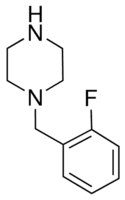
1-(2-Fluorobenzyl)piperazine
C11H15FN2
Chemical Synthesis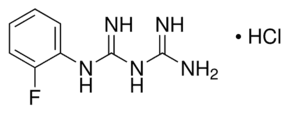
1-(2-Fluorophenyl)biguanide hydrochloride
Chemical Synthesis
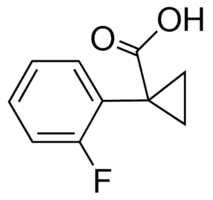
1-(2-Fluorophenyl)cyclopropanecarboxylic acid
C10H9FO2
Chemical Synthesis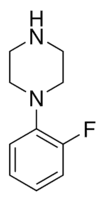
1-(2-Fluorophenyl)piperazine
C10H13FN2
Chemical Synthesis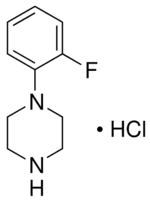
1-(2-Fluorophenyl)piperazine monohydrochloride
C10H13FN2 · HCl
Chemical Synthesis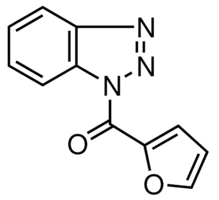
1-(2-Furoyl)-1H-benzotriazole
C11H7N3O2
Chemical Synthesis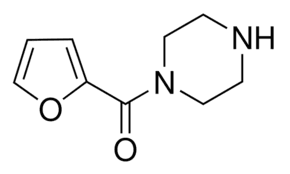
1-(2-Furoyl)piperazine
C9H12N2O2
Chemical Synthesis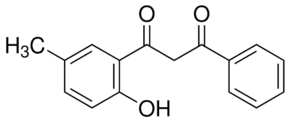
1-(2-Hydroxy-5-methylphenyl)-3-phenyl-1,3-propanedione
Chemical Synthesis