trans-2-(Tributyltin)vinylboronic acid MIDA ester
trans-2-(Tributyltin)vinylboronic acid MIDA ester (CAS: 1237789-30-8) is an organotin compound with the formula C19H36BNO4Sn and a molecular weight of 472.01 g/mol. This MIDA boronate ester serves as a valuable building block in organic synthesis, particularly for carbon-carbon bond formation via cross-coupling reactions. It is typically supplied as a research or technical grade material by Tech Serve Solutions.

Suzuki-Miyaura Cross-Coupling
This compound is employed in Suzuki-Miyaura cross-coupling reactions, a powerful method for forming C-C bonds. The MIDA ester moiety offers stability and controlled reactivity, making it ideal for complex synthetic targets. It enables the efficient coupling of vinyl groups to aryl or vinyl halides.
Organometallic Chemistry
As an organometallic reagent, it participates in reactions characteristic of organotin compounds. Its structure allows for specific transformations in the synthesis of advanced materials and complex organic molecules where precise functionalization is required.
Synthesis of Complex Molecules
This MIDA boronate ester is a versatile intermediate in multi-step synthesis. It facilitates the introduction of a tributyltin-substituted vinyl group into organic frameworks, contributing to the creation of novel chemical entities for research and development.
| Molecular weight | 472.01 |
|---|---|
| Empirical formula | C19H36BNO4Sn |
| Storage temperature | 2-8°C |
| Application | Suzuki Cross-Coupling with MIDA Boronates |
| Melting point | 53-57 °C |


Hazard statements
- H301Toxic if swallowed
- H312Harmful in contact with skin
- H315Causes skin irritation
- H319Causes serious eye irritation
- H372Causes damage to organs through prolonged exposure
- H410Very toxic to aquatic life with long-lasting effects
Precautionary statements
- P273Avoid release to the environment
- P280Wear protective gloves, clothing and eye/face protection
- P301IF SWALLOWED
- P305IF IN EYES
- P314Get medical attention if you feel unwell
- P501Dispose of contents and container per local regulations
| Protective equipment | dust mask type N95 (US), Eyeshields, Faceshields, Gloves, type P2 (EN 143) respirator cartridges |
|---|---|
| Flash point | >110 °C / >230 °F |
| Transport (UN / ADR) | UN 3146 6.1 / PGIII |
| Water hazard class (WGK, DE) | 3 |
| Hazard codes (EU) | T,N |
| Risk statements (R) | 21-25-36/38-48/23/25-50/53 |
| Safety statements (S) | 36/37/39-45-60-61 |
Hazard information is provided for guidance. Always consult the product Safety Data Sheet (SDS), available on request, before handling.
Documentation
Every batch ships with a Certificate of Analysis covering assay, identity and purity; the grade is confirmed against your enquiry. Safety Data Sheets and technical data sheets are available on request.
Supply & logistics
Samples for technical evaluation; bulk MOQ by grade and packaging. In-stock material ships in 7–10 working days, worldwide, with full export documentation.
What is trans-2-(Tributyltin)vinylboronic acid MIDA ester used for?
+
This compound is primarily used as a building block in organic synthesis, particularly for carbon-carbon bond formation through Suzuki-Miyaura cross-coupling reactions and other organometallic transformations.
What are the CAS number and formula for this compound?
+
The CAS number is 1237789-30-8, and the empirical formula is C19H36BNO4Sn.
What grade and purity does Tech Serve Solutions supply?
+
Tech Serve Solutions typically supplies this product as a research or technical grade. The specific assay is available on the Certificate of Analysis. It is not supplied as USP, BP, EP, or any pharmacopoeia grade.
What are the main hazards associated with this chemical?
+
This compound is classified as acutely toxic if swallowed (H301) and acutely toxic in contact with skin (H312). It is also a skin irritant (H315), eye irritant (H319), causes damage to organs through prolonged or repeated exposure (H372), and is very toxic to aquatic life with long-lasting effects (H410). Appropriate personal protective equipment, including gloves, eye protection, and respiratory protection, is essential. Always consult the Safety Data Sheet (SDS) before handling.
How is this chemical packed and shipped?
+
This product is typically packed in accordance with UN 3146, Class 6.1, Packing Group III regulations for hazardous materials transport. We ensure secure packaging for both domestic and international export.
How can I request a sample or quote?
+
To request a sample or a quotation, please navigate to the product page and utilize the 'Request Sample' or 'Request Quote' buttons, providing the necessary contact information.
▶ Related products
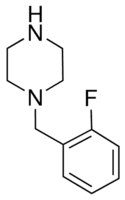
1-(2-Fluorobenzyl)piperazine
C11H15FN2
Chemical Synthesis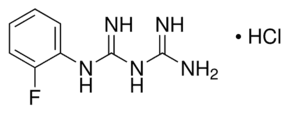
1-(2-Fluorophenyl)biguanide hydrochloride
Chemical Synthesis
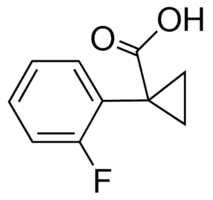
1-(2-Fluorophenyl)cyclopropanecarboxylic acid
C10H9FO2
Chemical Synthesis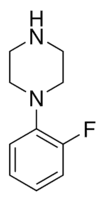
1-(2-Fluorophenyl)piperazine
C10H13FN2
Chemical Synthesis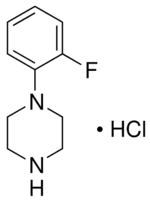
1-(2-Fluorophenyl)piperazine monohydrochloride
C10H13FN2 · HCl
Chemical Synthesis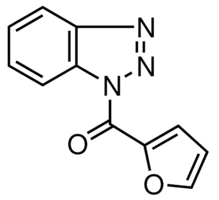
1-(2-Furoyl)-1H-benzotriazole
C11H7N3O2
Chemical Synthesis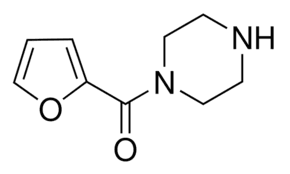
1-(2-Furoyl)piperazine
C9H12N2O2
Chemical Synthesis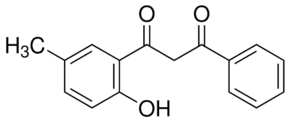
1-(2-Hydroxy-5-methylphenyl)-3-phenyl-1,3-propanedione
Chemical Synthesis