
(±)-Thalidomide
(±)-Thalidomide (CAS: 50-35-1) is a chemical compound with the formula C13H10N2O4 and a molecular weight of 258.23 g/mol. It exists as a white powder. This compound is recognised for its complex biological activities, including modulation of angiogenesis and its teratogenic properties, making it a subject of study in various research fields such as cancer research, cell biology, and neuroscience. It serves as a critical reagent in understanding developmental biology and disease mechanisms.
- IUPAC
- (±)-2-(2,6-Dioxo-3-piperidinyl)-1H-isoindole-1,3(2H)-dione
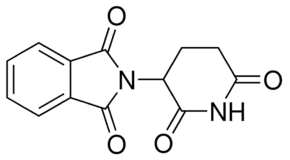
Neuropathological Research
Thalidomide has been utilised in studies investigating its neuropathological effects, particularly in mouse models of Alzheimer's disease. Research has indicated its potential to inhibit beta-secretase, thereby alleviating amyloid-like pathology.
Teratogenic Function Studies
The compound is employed to evaluate its teratogenic functions. Studies have demonstrated thalidomide's impact on endodermal differentiation and neural development in human embryonic and induced pluripotent stem cells.
Angiogenesis Research
As an angiogenesis inhibitor and regulator, thalidomide is used in research to explore its effects on blood vessel formation, relevant to cancer research and other biological processes.
| Molecular weight | 258.23 |
|---|---|
| Empirical formula | C13H10N2O4 |
| Assay | ≥98% |
| Form | powder |
| Colour | white |
| Solubility | DMSO: soluble20 mg/mL, clear |
| Application | Thalidomide has been used to study its neuropathological effects in mouse models of Alzheimer′s disease (AD). This study reported that long term administration of thalidomide causes beta-secretase inhibition and subsequently alleviates amyloid-like pathology1. Furthermore, thalidomide has also been used to evaluate its teratogenic functions. Thalidomide was found to affect endodermal differentiation and neural development in differentiating human embryonic and induced pluripotent stem cells2. |


Hazard statements
- H301Toxic if swallowed
- H312Harmful in contact with skin
- H361Suspected of damaging fertility or the unborn child
Precautionary statements
- P201Obtain special instructions before use
- P308IF exposed or concerned
| Protective equipment | Eyeshields, Faceshields, full-face particle respirator type N100 (US), Gloves, respirator cartridge type N100 (US), type P1 (EN143) respirator filter, type P3 (EN 143) respirator cartridges |
|---|---|
| Transport (UN / ADR) | UN 2811 6.1 / PGIII |
| Water hazard class (WGK, DE) | 3 |
| Hazard codes (EU) | T |
| Risk statements (R) | 46-61-21-25-62 |
| Safety statements (S) | 53-22-26-36/37/39-45 |
Hazard information is provided for guidance. Always consult the product Safety Data Sheet (SDS), available on request, before handling.
| Gene Information | human ... LITAF(9516), TNF(7124)mouse ... Nos2(18126)rat ... Nos1(24598) |
|---|
Documentation
Every batch ships with a Certificate of Analysis covering assay, identity and purity; the grade is confirmed against your enquiry. Safety Data Sheets and technical data sheets are available on request.
Supply & logistics
Samples for technical evaluation; bulk MOQ by grade and packaging. In-stock material ships in 7–10 working days, worldwide, with full export documentation.
What is (±)-Thalidomide used for?
+
(±)-Thalidomide is used in research for its neuropathological effects, teratogenic properties, and as an angiogenesis modulator. It is studied in the context of Alzheimer's disease, neural development, and cancer research.
What is the CAS number and formula for (±)-Thalidomide?
+
The CAS number for (±)-Thalidomide is 50-35-1, and its chemical formula is C13H10N2O4.
What grade and purity does Tech Serve Solutions supply?
+
Tech Serve Solutions supplies (±)-Thalidomide with an assay of ≥98%. We do not represent this product as USP, BP, EP, or any other pharmacopoeia grade.
What are the primary safety concerns when handling (±)-Thalidomide?
+
(±)-Thalidomide is labelled with Danger (GHS06, GHS08) and carries hazard statements H301, H312, and H361. It is toxic if swallowed, harmful in contact with skin, and suspected of damaging fertility or the unborn child. Appropriate personal protective equipment, including eyeshields, gloves, and suitable respiratory protection, is essential.
Is (±)-Thalidomide a controlled substance?
+
The provided data indicates that (±)-Thalidomide is classified under European hazard codes as 'T' (Toxic) with risk statements R46, R61, R21, R25, and R62, suggesting significant toxicity and reproductive hazards. It is shipped under UN 2811, 6.1 / PGIII.
How can I request a quote or sample of (±)-Thalidomide?
+
To request a quote or sample of (±)-Thalidomide, please contact our sales team through the website or by phone. Please ensure you comply with all relevant regulations for ordering and handling this chemical.
How is (±)-Thalidomide shipped and exported?
+
(±)-Thalidomide is shipped and exported according to UN 2811 regulations for toxic solids, organic, n.o.s., with hazard class 6.1 and packing group III, requiring specific labelling and documentation.
▶ Related products
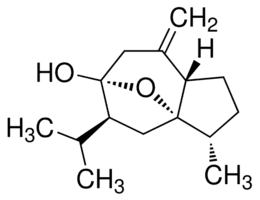
(−)-Curcumol
C15H24O2
Cell Biology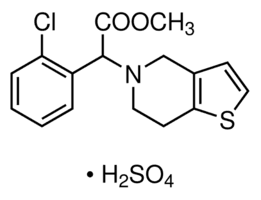
(±) Clopidogrel hydrogensulfate
Cell Biology
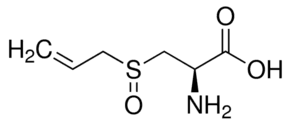
(±)-L-Alliin
C6H11NO3S
Cell Biology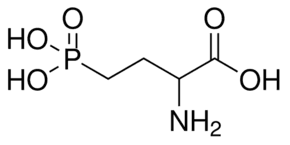
(±)-2-Amino-4-phosphonobutyric acid
C4H10NO5P
Cell Biology
(±)-2-Methylarachidonoyl-2′-fluoroethylamide
C23H38NOF
Cell Biology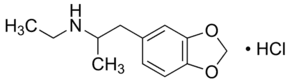
(±)-3,4-Methylenedioxy-N-ethylamphetamine hydrochloride
Cell Biology
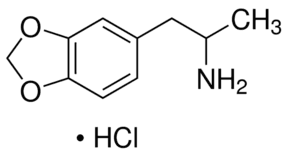
(±)-3,4-Methylenedioxyamphetamine hydrochloride
Cell Biology
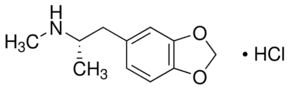
(±)-3,4-Methylenedioxymethamphetamine hydrochloride
Cell Biology
▶ Explore more

Bis(cyclopentadienyl)cobalt(III) hexafluorophosphate
C10H10CoF6P
Catalysis & Inorganic
1-(4-Chlorophenyl)biguanide hydrochloride
ClC6H4NHC(NH)NHC(NH)NH2 · HCl
Chemical Synthesis
Bis(cyclopentadienyl)dimethylzirconium(IV)
Catalysis & Inorganic

1-(4-Chlorophenyl)ethanol
ClC6H4CH(CH3)OH
Chemical Synthesis