
Tetraethyllead
Tetraethyllead (CAS 78-00-2), with the linear formula (C2H5)4Pb and a molecular weight of 323.44 g/mol, is an organometallic compound. Historically recognised for its use as a gasoline additive to boost octane ratings and prevent engine knocking, its applications are now highly restricted due to toxicity. It is supplied by TSS as a high-purity reagent for specialised chemical synthesis and research.
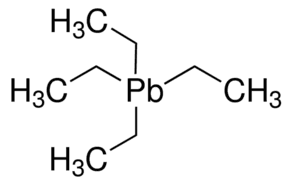
Historical Fuel Additive
Tetraethyllead was extensively used as an anti-knock agent in petrol, significantly increasing octane ratings and improving engine performance. This application has been phased out in most parts of the world due to severe environmental and health concerns.
Chemical Synthesis
As an organolead compound, Tetraethyllead can serve as a precursor or reagent in specific organic synthesis pathways. Its reactivity allows for the introduction of ethyl groups or lead into various chemical structures for research purposes.
Research and Development
Tetraethyllead is utilised in laboratory settings for research into organometallic chemistry. Studies may explore its reaction mechanisms, decomposition pathways, or its potential in niche catalytic applications under strictly controlled conditions.
| Molecular weight | 323.44 |
|---|---|
| Linear formula | (C2H5)4Pb |
| Assay | ≥99.99% |
| Boiling point | 84-85 °C/15 mmHg(lit.) |
| Density | 1.653 g/mL at 25 °C(lit.) |
| Refractive index | n20/D 1.519(lit.) |
| Concentration | 50 wt. % in xylene |
| Melting point | −136 °C(lit.) |


Hazard statements
- H300Fatal if swallowed
- H360DF
- H373May cause damage to organs through prolonged exposure
- H410Very toxic to aquatic life with long-lasting effects
Precautionary statements
- P201Obtain special instructions before use
- P260Do not breathe dust, fume, gas, mist, vapours or spray
- P264Wash thoroughly after handling
- P273Avoid release to the environment
- P280Wear protective gloves, clothing and eye/face protection
- P284Wear respiratory protection
| Protective equipment | Eyeshields, Faceshields, full-face respirator (US), Gloves, multi-purpose combination respirator cartridge (US), type ABEK (EN14387) respirator filter |
|---|---|
| Flash point | 73 °C / 163.4 °F |
| Transport (UN / ADR) | UN 1649 6.1 / PGI |
| Water hazard class (WGK, DE) | 3 |
| Hazard codes (EU) | T+,N |
| Risk statements (R) | 61-26/27/28-33-50/53-62 |
| Safety statements (S) | 53-45-60-61 |
Hazard information is provided for guidance. Always consult the product Safety Data Sheet (SDS), available on request, before handling.
Documentation
Every batch ships with a Certificate of Analysis covering assay, identity and purity; the grade is confirmed against your enquiry. Safety Data Sheets and technical data sheets are available on request.
Supply & logistics
Samples for technical evaluation; bulk MOQ by grade and packaging. In-stock material ships in 7–10 working days, worldwide, with full export documentation.
What is Tetraethyllead used for?
+
Tetraethyllead was historically used as an additive in gasoline to increase octane ratings and prevent engine knocking. It is now primarily used in specialised chemical synthesis and research due to its toxicity.
What is the CAS number and formula for Tetraethyllead?
+
The CAS number for Tetraethyllead is 78-00-2, and its linear formula is (C2H5)4Pb.
What grade and purity does Tech Serve Solutions supply?
+
Tech Serve Solutions supplies Tetraethyllead with an assay of ≥99.99%. TSS does not represent this product as USP, BP, EP, or any other pharmacopoeia grade.
How should Tetraethyllead be handled safely?
+
Tetraethyllead is highly toxic and dangerous. Handling requires extreme caution, including the use of appropriate personal protective equipment such as eyeshields, face shields, gloves, and a full-face or combination respirator with ABEK filter cartridges. It is acutely toxic if swallowed, in contact with skin, or if inhaled, and can cause serious damage to organs through prolonged exposure. It is also very toxic to aquatic life with long-lasting effects.
Is Tetraethyllead a controlled substance?
+
While not explicitly listed as a scheduled controlled substance in all jurisdictions, Tetraethyllead is a highly regulated chemical due to its extreme toxicity and historical environmental impact. Its sale, use, and transport are subject to strict national and international regulations.
How is Tetraethyllead packed and shipped?
+
Tetraethyllead is packed and shipped according to stringent international regulations for hazardous materials (UN 1649, Class 6.1). TSS ensures compliance with all transport and export requirements for this dangerous substance.
How can I request a sample or quote for Tetraethyllead?
+
To request a sample or quote for Tetraethyllead, please contact our sales team directly via the website or provide your requirements through the online enquiry form, referencing CAS number 78-00-2.
▶ Related products
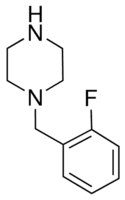
1-(2-Fluorobenzyl)piperazine
C11H15FN2
Chemical Synthesis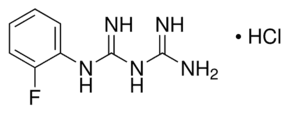
1-(2-Fluorophenyl)biguanide hydrochloride
Chemical Synthesis
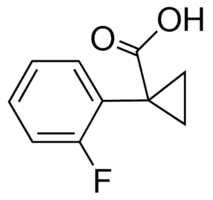
1-(2-Fluorophenyl)cyclopropanecarboxylic acid
C10H9FO2
Chemical Synthesis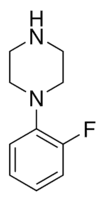
1-(2-Fluorophenyl)piperazine
C10H13FN2
Chemical Synthesis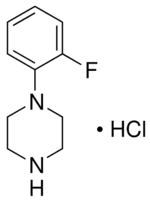
1-(2-Fluorophenyl)piperazine monohydrochloride
C10H13FN2 · HCl
Chemical Synthesis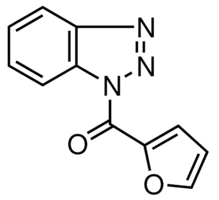
1-(2-Furoyl)-1H-benzotriazole
C11H7N3O2
Chemical Synthesis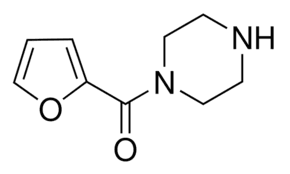
1-(2-Furoyl)piperazine
C9H12N2O2
Chemical Synthesis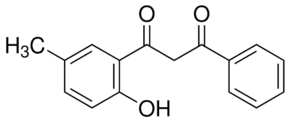
1-(2-Hydroxy-5-methylphenyl)-3-phenyl-1,3-propanedione
Chemical Synthesis
▶ Explore more

Bis(cyclopentadienyl)cobalt(III) hexafluorophosphate
C10H10CoF6P
Catalysis & Inorganic
1-(4-Chlorophenyl)biguanide hydrochloride
ClC6H4NHC(NH)NHC(NH)NH2 · HCl
Chemical Synthesis
Bis(cyclopentadienyl)dimethylzirconium(IV)
Catalysis & Inorganic

1-(4-Chlorophenyl)ethanol
ClC6H4CH(CH3)OH
Chemical Synthesis