Tetracyanoethylene
Tetracyanoethylene (CAS: 670-54-2), a potent organic compound with the molecular formula (NC)2C=C(CN)2 and a molecular weight of 128.09 g/mol, serves as a versatile reagent in chemical synthesis. It is particularly valuable for post-functionalization of polymers and in various cycloaddition and addition reactions. Its high reactivity makes it suitable for applications requiring strong electron-withdrawing capabilities.
- IUPAC
- Ethylenetetracarbonitrile,NSC 24833,Percyanoethylene,TCNE
- Synonyms
- EthylenetetracarbonitrilePercyanoethyleneTCNE

Polymer Modification
Utilised for post-functional addition to polyphenylacetylene derivatives, enabling modification of oxygen permeability in polymeric materials.
Dye Synthesis
Acts as a reactant in regioselective [2+2] cycloaddition reactions, facilitating the production of BODIPY dyes and TCBD derivatives.
Organic Synthesis Reagent
Engages in thermal addition reactions with alkynes and one-pot reactions with nucleophilic reagents to yield aromatic cyanovinyl compounds.
Materials Science
A key component in the synthesis of cobalt tetracyanoethylene films and used in the development of hole injection layer (HIL) and hole transport (HT) materials for organic electronics.
| Molecular weight | 128.09 |
|---|---|
| Linear formula | (NC)2C=C(CN)2 |
| Assay | 98% |
| Storage temperature | 2-8°C |
| Application | Used for postfunctional addition to polyphenylacetylene derivatives to change the oxygen permeability1Reactant for: • Regioselective [2+2] cycloaddition reaction for production of BODIPY dyes2 and TCBD derivatives3• Thermal addition reaction with alkynes4• One-pot reactions with nucleophilic reagents forming aromatic cyanovinyl compounds5• Synthesis of cobalt tetracyanoethylene films6• Biotransformation by Botrytis cinerea7 |
| Melting point | 197-199 °C(lit.) |

Hazard statements
- H300Fatal if swallowed
- H312Harmful in contact with skin
- H332Harmful if inhaled
Precautionary statements
- P264Wash thoroughly after handling
- P280Wear protective gloves, clothing and eye/face protection
- P301IF SWALLOWED
| Protective equipment | Eyeshields, Faceshields, full-face particle respirator type N100 (US), Gloves, respirator cartridge type N100 (US), type P1 (EN143) respirator filter, type P3 (EN 143) respirator cartridges |
|---|---|
| Transport (UN / ADR) | UN 2811 6.1 / PGI |
| Water hazard class (WGK, DE) | 3 |
| Hazard codes (EU) | T+ |
| Risk statements (R) | 20/21-28 |
| Safety statements (S) | 28-36/37-45 |
Hazard information is provided for guidance. Always consult the product Safety Data Sheet (SDS), available on request, before handling.
Documentation
Every batch ships with a Certificate of Analysis covering assay, identity and purity; the grade is confirmed against your enquiry. Safety Data Sheets and technical data sheets are available on request.
Supply & logistics
Samples for technical evaluation; bulk MOQ by grade and packaging. In-stock material ships in 7–10 working days, worldwide, with full export documentation.
What is Tetracyanoethylene used for?
+
Tetracyanoethylene is used for post-functional addition to polyphenylacetylene derivatives to alter oxygen permeability. It also serves as a reactant in regioselective [2+2] cycloaddition reactions for producing dyes, in thermal addition reactions with alkynes, and in synthesising cobalt tetracyanoethylene films.
What are the CAS number and formula for Tetracyanoethylene?
+
The CAS number for Tetracyanoethylene is 670-54-2, and its linear formula is (NC)2C=C(CN)2.
What grade and purity does Tech Serve Solutions supply?
+
Tech Serve Solutions supplies Tetracyanoethylene with an assay of 98%. This product is intended for laboratory and research purposes and is not represented as USP, BP, EP, or other pharmacopoeial grades.
How should Tetracyanoethylene be handled safely?
+
Tetracyanoethylene is acutely toxic if swallowed, in contact with skin, or if inhaled (H300, H312, H332). Handling requires stringent safety measures, including the use of appropriate personal protective equipment such as eyeshields, gloves, and respiratory protection, and should be performed in a well-ventilated area.
How is Tetracyanoethylene packed and shipped?
+
Tetracyanoethylene is stored at 2-8°C. It is shipped as a hazardous material according to UN 2811, Class 6.1, Packing Group I, requiring specialised packaging and handling procedures.
How can I request a quote or sample?
+
To request a quote or a sample of Tetracyanoethylene, please contact the Tech Serve Solutions sales team through our website or by phone, providing your specific requirements.
▶ Related products
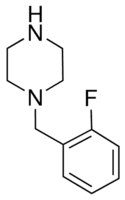
1-(2-Fluorobenzyl)piperazine
C11H15FN2
Chemical Synthesis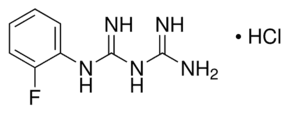
1-(2-Fluorophenyl)biguanide hydrochloride
Chemical Synthesis
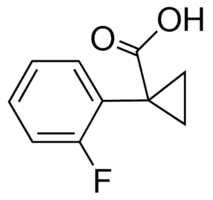
1-(2-Fluorophenyl)cyclopropanecarboxylic acid
C10H9FO2
Chemical Synthesis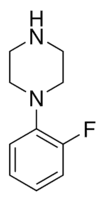
1-(2-Fluorophenyl)piperazine
C10H13FN2
Chemical Synthesis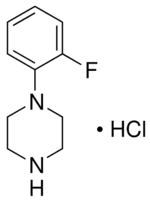
1-(2-Fluorophenyl)piperazine monohydrochloride
C10H13FN2 · HCl
Chemical Synthesis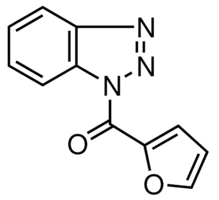
1-(2-Furoyl)-1H-benzotriazole
C11H7N3O2
Chemical Synthesis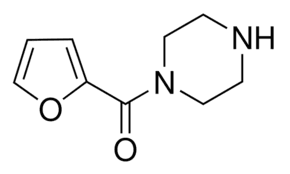
1-(2-Furoyl)piperazine
C9H12N2O2
Chemical Synthesis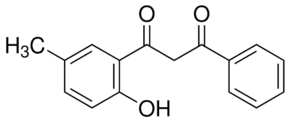
1-(2-Hydroxy-5-methylphenyl)-3-phenyl-1,3-propanedione
Chemical Synthesis