
Tetrabutylammonium fluoride trihydrate
Tetrabutylammonium fluoride trihydrate (CAS: 87749-50-6) is a versatile organic compound with the linear formula [CH3(CH2)3]4NF · 3H2O and a molecular weight of 315.51 g/mol. This reagent is primarily employed in organic synthesis, notably as a fluoride source and deprotecting agent. It plays a key role in the preparation of cellulose derivatives and is used in dehydrobromination reactions, contributing to efficient chemical transformations.
- IUPAC
- TBAF
![Tetrabutylammonium fluoride trihydrate ([CH3(CH2)3]4NF · 3H2O) — chemical structure, CAS 87749-50-6; Chemistry, fine chemical supplied by Tech Serve Solutions](/_next/image?url=https%3A%2F%2Fpub-f4d920c906024441a773a96f7098e551.r2.dev%2Fimages%2Fproducts%2F87749-50-6.png&w=3840&q=75)
Preparation of Deprotecting Agents
Tetrabutylammonium fluoride trihydrate serves as a reactant in the preparation of deprotecting agents. This is particularly relevant in the context of preparing cellulose derivatives, where selective removal of protecting groups is crucial.
Synthesis of Lipophilic Peptides
This compound is utilized in the synthesis of lipophilic peptides. Such peptides have applications in DNA transfections in vivo, highlighting its role in advanced biological and pharmaceutical research.
Dehydrobromination Reactions
Tetrabutylammonium fluoride trihydrate is an effective reagent for dehydrobromination reactions. This process involves the removal of hydrogen bromide, a common step in the synthesis of various organic molecules.
| Molecular weight | 315.51 |
|---|---|
| Linear formula | [CH3(CH2)3]4NF · 3H2O |
| Assay | ≥90% (T) |
| Application | Reactant for:Preparation of deprotecting agents in preparation of cellulose derivatives1Synthesis of lipophilic peptides for DNA transfections in vivo2Dehydrobromination reactions3 |
| Melting point | 62-63 °C(lit.) |

Hazard statements
- H314Causes severe skin burns and eye damage
Precautionary statements
- P280Wear protective gloves, clothing and eye/face protection
- P305IF IN EYES
- P310Immediately call a POISON CENTER or doctor
| Protective equipment | Eyeshields, Faceshields, full-face particle respirator type N100 (US), Gloves, respirator cartridge type N100 (US), type P1 (EN143) respirator filter, type P3 (EN 143) respirator cartridges |
|---|---|
| Transport (UN / ADR) | UN 1759 8 / PGIII |
| Water hazard class (WGK, DE) | 3 |
| Hazard codes (EU) | C |
| Risk statements (R) | 34 |
| Safety statements (S) | 26-36/37/39-45 |
Hazard information is provided for guidance. Always consult the product Safety Data Sheet (SDS), available on request, before handling.
Documentation
Every batch ships with a Certificate of Analysis covering assay, identity and purity; the grade is confirmed against your enquiry. Safety Data Sheets and technical data sheets are available on request.
Supply & logistics
Samples for technical evaluation; bulk MOQ by grade and packaging. In-stock material ships in 7–10 working days, worldwide, with full export documentation.
What is Tetrabutylammonium fluoride trihydrate used for?
+
Tetrabutylammonium fluoride trihydrate is used as a reactant in organic synthesis, primarily for the preparation of deprotecting agents, synthesis of lipophilic peptides for DNA transfections, and in dehydrobromination reactions.
What is the CAS number and formula for Tetrabutylammonium fluoride trihydrate?
+
The CAS number for Tetrabutylammonium fluoride trihydrate is 87749-50-6, and its linear formula is [CH3(CH2)3]4NF · 3H2O.
What grade and purity does Tech Serve Solutions supply?
+
Tech Serve Solutions supplies Tetrabutylammonium fluoride trihydrate with an assay of ≥90% (T). This is a technical/research grade, and TSS does not represent it as USP, BP, or EP grade.
How should Tetrabutylammonium fluoride trihydrate be handled safely?
+
Tetrabutylammonium fluoride trihydrate is corrosive and causes severe skin burns and eye damage (H314). Appropriate personal protective equipment, including eyeshields, face shields, and chemical-resistant gloves, must be worn. Ensure adequate ventilation and avoid dust formation. Handle with extreme care.
How is Tetrabutylammonium fluoride trihydrate packed and shipped?
+
Tetrabutylammonium fluoride trihydrate is shipped as UN 1759, hazard class 8, packing group III, indicating it is a corrosive solid. Packaging adheres to strict international regulations for hazardous materials transport.
How can I request a sample or quote for Tetrabutylammonium fluoride trihydrate?
+
To request a sample or a quote, please contact the Tech Serve Solutions sales team through our website or by phone, providing the product name and CAS number (87749-50-6).
▶ Related products
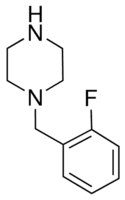
1-(2-Fluorobenzyl)piperazine
C11H15FN2
Chemical Synthesis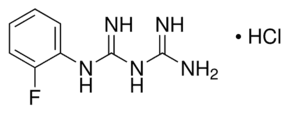
1-(2-Fluorophenyl)biguanide hydrochloride
Chemical Synthesis
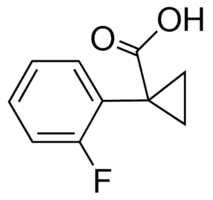
1-(2-Fluorophenyl)cyclopropanecarboxylic acid
C10H9FO2
Chemical Synthesis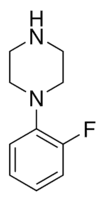
1-(2-Fluorophenyl)piperazine
C10H13FN2
Chemical Synthesis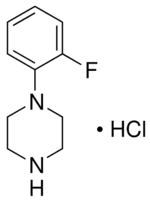
1-(2-Fluorophenyl)piperazine monohydrochloride
C10H13FN2 · HCl
Chemical Synthesis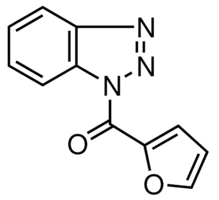
1-(2-Furoyl)-1H-benzotriazole
C11H7N3O2
Chemical Synthesis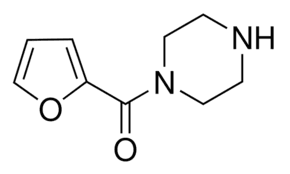
1-(2-Furoyl)piperazine
C9H12N2O2
Chemical Synthesis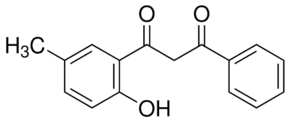
1-(2-Hydroxy-5-methylphenyl)-3-phenyl-1,3-propanedione
Chemical Synthesis
▶ Explore more
![2-[(4,4,5,5,6,6,7,7,8,8,9,9,10,10,11,11,11-Heptadecafluoro-1,1-dimethylundecyloxy)carbonyloxyimino]-2-phenylacetonitrile (C22H15F17N2O3) — chemical structure, CAS 350716-42-6; Chemical Synthesis, fine chemical supplied by Tech Serve Solutions](/_next/image?url=https%3A%2F%2Fpub-f4d920c906024441a773a96f7098e551.r2.dev%2Fimages%2Fproducts%2F350716-42-6.png&w=3840&q=75)
2-[(4,4,5,5,6,6,7,7,8,8,9,9,10,10,11,11,11-Heptadecafluoro-1,1-dimethylundecyloxy)carbonyloxyimino]-2-phenylacetonitrile
C22H15F17N2O3
Chemical Synthesis![2-[(4,4,5,5,6,6,7,7,8,8,9,9,9-Tridecafluoro-1,1-dimethylnonyloxy) carbonyloxyimino]-2-phenylacetonitrile (C20H15F13N2O3) — chemical structure, CAS 892154-76-6; Chemical Synthesis, fine chemical supplied by Tech Serve Solutions](/_next/image?url=https%3A%2F%2Fpub-f4d920c906024441a773a96f7098e551.r2.dev%2Fimages%2Fproducts%2F892154-76-6.png&w=3840&q=75)
2-[(4,4,5,5,6,6,7,7,8,8,9,9,9-Tridecafluoro-1,1-dimethylnonyloxy) carbonyloxyimino]-2-phenylacetonitrile
C20H15F13N2O3
Chemical Synthesis
N,N-Diisopropylmethylphosphonamidic chloride
Catalysis & Inorganic
![N-[2-(Diphenylphosphino)benzylidene]cyclohexylamine (C25H26NP) — chemical structure, CAS 321155-13-9; Catalysis & Inorganic, fine chemical supplied by Tech Serve Solutions](/_next/image?url=https%3A%2F%2Fpub-f4d920c906024441a773a96f7098e551.r2.dev%2Fimages%2Fproducts%2F321155-13-9.png&w=3840&q=75)
N-[2-(Diphenylphosphino)benzylidene]cyclohexylamine
C25H26NP
Catalysis & Inorganic