Sodium mercury amalgam
Sodium mercury amalgam (CAS 11110-52-4) is an alloy of sodium and mercury, supplied by TSS as beads with a sodium content of 5%. This compound is primarily utilised in chemical synthesis as a powerful reducing agent. Its applications span the creation of organometallic compounds, synthesis of carbonaceous films via dehalogenation, and in specialised methods for producing deuterium-depleted water. It also serves as a catalyst and reagent in various organic transformations.
- IUPAC
- Sodium amalgam

Reducing Agent in Organometallic Synthesis
Sodium mercury amalgam is employed for the reduction of metal compounds, facilitating the formation of organometallic oxo-vanadium cluster compounds. This highlights its utility in advanced inorganic and organometallic synthesis.
Dehalogenation for Film Synthesis
This amalgam acts as a dehalogenation agent, enabling the room-temperature synthesis of carbonaceous films. This application is critical in materials science for creating specialised coatings and films.
Preparation of Deuterium-Depleted Water
A plant-scaled method utilises sodium mercury amalgam for the preparation of deuterium-depleted water. This process is important for research requiring isotopically pure water.
Catalyst in Organic Chemistry
It serves as a catalyst in the synthesis of selectively benzylated Me α-D-glucopyranosides, demonstrating its role in complex carbohydrate chemistry.
Reagent for Forensic Analysis
Sodium mercury amalgam is used as a reagent for the reduction of RDX, a component often relevant in forensic analysis for the characterisation of explosives.
| Assay | ≥99.9% trace metals basis |
|---|---|
| Form | beads |
| Application | Magnetic characteristics were studied of organometallic oxo-vanadium cluster compounds, such as [C5Me5V]4(μ-O)6, which is formed by reduction with sodium mercury amalgam.1Used for: • Ionic liquid based sodium ion conducting gel polymer electrolytes2• Dehalogenation agent for the room-temperature synthesis of carbonaceous films3• Plant-scaled method for preparation of deuterium-depleted water4• Investigations of solvent effects on desulfonylation of polyethylene glycol-substituted aryl alkyl sulfones5Catalyst for synthesis of selectively benzylated Me α-D-glucopyranosides6Reagent for reduction of RDX for functionalization for forensic analysis7 |
| Composition | Na, 5% |
| Melting point | 61 °C |


Hazard statements
- H260In contact with water releases flammable gases
- H314Causes severe skin burns and eye damage
- H330Fatal if inhaled
- H360May damage fertility or the unborn child
- H372Causes damage to organs through prolonged exposure
- H410Very toxic to aquatic life with long-lasting effects
Precautionary statements
- P201Obtain special instructions before use
- P223Do not allow contact with water
- P231Handle under inert gas
- P260Do not breathe dust, fume, gas, mist, vapours or spray
- P370In case of fire
- P422
| Protective equipment | dust mask type N95 (US), Eyeshields, Faceshields, full-face particle respirator type N100 (US), Gloves, respirator cartridge type N100 (US), type P1 (EN143) respirator filter, type P2 (EN 143) respirator cartridges, type P3 (EN 143) respirator cartridges |
|---|---|
| Transport (UN / ADR) | UN 3401 4.3 / PGI |
| Water hazard class (WGK, DE) | 3 |
| Hazard codes (EU) | F,T+,N |
| Risk statements (R) | 61-14/15-26-36/38-48/23-50/53 |
| Safety statements (S) | 53-26-28-36/37-43-45-61 |
| Supplemental hazards | Reacts violently with water. |
Hazard information is provided for guidance. Always consult the product Safety Data Sheet (SDS), available on request, before handling.
Documentation
Every batch ships with a Certificate of Analysis covering assay, identity and purity; the grade is confirmed against your enquiry. Safety Data Sheets and technical data sheets are available on request.
Supply & logistics
Samples for technical evaluation; bulk MOQ by grade and packaging. In-stock material ships in 7–10 working days, worldwide, with full export documentation.
What is Sodium mercury amalgam used for?
+
Sodium mercury amalgam is used in chemical synthesis as a reducing agent for organometallic compounds, dehalogenation reactions for carbonaceous film synthesis, preparation of deuterium-depleted water, as a catalyst in organic synthesis (e.g., benzylated glucopyranosides), and as a reagent for RDX reduction in forensic analysis.
What is the CAS number and formula for Sodium mercury amalgam?
+
The CAS number for Sodium mercury amalgam is 11110-52-4. The formula is not provided in the data.
What grade and purity does Tech Serve Solutions supply?
+
Tech Serve Solutions supplies Sodium mercury amalgam with an assay of ≥99.9% trace metals basis. It is supplied as beads with 5% sodium. TSS does not represent this product as USP, BP, EP, or any other pharmacopoeia grade.
How should Sodium mercury amalgam be handled safely?
+
Sodium mercury amalgam is a Danger-classified substance. It reacts violently with water (H260), is corrosive (H314), highly toxic if inhaled (H330), may damage fertility or the unborn child (H360), causes damage to organs through prolonged or repeated exposure (H372), and is very toxic to aquatic life with long-lasting effects (H410). Appropriate PPE, including respirators, eye and face protection, and gloves, is mandatory. Handle only in a well-ventilated area and avoid contact with water.
How is Sodium mercury amalgam packed and shipped?
+
Sodium mercury amalgam is shipped under UN 3401, Hazard Class 4.3, Packing Group I. Specific packing details are available upon request.
How can I request a sample or quote for Sodium mercury amalgam?
+
To request a sample or quote for Sodium mercury amalgam, please contact our sales team through the website or by calling our main line.
▶ Related products
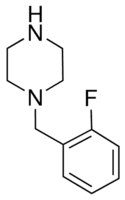
1-(2-Fluorobenzyl)piperazine
C11H15FN2
Chemical Synthesis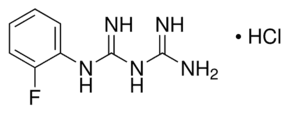
1-(2-Fluorophenyl)biguanide hydrochloride
Chemical Synthesis
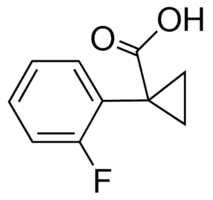
1-(2-Fluorophenyl)cyclopropanecarboxylic acid
C10H9FO2
Chemical Synthesis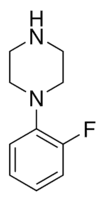
1-(2-Fluorophenyl)piperazine
C10H13FN2
Chemical Synthesis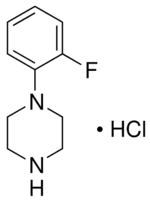
1-(2-Fluorophenyl)piperazine monohydrochloride
C10H13FN2 · HCl
Chemical Synthesis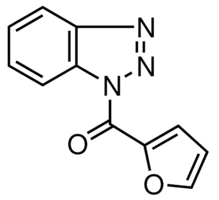
1-(2-Furoyl)-1H-benzotriazole
C11H7N3O2
Chemical Synthesis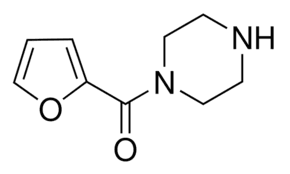
1-(2-Furoyl)piperazine
C9H12N2O2
Chemical Synthesis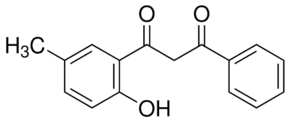
1-(2-Hydroxy-5-methylphenyl)-3-phenyl-1,3-propanedione
Chemical Synthesis