
Sodium dicyanamide
Sodium dicyanamide (CAS: 1934-75-4), with the chemical formula NaN(CN)2 and a molecular weight of 89.03 g/mol, is a key chemical intermediate. It serves as a versatile building block in organic synthesis. This compound is particularly valuable in the preparation of various metal complexes and coordination polymers, enabling the development of advanced materials with specific magnetic and luminescent properties.
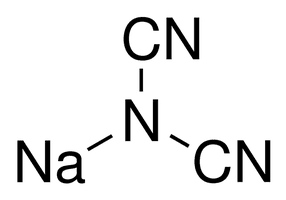
Coordination Chemistry
Sodium dicyanamide is utilized as a reactant in the synthesis of diverse metal cluster complexes and coordination polymers. It facilitates the formation of bridged structures in compounds such as nickel diacetylpyridine dioximate clusters and manganese(II/III) oxo azide diolate clusters.
Materials Science
This compound is employed in constructing extended magnetic networks and two-dimensional anionic sheet-like coordination polymeric networks. Examples include lead dicyanamide-bridged nitronyl nitroxide radical polymers and cadmium(II) coordination polymers exhibiting photoluminescence.
Catalysis and Ligand Synthesis
It acts as a precursor for ligands and complexes in various catalytic applications. The dicyanamide moiety can participate in forming stable complexes with transition metals, leading to novel catalytic systems.
| Molecular weight | 89.03 |
|---|---|
| Linear formula | NaN(CN)2 |
| Assay | 96% |
| Grade | Lonza quality |
| Impurities tested | <3% NaCl |
| Application | Reactant for preparation of:• Nickel diacetylpyridine dioximate pentanuclear, octanuclear and decanuclear cluster complexes1• Decanuclear manganese(II/III) oxo azide diolate clusters as supertetrahedral building-blocks to design extended magnetic networks2• Ruthenium bipyridine complexes entrapped in iron and manganese dicyanamide two-dimensional anionic sheet-like coordination polymeric networks exhibiting dual emission photoluminescence3• Lead dicyanamide-bridged nitronyl nitroxide radical polymeric complex4• Antiferromagnetically coupled hexanuclear copper(II) Schiff base complexes with dicyanamido bridges5• CuII2L based polymeric ladders using dicyanamide bridges6• Luminous hexacoordinated coordination polymers of cadmium(II), containing dicyanamide bridges7 |

Hazard statements
- H302Harmful if swallowed
- H315Causes skin irritation
- H319Causes serious eye irritation
- H335May cause respiratory irritation
Precautionary statements
- P261Avoid breathing dust, fume, gas or vapours
- P305IF IN EYES
| Protective equipment | dust mask type N95 (US), Eyeshields, Gloves |
|---|---|
| Water hazard class (WGK, DE) | 1 |
| Hazard codes (EU) | Xn |
| Risk statements (R) | 22-36/37/38 |
| Safety statements (S) | 26-36 |
Hazard information is provided for guidance. Always consult the product Safety Data Sheet (SDS), available on request, before handling.
| Mfr No | Lonza Ltd |
|---|
Documentation
Every batch ships with a Certificate of Analysis covering assay, identity and purity; the grade is confirmed against your enquiry. Safety Data Sheets and technical data sheets are available on request.
Supply & logistics
Samples for technical evaluation; bulk MOQ by grade and packaging. In-stock material ships in 7–10 working days, worldwide, with full export documentation.
What is Sodium dicyanamide used for?
+
Sodium dicyanamide is used as a reactant for the preparation of various metal cluster complexes and coordination polymers, including nickel, manganese, ruthenium, lead, copper, and cadmium compounds. It is a valuable building block in coordination chemistry and materials science.
What are the CAS number and chemical formula for Sodium dicyanamide?
+
The CAS number for Sodium dicyanamide is 1934-75-4, and its chemical formula is NaN(CN)2.
What grade and purity does Tech Serve Solutions supply?
+
Tech Serve Solutions supplies Sodium dicyanamide at 96% purity, Lonza quality grade. We do not represent this product as USP, BP, or EP grade.
What are the safety considerations when handling Sodium dicyanamide?
+
Sodium dicyanamide is classified as harmful if swallowed (H302), causes skin irritation (H315), causes serious eye irritation (H319), and may cause respiratory irritation (H335). Handle with appropriate personal protective equipment, including a dust mask (N95), eyeshields, and gloves, in a well-ventilated area.
Is Sodium dicyanamide a controlled substance?
+
Based on the provided data, Sodium dicyanamide is not indicated as a controlled substance.
How is Sodium dicyanamide packed, shipped, and exported?
+
Information regarding specific packing, shipping, and export details is available upon request. Please contact our sales team for further information.
How can I request a sample or quote for Sodium dicyanamide?
+
To request a sample or quote for Sodium dicyanamide, please contact the Tech Serve Solutions sales department via our website or direct inquiry.
▶ Related products
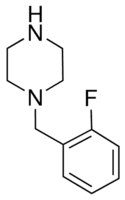
1-(2-Fluorobenzyl)piperazine
C11H15FN2
Chemical Synthesis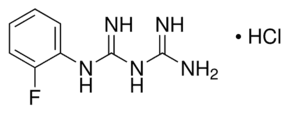
1-(2-Fluorophenyl)biguanide hydrochloride
Chemical Synthesis
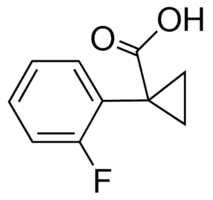
1-(2-Fluorophenyl)cyclopropanecarboxylic acid
C10H9FO2
Chemical Synthesis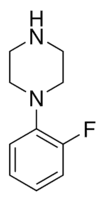
1-(2-Fluorophenyl)piperazine
C10H13FN2
Chemical Synthesis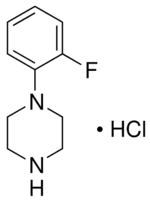
1-(2-Fluorophenyl)piperazine monohydrochloride
C10H13FN2 · HCl
Chemical Synthesis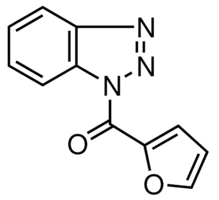
1-(2-Furoyl)-1H-benzotriazole
C11H7N3O2
Chemical Synthesis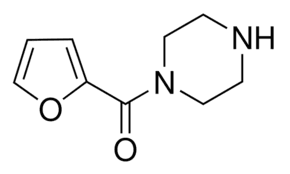
1-(2-Furoyl)piperazine
C9H12N2O2
Chemical Synthesis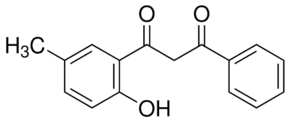
1-(2-Hydroxy-5-methylphenyl)-3-phenyl-1,3-propanedione
Chemical Synthesis
▶ Explore more

Bis(cyclopentadienyl)cobalt(III) hexafluorophosphate
C10H10CoF6P
Catalysis & Inorganic
1-(4-Chlorophenyl)biguanide hydrochloride
ClC6H4NHC(NH)NHC(NH)NH2 · HCl
Chemical Synthesis
Bis(cyclopentadienyl)dimethylzirconium(IV)
Catalysis & Inorganic

1-(4-Chlorophenyl)ethanol
ClC6H4CH(CH3)OH
Chemical Synthesis