
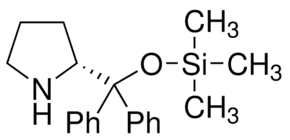
(R)-(+)-α,α-Diphenyl-2-pyrrolidinemethanol trimethylsilyl ether
(R)-(+)-α,α-Diphenyl-2-pyrrolidinemethanol trimethylsilyl ether (CAS 943757-71-9) is a chiral organocatalyst with the molecular formula C20H27NOSi and a molecular weight of 325.52 g/mol. This proline-derived compound is primarily employed in asymmetric synthesis and serves as a valuable reagent in chemical synthesis for creating enantiomerically enriched products. Its optical activity and specific structural features make it a key component in advanced organic chemistry research and development.
- IUPAC
- (2R)-2-[Diphenyl[(trimethylsilyl)oxy]methyl]pyrrolidine,(R)-α,α-Diphenylprolinol trimethylsilyl ether
- Synonyms
- (2R)-2-[Diphenyl[(trimethylsilyl)oxy]methyl]pyrrolidine(R)-α,α-Diphenylprolinol trimethylsilyl ether
Asymmetric Synthesis
This compound is a crucial chiral auxiliary and catalyst in asymmetric synthesis, enabling the stereoselective formation of new chiral centres in organic molecules. Its ability to influence reaction pathways makes it ideal for producing enantiopure compounds.
Chiral Ligand Development
As a chiral ligand precursor, it can be utilised in the development of novel catalytic systems for enantioselective transformations. Its structure allows for versatile coordination in transition metal catalysis.
Organocatalysis
Belonging to the class of proline-based organocatalysts, this molecule facilitates various organic reactions without the need for metal catalysts. It is instrumental in promoting enantioselective aldol reactions and Michael additions.
Pharmaceutical Intermediate Synthesis
The stereochemical control offered by this reagent is vital in synthesising complex pharmaceutical intermediates where specific enantiomers are required for biological activity.
| Molecular weight | 325.52 |
|---|---|
| Empirical formula | C20H27NOSi |
| Assay | 96% |
| Density | 1.0459 g/mL at 25 °C |
| Refractive index | n20/D 1.5509 |
| Optical activity | [α]22/D +52±5°, c = 1 in chloroform |
| Storage temperature | 2-8°C |

Hazard statements
- H315Causes skin irritation
- H319Causes serious eye irritation
- H335May cause respiratory irritation
Precautionary statements
- P261Avoid breathing dust, fume, gas or vapours
- P305IF IN EYES
| Protective equipment | dust mask type N95 (US), Eyeshields, Gloves |
|---|---|
| Flash point | >110 °C / >230 °F |
| Water hazard class (WGK, DE) | 3 |
| Hazard codes (EU) | Xi |
| Risk statements (R) | 36/37/38 |
| Safety statements (S) | 26 |
Hazard information is provided for guidance. Always consult the product Safety Data Sheet (SDS), available on request, before handling.
Documentation
Every batch ships with a Certificate of Analysis covering assay, identity and purity; the grade is confirmed against your enquiry. Safety Data Sheets and technical data sheets are available on request.
Supply & logistics
Samples for technical evaluation; bulk MOQ by grade and packaging. In-stock material ships in 7–10 working days, worldwide, with full export documentation.
What is (R)-(+)-α,α-Diphenyl-2-pyrrolidinemethanol trimethylsilyl ether used for?
+
This compound is primarily used in asymmetric synthesis and organocatalysis. It serves as a chiral catalyst or ligand for the stereoselective synthesis of enantiomerically enriched compounds, particularly in the development of pharmaceutical intermediates and complex organic molecules.
What is the CAS number and formula for (R)-(+)-α,α-Diphenyl-2-pyrrolidinemethanol trimethylsilyl ether?
+
The CAS number is 943757-71-9, and the empirical formula is C20H27NOSi.
What grade and purity does Tech Serve Solutions supply?
+
Tech Serve Solutions supplies this product with an assay of 96%. We do not represent this product as USP, BP, EP, or other pharmacopoeial grades unless explicitly stated in the specifications.
What are the safety and handling precautions for this chemical?
+
This compound is a Warning substance, classified with H315 (Causes skin irritation), H319 (Causes serious eye irritation), and H335 (May cause respiratory irritation). Appropriate personal protective equipment, including a dust mask (type N95 US), eyeshields, and gloves, should be used. Work in a well-ventilated area. Refer to the Safety Data Sheet for full details.
Is this chemical a controlled substance?
+
The provided data does not indicate that this chemical is a controlled substance.
How is this product typically packed and exported?
+
This chemical is typically stored at 2-8°C. Tech Serve Solutions exports fine chemicals globally, adhering to all necessary shipping regulations and documentation requirements for international transport.
How can I request a sample or quote for this chemical?
+
To request a sample or a quote, please use the contact form on our website or contact our sales department directly. Please provide the product name and CAS number (943757-71-9) in your inquiry.
▶ Related products
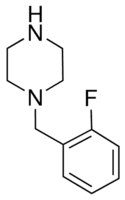
1-(2-Fluorobenzyl)piperazine
C11H15FN2
Chemical Synthesis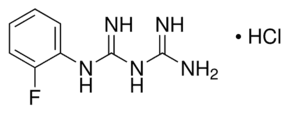
1-(2-Fluorophenyl)biguanide hydrochloride
Chemical Synthesis
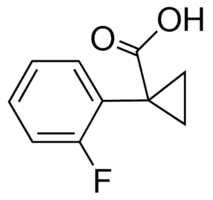
1-(2-Fluorophenyl)cyclopropanecarboxylic acid
C10H9FO2
Chemical Synthesis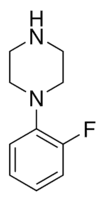
1-(2-Fluorophenyl)piperazine
C10H13FN2
Chemical Synthesis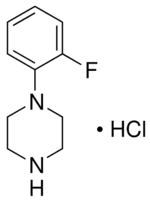
1-(2-Fluorophenyl)piperazine monohydrochloride
C10H13FN2 · HCl
Chemical Synthesis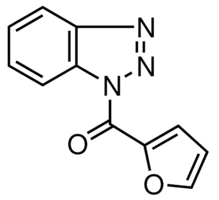
1-(2-Furoyl)-1H-benzotriazole
C11H7N3O2
Chemical Synthesis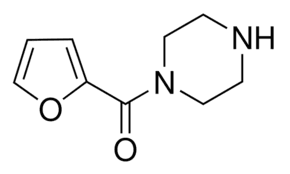
1-(2-Furoyl)piperazine
C9H12N2O2
Chemical Synthesis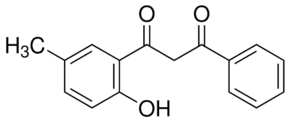
1-(2-Hydroxy-5-methylphenyl)-3-phenyl-1,3-propanedione
Chemical Synthesis
▶ Explore more

Bis(cyclopentadienyl)cobalt(III) hexafluorophosphate
C10H10CoF6P
Catalysis & Inorganic
1-(4-Chlorophenyl)biguanide hydrochloride
ClC6H4NHC(NH)NHC(NH)NH2 · HCl
Chemical Synthesis
Bis(cyclopentadienyl)dimethylzirconium(IV)
Catalysis & Inorganic

1-(4-Chlorophenyl)ethanol
ClC6H4CH(CH3)OH
Chemical Synthesis