
(R)-(6,6′-Dimethoxybiphenyl-2,2′-diyl)bis[bis(3,5-di-tert-butyl-4-methoxyphenyl)phosphine]
(R)-(6,6′-Dimethoxybiphenyl-2,2′-diyl)bis[bis(3,5-di-tert-butyl-4-methoxyphenyl)phosphine] (CAS 352655-61-9) is a chiral phosphine ligand with the molecular formula C74H104O6P2 and a molecular weight of 1151.56 g/mol. This atropisomeric MeOBIPHEP ligand is pivotal in asymmetric synthesis, facilitating enantioselective transformations through its complexation with transition metals. It is extensively utilised in catalysing a variety of reactions, promoting high optical purity in the resulting products.
- IUPAC
- (R)-[6,6′-Dimethoxy(1,1′-biphenyl)-2,2′-diyl]bis{bis[3,5-bis(1,1-dimethylethyl)-4-methoxyphenyl]phosphine},(R)-3,5-t-Bu-4-MeO-MeOBIPHEP,SL-A109-1
- Synonyms
- 5-di-tert-butyl-4-methoxyphenyl)phosphine],352655-61-9, C74H104O6P2, (R)-3,5-t-Bu-4-MeO-MeOBIPHEP,SL-A109-1
![(R)-(6,6′-Dimethoxybiphenyl-2,2′-diyl)bis[bis(3,5-di-tert-butyl-4-methoxyphenyl)phosphine] (C74H104O6P2) — chemical structure, CAS 352655-61-9; Chemistry, fine chemical supplied by Tech Serve Solutions](/_next/image?url=https%3A%2F%2Fpub-f4d920c906024441a773a96f7098e551.r2.dev%2Fimages%2Fproducts%2F352655-61-9.png&w=3840&q=75)
Asymmetric Conjugate Addition
This ligand, as part of rhodium complexes, effectively catalyses the asymmetric conjugate addition of arylboronic acids to maleimides and enones, yielding enantiomerically enriched products.
Intramolecular Hydroacylation
The ligand enables the enantioselective intramolecular hydroacylation of alkenes, a key step in the synthesis of complex cyclic molecules.
Desymmetrization Reactions
It facilitates desymmetrization through enantioselective C-C bond activation and ring expansion of allenyl cyclobutanols, providing access to chiral scaffolds.
Hydroamination Catalysis
Complexes formed with this ligand catalyse the enantioselective hydroamination of bicyclic alkenes and dienes with anilines, an important transformation in nitrogen-containing compound synthesis.
1,4-Addition / Asymmetric Protonation
The ligand is employed in the 1,4-addition and subsequent asymmetric protonation of amino acrylates, leading to chiral amino acid derivatives.
| Molecular weight | 1151.56 |
|---|---|
| Empirical formula | C74H104O6P2 |
| Assay | ≥97% |
| Optical purity | ee: ≥99% |
| Application | Atropisomeric MeOBIPHEP ligands• Asymmetrical conjugate addition of arylboronic acids to maleimides and enones catalyzed by rhodium complexes1• Intramolecular ketone hydroacylation2• Desymmetrization through enantioselective C-C bond activation and ring expansion of allenyl cyclobutanols3• Hydroamination of bicyclic alkenes and dienes with anilines4• 1,4-addition/asymmetric protonation of amino acrylates5 |
| Protective equipment | Eyeshields, Gloves, type N95 (US), type P1 (EN143) respirator filter |
|---|---|
| Water hazard class (WGK, DE) | 3 |
Hazard information is provided for guidance. Always consult the product Safety Data Sheet (SDS), available on request, before handling.
Documentation
Every batch ships with a Certificate of Analysis covering assay, identity and purity; the grade is confirmed against your enquiry. Safety Data Sheets and technical data sheets are available on request.
Supply & logistics
Samples for technical evaluation; bulk MOQ by grade and packaging. In-stock material ships in 7–10 working days, worldwide, with full export documentation.
What is (R)-(6,6′-Dimethoxybiphenyl-2,2′-diyl)bis[bis(3,5-di-tert-butyl-4-methoxyphenyl)phosphine] used for?
+
This compound is primarily used as a chiral ligand in asymmetric catalysis. It facilitates enantioselective transformations such as conjugate addition, hydroacylation, desymmetrization, hydroamination, and 1,4-addition/protonation reactions.
What are the CAS number and formula for this chemical?
+
The CAS number is 352655-61-9 and the empirical formula is C74H104O6P2.
What grade and purity does Tech Serve Solutions supply?
+
Tech Serve Solutions supplies this product with an assay of ≥97% and an optical purity (ee) of ≥99%. It is supplied as a research or technical grade material and is not represented as USP, BP, EP, or other pharmacopoeia grades.
How should this chemical be handled and stored?
+
Handle with appropriate personal protective equipment, including eyeshields and gloves. Ensure adequate ventilation or use a type N95 (US) or type P1 (EN143) respirator filter. Store in a cool, dry place away from incompatible materials. Refer to the Safety Data Sheet for comprehensive handling information.
Is this chemical a controlled substance?
+
Based on the provided data, there is no indication that this chemical is a controlled substance.
How is this product packed, shipped, and exported?
+
This product is carefully packed to ensure safe transit and is available for global export. Specific packaging details will be confirmed at the time of order.
How can I request a sample or quote for this product?
+
To request a sample or a quotation, please contact our sales team through the enquiry form on our website or by calling us directly. Please reference the product name and CAS number.
▶ Related products
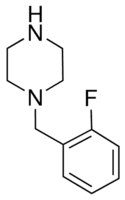
1-(2-Fluorobenzyl)piperazine
C11H15FN2
Chemical Synthesis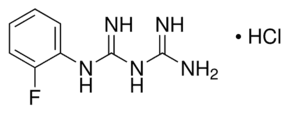
1-(2-Fluorophenyl)biguanide hydrochloride
Chemical Synthesis
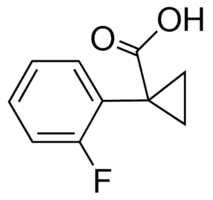
1-(2-Fluorophenyl)cyclopropanecarboxylic acid
C10H9FO2
Chemical Synthesis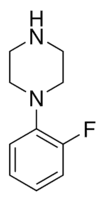
1-(2-Fluorophenyl)piperazine
C10H13FN2
Chemical Synthesis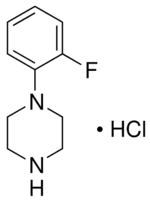
1-(2-Fluorophenyl)piperazine monohydrochloride
C10H13FN2 · HCl
Chemical Synthesis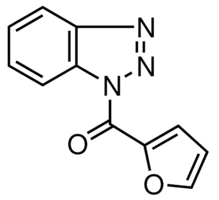
1-(2-Furoyl)-1H-benzotriazole
C11H7N3O2
Chemical Synthesis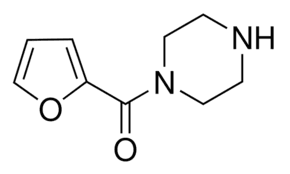
1-(2-Furoyl)piperazine
C9H12N2O2
Chemical Synthesis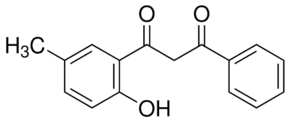
1-(2-Hydroxy-5-methylphenyl)-3-phenyl-1,3-propanedione
Chemical Synthesis
▶ Explore more

Bis(cyclopentadienyl)cobalt(III) hexafluorophosphate
C10H10CoF6P
Catalysis & Inorganic
1-(4-Chlorophenyl)biguanide hydrochloride
ClC6H4NHC(NH)NHC(NH)NH2 · HCl
Chemical Synthesis
Bis(cyclopentadienyl)dimethylzirconium(IV)
Catalysis & Inorganic

1-(4-Chlorophenyl)ethanol
ClC6H4CH(CH3)OH
Chemical Synthesis