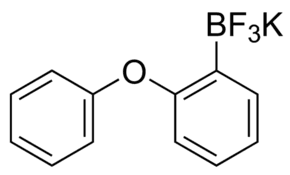
Potassium 2-phenoxyphenyltrifluoroboroate
Potassium 2-phenoxyphenyltrifluoroboroate (CAS: 213745-39-2; Formula: C12H9BF3KO; MW: 276.10) is a valuable organoboron compound. It functions as a cross-coupling partner in palladium-catalysed Suzuki reactions for carbon-carbon bond formation. This trifluoroborate salt also exhibits utility in radical cyclization reactions under open-flask conditions, making it a versatile reagent in synthetic organic chemistry.
Suzuki Coupling Reactions
Serves as an effective cross-coupling partner in palladium-catalysed Suzuki reactions. It facilitates the formation of carbon-carbon bonds, essential for constructing complex organic molecules.
Radical Cyclization
Demonstrates utility in radical cyclization processes. These reactions can be performed under open-flask conditions, offering a practical synthetic route.
Synthetic Reagent
A useful building block in chemical synthesis, particularly for introducing the 2-phenoxyphenyl moiety into target structures via organometallic coupling methods.
| Molecular weight | 276.10 |
|---|---|
| Empirical formula | C12H9BF3KO |
| Assay | 97% |
| Application | Cross-coupling partner in Palladium-catalyzed carbon-carbon bond formation (Suzuki reaction) and has shown recently to undergo radical cyclization under open-flask conditions |
| Melting point | 219-224 °C |

Hazard statements
- H301Toxic if swallowed
Precautionary statements
- P261Avoid breathing dust, fume, gas or vapours
- P280Wear protective gloves, clothing and eye/face protection
- P301IF SWALLOWED
- P311Call a POISON CENTER or doctor
| Transport (UN / ADR) | UN 2811 6.1 / PGIII |
|---|---|
| Water hazard class (WGK, DE) | 3 |
| Hazard codes (EU) | T |
| Risk statements (R) | 23/24/25 |
| Safety statements (S) | 45 |
Hazard information is provided for guidance. Always consult the product Safety Data Sheet (SDS), available on request, before handling.
Documentation
Every batch ships with a Certificate of Analysis covering assay, identity and purity; the grade is confirmed against your enquiry. Safety Data Sheets and technical data sheets are available on request.
Supply & logistics
Samples for technical evaluation; bulk MOQ by grade and packaging. In-stock material ships in 7–10 working days, worldwide, with full export documentation.
What is Potassium 2-phenoxyphenyltrifluoroboroate used for?
+
Potassium 2-phenoxyphenyltrifluoroboroate is primarily used as a cross-coupling partner in palladium-catalysed Suzuki reactions for carbon-carbon bond formation and in radical cyclization reactions.
What is the CAS number and formula for Potassium 2-phenoxyphenyltrifluoroboroate?
+
The CAS number is 213745-39-2 and the molecular formula is C12H9BF3KO.
What grade and purity does Tech Serve Solutions supply?
+
Tech Serve Solutions supplies this chemical with an assay of 97%. We do not represent this product as USP, BP, or EP grade.
What are the main safety hazards associated with this chemical?
+
This compound is classified as dangerous. It is harmful if swallowed, in contact with skin, and if inhaled (H301 + H311 + H331). Handle with appropriate personal protective equipment in a well-ventilated area.
How is this chemical packed and shipped?
+
This product is shipped as UN 2811, Class 6.1, Packing Group III. TSS exports globally, adhering to all transport regulations.
How can I request a sample or quote?
+
Please contact our sales team via our website or directly by phone to request a sample or a quotation for Potassium 2-phenoxyphenyltrifluoroboroate.
▶ Related products
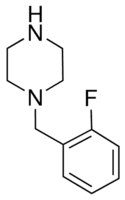
1-(2-Fluorobenzyl)piperazine
C11H15FN2
Chemical Synthesis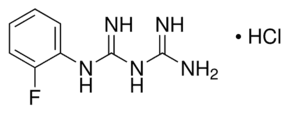
1-(2-Fluorophenyl)biguanide hydrochloride
Chemical Synthesis
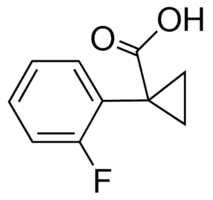
1-(2-Fluorophenyl)cyclopropanecarboxylic acid
C10H9FO2
Chemical Synthesis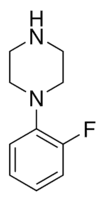
1-(2-Fluorophenyl)piperazine
C10H13FN2
Chemical Synthesis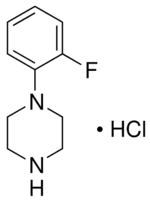
1-(2-Fluorophenyl)piperazine monohydrochloride
C10H13FN2 · HCl
Chemical Synthesis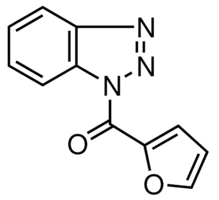
1-(2-Furoyl)-1H-benzotriazole
C11H7N3O2
Chemical Synthesis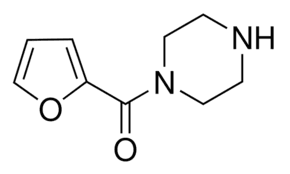
1-(2-Furoyl)piperazine
C9H12N2O2
Chemical Synthesis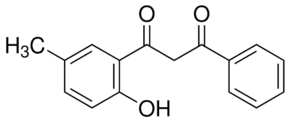
1-(2-Hydroxy-5-methylphenyl)-3-phenyl-1,3-propanedione
Chemical Synthesis