
Polypropylene
Polypropylene (CAS: 9003-07-0, Formula: [CH2CH(CH3)]n) is a versatile hydrophobic polymer. It is utilized to enhance waxes by reducing blocking, scuffing, and abrasion. Furthermore, Polypropylene improves pigment dispersion in various polypropylene films and fibers. Tech Serve Solutions supplies this material for diverse industrial and research applications, ensuring reliable quality for material science and polymer research.
![Polypropylene ([CH2CH(CH3)]n) — chemical structure, CAS 9003-07-0; Materials Science, fine chemical supplied by Tech Serve Solutions](/_next/image?url=https%3A%2F%2Fpub-f4d920c906024441a773a96f7098e551.r2.dev%2Fimages%2Fproducts%2F9003-07-0.png&w=3840&q=75)
Wax Modification
Polypropylene serves as a key additive to waxes, effectively reducing issues such as blocking, scuffing, and abrasion. This application enhances the durability and performance of wax-based products.
Pigment Dispersion
In the production of polypropylene films and fibers, this polymer significantly improves pigment dispersion. This leads to more uniform colouration and enhanced aesthetic qualities.
Material Science Research
As a fundamental polymer, Polypropylene is integral to material science research, enabling the development and testing of new material compositions and properties.
Polymer Science Studies
Its well-defined structure and properties make it suitable for polymer science studies, including investigations into polymerisation, material characterisation, and performance analysis.
| Linear formula | [CH2CH(CH3)]n |
|---|---|
| Density | 0.9 g/mL at 25 °C(lit.) |
| Viscosity | 6.0 poise(190 °C, Brookfield Thermosel)(lit.) |
| Application | Modifier for waxes to reduce blocking, scuffing and abrasion. Improves pigment dispersion in polypropylene films and fibers. |
| Melting point | 157 °C |
| Protective equipment | Eyeshields, Gloves, type N95 (US), type P1 (EN143) respirator filter |
|---|---|
| Water hazard class (WGK, DE) | 3 |
Hazard information is provided for guidance. Always consult the product Safety Data Sheet (SDS), available on request, before handling.
| Mol Wt | average Mn ~5,000average Mw ~12,000 |
|---|---|
| Transition Temp | softening point 163 °C (ring and ball, ASTM E 28) |
Documentation
Every batch ships with a Certificate of Analysis covering assay, identity and purity; the grade is confirmed against your enquiry. Safety Data Sheets and technical data sheets are available on request.
Supply & logistics
Samples for technical evaluation; bulk MOQ by grade and packaging. In-stock material ships in 7–10 working days, worldwide, with full export documentation.
What is Polypropylene used for?
+
Polypropylene (CAS: 9003-07-0) is used as a modifier for waxes to reduce blocking, scuffing, and abrasion. It also improves pigment dispersion in polypropylene films and fibers. It is a key material in material science and polymer science research.
What is the CAS number and chemical formula for Polypropylene?
+
The CAS number for Polypropylene is 9003-07-0, and its linear formula is [CH2CH(CH3)]n.
What grade and purity does Tech Serve Solutions supply?
+
Tech Serve Solutions supplies Polypropylene with an average Mn of ~5,000 and average Mw of ~12,000. We do not represent this product as USP, BP, or EP grade.
What are the safety and handling recommendations for Polypropylene?
+
When handling Polypropylene, it is recommended to use eyeshields and gloves. A type N95 (US) or type P1 (EN143) respirator filter should be used if necessary. The material has a WGK Germany rating of 3.
How is Polypropylene packed, shipped, and exported?
+
Tech Serve Solutions packs, ships, and exports Polypropylene according to standard chemical handling and international shipping regulations. Specific details can be provided upon request.
How can I request a sample or quote for Polypropylene?
+
To request a sample or quote for Polypropylene, please contact our sales team through the website or by phone, providing your specific requirements.
▶ Related products
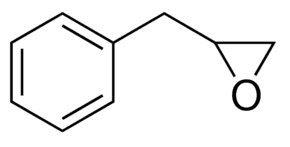
(2,3-Epoxypropyl)benzene
Polymer Science
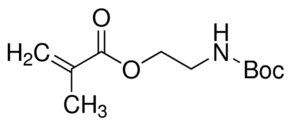
(2-Boc-amino)ethyl methacrylate
C11H19NO4
Polymer Science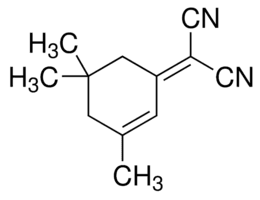
(3,5,5-Trimethylcyclohex-2-enylidene)malononitrile
Polymer Science
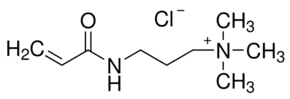
(3-Acrylamidopropyl)trimethylammonium chloride solution
Polymer Science
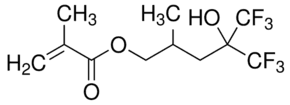
1,1,1-Trifluoro-2-(trifluoromethyl)-2-hydroxy-4-methyl-5-pentyl methacrylate
Polymer Science
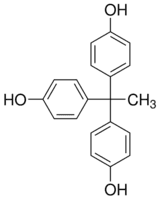
1,1,1-Tris(4-hydroxyphenyl)ethane
Polymer Science
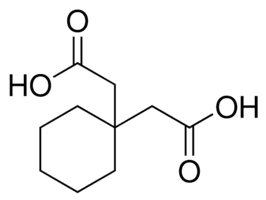
1,1-Cyclohexanediacetic acid
Polymer Science

1,12-Diisocyanatododecane
Polymer Science
▶ Explore more

Bis(cyclopentadienyl)cobalt(III) hexafluorophosphate
C10H10CoF6P
Catalysis & Inorganic
1-(4-Chlorophenyl)biguanide hydrochloride
ClC6H4NHC(NH)NHC(NH)NH2 · HCl
Chemical Synthesis
Bis(cyclopentadienyl)dimethylzirconium(IV)
Catalysis & Inorganic

1-(4-Chlorophenyl)ethanol
ClC6H4CH(CH3)OH
Chemical Synthesis