
Poly(vinyl alcohol)
Poly(vinyl alcohol) (PVA), CAS 9002-89-5, is a synthetic polymer characterized by its water solubility and film-forming capabilities, derived from polyvinyl acetate. With a degree of polymerization around 1700 and a molecular weight reflecting this, PVA serves as a versatile agent in various laboratory and industrial applications. Its applications span across cell biology, centrifugation, and histology due to its unique colloidal properties.
![Poly(vinyl alcohol) ([-CH2CHOH-]n) — chemical structure, CAS 9002-89-5; Life Science, fine chemical supplied by Tech Serve Solutions](/_next/image?url=https%3A%2F%2Fpub-f4d920c906024441a773a96f7098e551.r2.dev%2Fimages%2Fproducts%2F9002-89-5.png&w=3840&q=75)
Cell Biology and Histology
Poly(vinyl alcohol) is utilized in cell biology and histology for its properties as a protective colloid and embedding medium. It aids in sample preparation and preservation during microscopic examination.
Centrifugation Media
In centrifugation, PVA can be employed as a component of density gradient media. Its controlled viscosity and density properties assist in the separation of biological components.
Adhesive and Binder Applications
Due to its film-forming and adhesive qualities, Poly(vinyl alcohol) finds use as a binder in various formulations and as a component in adhesive systems.
Textile and Paper Industry
PVA serves as a sizing agent in the textile industry to improve yarn strength and as a binder and coating agent in the paper industry to enhance surface properties.
| Linear formula | [-CH2CHOH-]n |
|---|---|
| Grade | SAJ first grade |
| Solubility | H2O: soluble |
| Viscosity | 9-11 mPa.s, 4 % in H2O(20 °C) |
| Impurities tested | 1.1-1.9% residual content of acetyl |
Precautionary statements
- P260Do not breathe dust, fume, gas, mist, vapours or spray
| Protective equipment | Eyeshields, Gloves, type N95 (US), type P1 (EN143) respirator filter |
|---|---|
| Water hazard class (WGK, DE) | 1 |
| Ignition residue | ≤0.5% |
Hazard information is provided for guidance. Always consult the product Safety Data Sheet (SDS), available on request, before handling.
| Mol Wt | degree of polymerization 1700 |
|---|---|
| Availability | available only in Japan |
Documentation
Every batch ships with a Certificate of Analysis covering assay, identity and purity; the grade is confirmed against your enquiry. Safety Data Sheets and technical data sheets are available on request.
Supply & logistics
Samples for technical evaluation; bulk MOQ by grade and packaging. In-stock material ships in 7–10 working days, worldwide, with full export documentation.
What is Poly(vinyl alcohol) used for?
+
Poly(vinyl alcohol) is used in cell biology, centrifugation media, histology, as a protective colloid, film-former, binder, and sizing agent.
What is the CAS number and formula for Poly(vinyl alcohol)?
+
The CAS number for Poly(vinyl alcohol) is 9002-89-5, and its linear formula is [-CH2CHOH-]n.
What grade and purity does Tech Serve Solutions supply?
+
Tech Serve Solutions supplies Poly(vinyl alcohol) as SAJ first grade, with a degree of polymerization of approximately 1700 and residual acetyl content between 1.1-1.9%.
How should Poly(vinyl alcohol) be handled safely?
+
When handling Poly(vinyl alcohol), use eyeshields and gloves. A type N95 (US) or type P1 (EN143) respirator filter is recommended. Avoid breathing dust. The WGK Germany classification is 1.
Is Poly(vinyl alcohol) available for export from TSS?
+
Tech Serve Solutions offers Poly(vinyl alcohol) for export, although availability may be restricted to certain regions, such as Japan.
How can I request a quote or sample of Poly(vinyl alcohol)?
+
To request a quote or sample of Poly(vinyl alcohol), please contact our sales team directly through our website or by phone.
▶ Related products
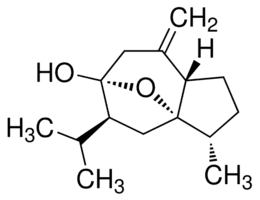
(−)-Curcumol
C15H24O2
Cell Biology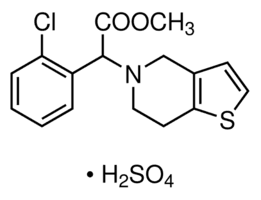
(±) Clopidogrel hydrogensulfate
Cell Biology
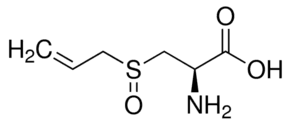
(±)-L-Alliin
C6H11NO3S
Cell Biology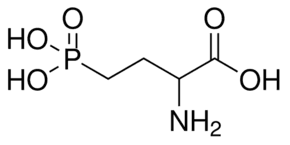
(±)-2-Amino-4-phosphonobutyric acid
C4H10NO5P
Cell Biology
(±)-2-Methylarachidonoyl-2′-fluoroethylamide
C23H38NOF
Cell Biology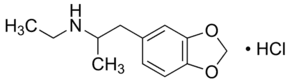
(±)-3,4-Methylenedioxy-N-ethylamphetamine hydrochloride
Cell Biology
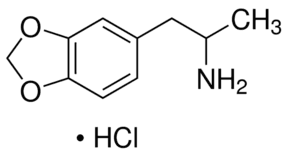
(±)-3,4-Methylenedioxyamphetamine hydrochloride
Cell Biology
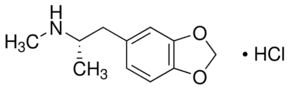
(±)-3,4-Methylenedioxymethamphetamine hydrochloride
Cell Biology
▶ Explore more

Bis(cyclopentadienyl)cobalt(III) hexafluorophosphate
C10H10CoF6P
Catalysis & Inorganic
1-(4-Chlorophenyl)biguanide hydrochloride
ClC6H4NHC(NH)NHC(NH)NH2 · HCl
Chemical Synthesis
Bis(cyclopentadienyl)dimethylzirconium(IV)
Catalysis & Inorganic

1-(4-Chlorophenyl)ethanol
ClC6H4CH(CH3)OH
Chemical Synthesis