
Poly(pyromellitic dianhydride-co-4,4′-oxydianiline), amic acid solution
Poly(pyromellitic dianhydride-co-4,4′-oxydianiline), amic acid solution (CAS: 25038-81-7) is a specialized polymer solution. It functions primarily as a semi-conductor material and a dielectric component. Its applications are critical in advanced electronic systems, including thin films, high-density interconnects, and multichip modules, offering robust performance in demanding technological environments.
- IUPAC
- Polyamic acid
- Synonyms
- 25038-81-7

Semi-conductor Material
This amic acid solution serves as a vital semi-conductor material. Its properties are essential for the fabrication of advanced electronic components and integrated circuits.
Dielectric Component in Thin Films
Utilised as a dielectric component in thin film applications, it facilitates the insulation and performance of microelectronic devices.
High-Density Interconnect Systems
The material is a key dielectric component in high-density interconnect (HDI) systems, enabling complex circuitry with enhanced reliability and performance.
Multichip Modules (MCMs)
It functions as a dielectric in multichip modules, contributing to the miniaturisation and enhanced functionality of electronic packaging.
| Boiling point | 174 °C |
|---|---|
| Density | 1.04 g/mL at 25 °C |
| Refractive index | n20/D 1.506 |
| Viscosity | 10-12 poise(25 °C, Brookfield)(12 rpm)(lit.) |
| Storage temperature | −20°C |
| Application | Semi-conductor material. Dielectric component in thin films, high density interconnect systems and multichip modules. |


Hazard statements
- H226Flammable liquid and vapour
- H304May be fatal if swallowed and enters airways
- H315Causes skin irritation
- H319Causes serious eye irritation
- H335May cause respiratory irritation
- H340May cause genetic defects
- H350May cause cancer
- H360D
- H412Harmful to aquatic life with long-lasting effects
Precautionary statements
- P201Obtain special instructions before use
- P261Avoid breathing dust, fume, gas or vapours
- P273Avoid release to the environment
- P301IF SWALLOWED
- P305IF IN EYES
- P308IF exposed or concerned
| Protective equipment | Eyeshields, full-face respirator (US), Gloves, multi-purpose combination respirator cartridge (US), type ABEK (EN14387) respirator filter |
|---|---|
| Flash point | 59 °C / 138.2 °F |
| Transport (UN / ADR) | UN 1866C 3 / PGIII |
| Water hazard class (WGK, DE) | 3 |
| Hazard codes (EU) | T |
| Risk statements (R) | 45-46-61-36/37/38-52/53-65 |
| Safety statements (S) | 53-26-45-61-62 |
Hazard information is provided for guidance. Always consult the product Safety Data Sheet (SDS), available on request, before handling.
| Transition Temp | Tg >400 °C (imide) |
|---|---|
| Purified By | sub-micron filtration (0.2 μm medium) |
Documentation
Every batch ships with a Certificate of Analysis covering assay, identity and purity; the grade is confirmed against your enquiry. Safety Data Sheets and technical data sheets are available on request.
Supply & logistics
Samples for technical evaluation; bulk MOQ by grade and packaging. In-stock material ships in 7–10 working days, worldwide, with full export documentation.
What is Poly(pyromellitic dianhydride-co-4,4′-oxydianiline), amic acid solution used for?
+
This amic acid solution is used as a semi-conductor material and a dielectric component in thin films, high-density interconnect systems, and multichip modules.
What is the CAS number and formula for this product?
+
The CAS number is 25038-81-7. The formula is not provided in the available data.
What grade and purity does Tech Serve Solutions supply?
+
Tech Serve Solutions supplies this product purified by sub-micron filtration (0.2 μm medium). We do not represent it as USP, BP, EP, or any other pharmacopoeia grade.
What are the main safety hazards associated with this chemical?
+
This product carries significant hazards, including flammability (H226), potential aspiration hazard (H304), skin and eye irritation (H315, H319), respiratory irritation (H335), and potential genetic defects (H340), cancer (H350), reproductive toxicity (H360D), and is harmful to aquatic life with long-lasting effects (H412). It is classified as Danger. Appropriate personal protective equipment, including eyeshields and a full-face respirator, is required. Handle with extreme caution in a well-ventilated area away from ignition sources.
How is this product packed, shipped, and exported?
+
This chemical is shipped under UN 1866C 3 / PGIII regulations, indicating it is a flammable liquid, resin solution. We ensure compliant packaging and export procedures for international distribution.
How can I request a sample or quote?
+
To request a sample or a quotation, please contact our sales team directly through the website or by phone, providing the product name and CAS number (25038-81-7).
▶ Related products
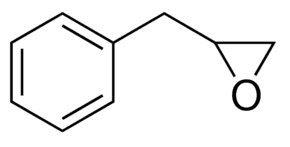
(2,3-Epoxypropyl)benzene
Polymer Science
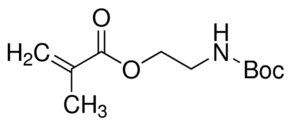
(2-Boc-amino)ethyl methacrylate
C11H19NO4
Polymer Science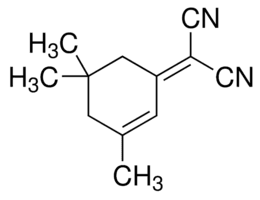
(3,5,5-Trimethylcyclohex-2-enylidene)malononitrile
Polymer Science
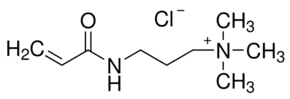
(3-Acrylamidopropyl)trimethylammonium chloride solution
Polymer Science
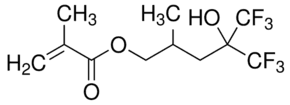
1,1,1-Trifluoro-2-(trifluoromethyl)-2-hydroxy-4-methyl-5-pentyl methacrylate
Polymer Science
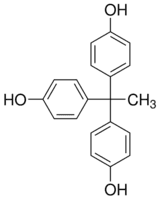
1,1,1-Tris(4-hydroxyphenyl)ethane
Polymer Science
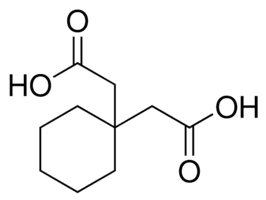
1,1-Cyclohexanediacetic acid
Polymer Science

1,12-Diisocyanatododecane
Polymer Science
▶ Explore more

Bis(cyclopentadienyl)cobalt(III) hexafluorophosphate
C10H10CoF6P
Catalysis & Inorganic
1-(4-Chlorophenyl)biguanide hydrochloride
ClC6H4NHC(NH)NHC(NH)NH2 · HCl
Chemical Synthesis
Bis(cyclopentadienyl)dimethylzirconium(IV)
Catalysis & Inorganic

1-(4-Chlorophenyl)ethanol
ClC6H4CH(CH3)OH
Chemical Synthesis