
Poly(methyl methacrylate)
Poly(methyl methacrylate) (PMMA), CAS 9011-14-7, with the formula [CH2C(CH3)(CO2CH3)]n and an average molecular weight of ~350,000 g/mol, is a versatile synthetic resin known for its transparency and rigidity. Commonly referred to as acrylic glass, it serves as a critical pigment-wetting binder in various coating formulations. Its excellent dielectric properties also lend themselves to applications in electronics.
- IUPAC
- PMMA,Poly(methacrylic acid methyl ester)
- Synonyms
- Poly(methyl methacrylate), PMMA, Poly(methacrylic acid methyl ester), PMMA-Based Resins
![Poly(methyl methacrylate) ([CH2C(CH3)(CO2CH3)]n) — chemical structure, CAS 9011-14-7; Materials Science, fine chemical supplied by Tech Serve Solutions](/_next/image?url=https%3A%2F%2Fpub-f4d920c906024441a773a96f7098e551.r2.dev%2Fimages%2Fproducts%2F9011-14-7.png&w=3840&q=75)
Coatings Industry
Serves as a pigment-wetting binder in the formulation of coatings. Its properties ensure good dispersion and adhesion of pigments within the coating matrix.
Dielectric Materials
Utilised for its electrical insulating properties. Its hydrophobic nature and stability make it suitable for applications requiring dielectric strength.
Organic Electronics
A key material in organic field-effect transistors (OFETs) and other micro/nanoelectronic devices due to its suitability for organic and printed electronics applications.
Polymer Science Research
A fundamental methacrylate polymer used in materials science and polymer science research, including studies on PMMA-based resins and gate dielectrics.
| Linear formula | [CH2C(CH3)(CO2CH3)]n |
|---|---|
| Autoignition temp | 580 °F |
| Application | Pigment-wetting binder for coatings. |
| Protective equipment | Eyeshields, Gloves, type N95 (US), type P1 (EN143) respirator filter |
|---|---|
| Flash point | >250 °C / >482 °F |
| Water hazard class (WGK, DE) | nwg |
Hazard information is provided for guidance. Always consult the product Safety Data Sheet (SDS), available on request, before handling.
| Mol Wt | average Mw ~350,000 by GPC |
|---|---|
| Transition Temp | Tg (DSC) 105 °C (midpoint) |
Documentation
Every batch ships with a Certificate of Analysis covering assay, identity and purity; the grade is confirmed against your enquiry. Safety Data Sheets and technical data sheets are available on request.
Supply & logistics
Samples for technical evaluation; bulk MOQ by grade and packaging. In-stock material ships in 7–10 working days, worldwide, with full export documentation.
What is Poly(methyl methacrylate) used for?
+
Poly(methyl methacrylate) is primarily used as a pigment-wetting binder for coatings and as a dielectric material in various electronic applications, including organic field-effect transistors.
What is the CAS number and chemical formula for Poly(methyl methacrylate)?
+
The CAS number for Poly(methyl methacrylate) is 9011-14-7, and its chemical formula is [CH2C(CH3)(CO2CH3)]n.
What grade and purity does Tech Serve Solutions supply for Poly(methyl methacrylate)?
+
Tech Serve Solutions supplies Poly(methyl methacrylate) with an average molecular weight of ~350,000 g/mol. TSS does not represent this product as USP, BP, or EP grade; it is supplied for research and technical use.
What are the safety and handling considerations for Poly(methyl methacrylate)?
+
When handling Poly(methyl methacrylate), it is recommended to use safety measures such as eyeshields and gloves. A type N95 (US) or type P1 (EN143) respirator filter should be used if necessary. The autoignition temperature is 580 °F (304 °C), and the flash point is greater than 482 °F (>250 °C).
How is Poly(methyl methacrylate) packed, shipped, and exported?
+
Tech Serve Solutions exports fine chemicals globally. Specific packing and shipping details for Poly(methyl methacrylate) can be provided upon request, adhering to all relevant regulations.
How can I request a quote or sample for Poly(methyl methacrylate)?
+
To request a quote or a sample of Poly(methyl methacrylate), please contact the Tech Serve Solutions sales team through our website or by phone.
▶ Related products
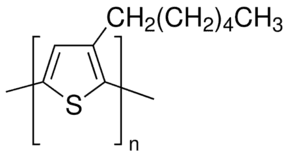
Poly(3-hexylthiophene-2,5-diyl)
Organic & Printed Electronics
![[6,6]-Phenyl C71 butyric acid methyl ester, mixture of isomers — chemical structure, CAS 609771-63-3; Organic & Printed Electronics, fine chemical supplied by Tech Serve Solutions](/_next/image?url=https%3A%2F%2Fpub-f4d920c906024441a773a96f7098e551.r2.dev%2Fimages%2Fproducts%2F609771-63-3.png&w=3840&q=75)
[6,6]-Phenyl C71 butyric acid methyl ester, mixture of isomers
Organic & Printed Electronics
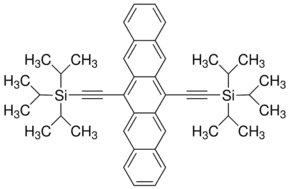
6,13-Bis(triisopropylsilylethynyl)pentacene
Organic & Printed Electronics
![[6,6]-Phenyl C61 butyric acid methyl ester — chemical structure, CAS 160848-22-6; Organic & Printed Electronics, fine chemical supplied by Tech Serve Solutions](/_next/image?url=https%3A%2F%2Fpub-f4d920c906024441a773a96f7098e551.r2.dev%2Fimages%2Fproducts%2F160848-22-6.png&w=3840&q=75)
[6,6]-Phenyl C61 butyric acid methyl ester
Organic & Printed Electronics
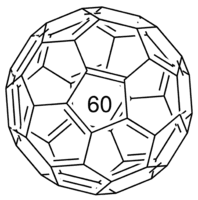
Fullerene-C60
C60
Organic & Printed Electronics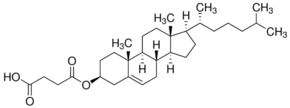
Cholesteryl hemisuccinate
C31H50O4
Organic & Printed Electronics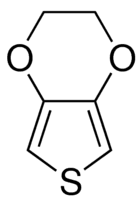
3,4-Ethylenedioxythiophene
Organic & Printed Electronics
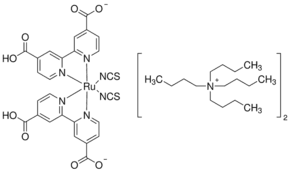
Di-tetrabutylammonium cis-bis(isothiocyanato)bis(2,2′-bipyridyl-4,4′-dicarboxylato)ruthenium(II)
Organic & Printed Electronics
▶ Explore more

Bis(cyclopentadienyl)cobalt(III) hexafluorophosphate
C10H10CoF6P
Catalysis & Inorganic
1-(4-Chlorophenyl)biguanide hydrochloride
ClC6H4NHC(NH)NHC(NH)NH2 · HCl
Chemical Synthesis
Bis(cyclopentadienyl)dimethylzirconium(IV)
Catalysis & Inorganic

1-(4-Chlorophenyl)ethanol
ClC6H4CH(CH3)OH
Chemical Synthesis