
Poly(ethylene glycol) monolaurate
Poly(ethylene glycol) monolaurate (CAS: 9004-81-3) is a versatile non-ionic surfactant and plasticizer. Its chemical structure, derived from polyethylene glycol and lauric acid, provides valuable emulsifying and solubilizing properties. With an average molecular weight of approximately 400, it finds utility in material science applications, particularly as a polymer additive and within polymer science formulations. Its characteristics make it a functional ingredient in various industrial processes.
- IUPAC
- Polyethylene glycol 400 monolaurate

Plasticizer
As a plasticizer, Poly(ethylene glycol) monolaurate enhances the flexibility and workability of polymers. It is incorporated into plastic formulations to reduce brittleness and improve material processing characteristics.
Surfactant
Its amphiphilic nature allows Poly(ethylene glycol) monolaurate to function effectively as a surfactant. It aids in reducing surface tension, facilitating emulsification and dispersion in various chemical systems.
Polymer Additive
This compound serves as a valuable additive in polymer science, modifying the physical properties of polymer matrices. Its inclusion can influence characteristics such as melt flow and surface properties.
| Boiling point | >260 °C(lit.) |
|---|---|
| Density | 0.985 g/mL at 25 °C |
| Refractive index | n20/D 1.455 |
| Solubility | toluene, ethanol and acetone: soluble (dispersible in water) |
| Application | Plasticizer, surfactant. |

Hazard statements
- H302Harmful if swallowed
- H315Causes skin irritation
- H319Causes serious eye irritation
- H335May cause respiratory irritation
Precautionary statements
- P261Avoid breathing dust, fume, gas or vapours
- P305IF IN EYES
| Protective equipment | Eyeshields, Faceshields, full-face respirator (US), Gloves, multi-purpose combination respirator cartridge (US), type ABEK (EN14387) respirator filter |
|---|---|
| Flash point | 113 °C / 235.4 °F |
| Water hazard class (WGK, DE) | 1 |
| Hazard codes (EU) | Xn |
| Risk statements (R) | 22-36/37/38 |
| Safety statements (S) | 36/37/39 |
Hazard information is provided for guidance. Always consult the product Safety Data Sheet (SDS), available on request, before handling.
| Mol Wt | average Mn ~400 |
|---|---|
| Hydroxyl Value | 140 mg KOH/g |
| Iodine Value | 10 |
Documentation
Every batch ships with a Certificate of Analysis covering assay, identity and purity; the grade is confirmed against your enquiry. Safety Data Sheets and technical data sheets are available on request.
Supply & logistics
Samples for technical evaluation; bulk MOQ by grade and packaging. In-stock material ships in 7–10 working days, worldwide, with full export documentation.
What is Poly(ethylene glycol) monolaurate used for?
+
Poly(ethylene glycol) monolaurate is primarily used as a plasticizer and a surfactant. It also functions as a polymer additive in materials science and polymer science applications.
What are the CAS number and formula for Poly(ethylene glycol) monolaurate?
+
The CAS number for Poly(ethylene glycol) monolaurate is 9004-81-3. The chemical formula is not explicitly provided in the data.
What grade and purity does Tech Serve Solutions supply?
+
Tech Serve Solutions supplies Poly(ethylene glycol) monolaurate with an average Mn of ~400. The specific grade is technical/research, and TSS does not represent it as USP, BP, or EP grade.
How should Poly(ethylene glycol) monolaurate be handled safely?
+
Handle with care, as it is a Warning substance classified with H302, H315, H319, and H335 hazards (Harmful if swallowed, causes skin irritation, causes serious eye irritation, may cause respiratory irritation). Use appropriate personal protective equipment, including eyeshields, gloves, and ensure adequate ventilation.
Is Poly(ethylene glycol) monolaurate a controlled substance?
+
The provided data does not indicate that Poly(ethylene glycol) monolaurate is a controlled substance.
How is Poly(ethylene glycol) monolaurate shipped and exported?
+
Tech Serve Solutions is a specialist global supplier and exporter of fine chemicals, including Poly(ethylene glycol) monolaurate, adhering to all relevant shipping and export regulations.
How can I request a quote or sample of Poly(ethylene glycol) monolaurate?
+
To request a quote or a sample, please contact our sales team through the website or direct enquiry channels provided by Tech Serve Solutions.
▶ Related products
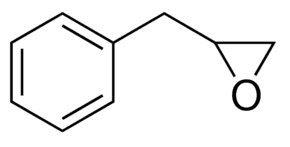
(2,3-Epoxypropyl)benzene
Polymer Science
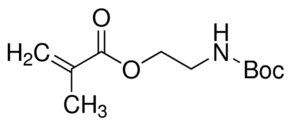
(2-Boc-amino)ethyl methacrylate
C11H19NO4
Polymer Science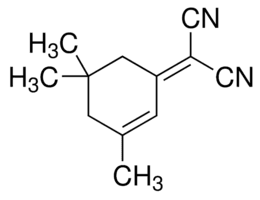
(3,5,5-Trimethylcyclohex-2-enylidene)malononitrile
Polymer Science
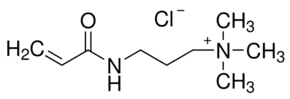
(3-Acrylamidopropyl)trimethylammonium chloride solution
Polymer Science
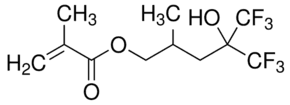
1,1,1-Trifluoro-2-(trifluoromethyl)-2-hydroxy-4-methyl-5-pentyl methacrylate
Polymer Science
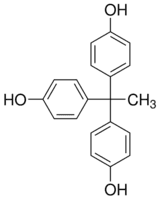
1,1,1-Tris(4-hydroxyphenyl)ethane
Polymer Science
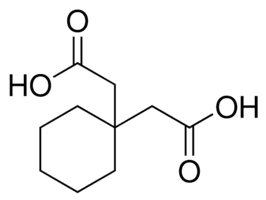
1,1-Cyclohexanediacetic acid
Polymer Science

1,12-Diisocyanatododecane
Polymer Science
▶ Explore more

Bis(cyclopentadienyl)cobalt(III) hexafluorophosphate
C10H10CoF6P
Catalysis & Inorganic
1-(4-Chlorophenyl)biguanide hydrochloride
ClC6H4NHC(NH)NHC(NH)NH2 · HCl
Chemical Synthesis
Bis(cyclopentadienyl)dimethylzirconium(IV)
Catalysis & Inorganic

1-(4-Chlorophenyl)ethanol
ClC6H4CH(CH3)OH
Chemical Synthesis