
Poly(ethylene glycol) dioleate
Poly(ethylene glycol) dioleate (CAS 9005-07-6) is a diester of oleic acid and polyethylene glycol, with an average molecular weight of approximately 914 g/mol. This compound is recognised for its utility as a plasticizer, contributing to the flexibility and workability of polymeric materials. Its properties make it suitable for various applications within polymer science and materials engineering, particularly where enhanced material characteristics are desired.
- IUPAC
- O,O′-Dioleoylpolyethylene glycol 400,Polyethylene glycol 400 dioleate
- Synonyms
- O,O′-Dioleoylpolyethylene glycol 400Polyethylene glycol 400 dioleate

Plasticiser for Polymers
Poly(ethylene glycol) dioleate functions as an effective plasticiser, improving the flexibility and processability of various polymer systems. It is incorporated to modify the physical properties of materials, making them less brittle and easier to handle during manufacturing.
Materials Science Intermediate
This chemical serves as a valuable component in materials science research and development. Its ester and polyether structure allows for potential use in the synthesis or modification of advanced materials with tailored properties.
Polymer Additive
As a polymer additive, Poly(ethylene glycol) dioleate can enhance specific characteristics of polymers, such as impact resistance and elongation. Its compatibility with certain polymer matrices makes it a useful additive for performance enhancement.
| Linear formula | CH3(CH2)7CH=CH(CH2)7CO(OCH2CH2)nO2C(CH2)7CH=CH(CH2)7CH3 |
|---|---|
| Boiling point | >260 °C(lit.) |
| Density | 0.945 g/mL at 25 °C(lit.) |
| Refractive index | n20/D 1.471(lit.) |
| Solubility | toluene, ethanol and acetone: soluble (dispersible in water) |
| Application | Plasticizer |
| Melting point | −15 °C(lit.) |
| Protective equipment | Eyeshields, Gloves |
|---|---|
| Flash point | >113 °C / >235.4 °F |
| Water hazard class (WGK, DE) | 1 |
Hazard information is provided for guidance. Always consult the product Safety Data Sheet (SDS), available on request, before handling.
| Mol Wt | average Mn ~914 |
|---|---|
| Hydroxyl Value | 10 mg KOH/g |
| Iodine Value | 75 |
Documentation
Every batch ships with a Certificate of Analysis covering assay, identity and purity; the grade is confirmed against your enquiry. Safety Data Sheets and technical data sheets are available on request.
Supply & logistics
Samples for technical evaluation; bulk MOQ by grade and packaging. In-stock material ships in 7–10 working days, worldwide, with full export documentation.
What is Poly(ethylene glycol) dioleate used for?
+
Poly(ethylene glycol) dioleate is primarily used as a plasticiser for polymers and in materials science applications. It functions as a polymer additive to modify material properties.
What is the CAS number and formula for Poly(ethylene glycol) dioleate?
+
The CAS number for Poly(ethylene glycol) dioleate is 9005-07-6. Its linear formula is CH3(CH2)7CH=CH(CH2)7CO(OCH2CH2)nO2C(CH2)7CH=CH(CH2)7CH3.
What grade and purity does Tech Serve Solutions supply?
+
Tech Serve Solutions supplies Poly(ethylene glycol) dioleate as a technical grade material. We do not represent this product as USP, BP, or EP grade. Please refer to the product's specification sheet for detailed purity information.
How should Poly(ethylene glycol) dioleate be handled safely?
+
When handling Poly(ethylene glycol) dioleate, it is advisable to wear eyeshields and gloves. Ensure adequate ventilation. Refer to the Safety Data Sheet (SDS) for comprehensive safety and handling guidelines. The flash point is over 113 °C (235.4 °F).
How is Poly(ethylene glycol) dioleate packed and exported?
+
Tech Serve Solutions packs and exports Poly(ethylene glycol) dioleate according to industry standards to ensure product integrity during transit. We cater to global shipping requirements for fine chemicals, laboratory reagents, and pharmaceutical intermediates.
How can I request a sample or quote for Poly(ethylene glycol) dioleate?
+
To request a sample or a quote for Poly(ethylene glycol) dioleate, please contact our sales team via the website or by phone. Our team will be happy to assist you with your requirements.
▶ Related products
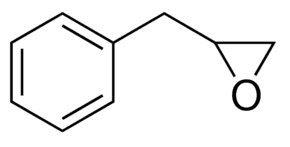
(2,3-Epoxypropyl)benzene
Polymer Science
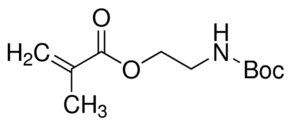
(2-Boc-amino)ethyl methacrylate
C11H19NO4
Polymer Science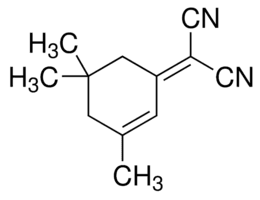
(3,5,5-Trimethylcyclohex-2-enylidene)malononitrile
Polymer Science
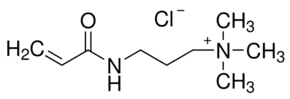
(3-Acrylamidopropyl)trimethylammonium chloride solution
Polymer Science
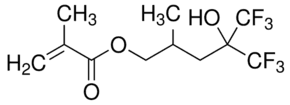
1,1,1-Trifluoro-2-(trifluoromethyl)-2-hydroxy-4-methyl-5-pentyl methacrylate
Polymer Science
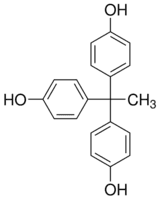
1,1,1-Tris(4-hydroxyphenyl)ethane
Polymer Science
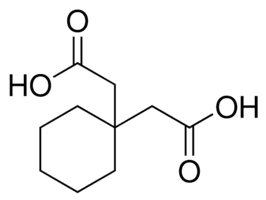
1,1-Cyclohexanediacetic acid
Polymer Science

1,12-Diisocyanatododecane
Polymer Science
▶ Explore more

Bis(cyclopentadienyl)cobalt(III) hexafluorophosphate
C10H10CoF6P
Catalysis & Inorganic
1-(4-Chlorophenyl)biguanide hydrochloride
ClC6H4NHC(NH)NHC(NH)NH2 · HCl
Chemical Synthesis
Bis(cyclopentadienyl)dimethylzirconium(IV)
Catalysis & Inorganic

1-(4-Chlorophenyl)ethanol
ClC6H4CH(CH3)OH
Chemical Synthesis