Poly(ethylene glycol) bis(amine)
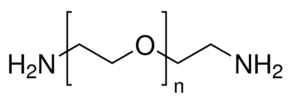
Poly(ethylene glycol) bis(amine) (CAS: 24991-53-5), with the linear formula H₂N(CH₂CH₂O)nCH₂CH₂NH₂, is a homobifunctional polyethylene glycol derivative. It possesses terminal primary amine groups, making it a versatile crosslinker and surface modification agent. This polymer finds significant utility in materials science and polymer chemistry for applications requiring the conjugation of biomolecules, the functionalisation of surfaces, and the synthesis of advanced polymeric materials.
- IUPAC
- O,O′-Bis(2-aminoethyl)polyethylene glycol,Diaminopolyethylene glycol,PEG-diamine,Polyoxyethylene bis(amine)
- Synonyms
- O,O′-Bis(2-aminoethyl)polyethylene glycolDiaminopolyethylene glycolPEG-diaminePolyoxyethylene bis(amine)
Bioconjugation and Surface Modification
Utilised to covalently link biomolecules, such as proteins and peptides, to surfaces or nanoparticles, enabling the development of diagnostic tools and targeted drug delivery systems.
Hydrogel Formation
Acts as a crosslinking agent in the formation of hydrogels for biomedical applications, including tissue engineering scaffolds and controlled release matrices.
Polymer Synthesis
Serves as a building block in the synthesis of novel polymers and dendrimers, leveraging its diamine functionality for controlled polymer architecture.
Materials Science Research
Employed in various materials science research endeavours, including the development of advanced coatings, adhesives, and functionalised polymer films.
| Linear formula | H2N(CH2CH2O)nCH2CH2NH2 |
|---|---|
| Storage temperature | 2-8°C |


Hazard statements
- H315Causes skin irritation
- H317May cause an allergic skin reaction
- H318Causes serious eye damage
- H334May cause allergy or asthma symptoms if inhaled
Precautionary statements
- P261Avoid breathing dust, fume, gas or vapours
- P280Wear protective gloves, clothing and eye/face protection
- P305IF IN EYES
- P342
| Water hazard class (WGK, DE) | 3 |
|---|---|
| Hazard codes (EU) | Xn |
| Risk statements (R) | 36/38-42/43 |
| Safety statements (S) | 22-26-36/37-45 |
Hazard information is provided for guidance. Always consult the product Safety Data Sheet (SDS), available on request, before handling.
| Mol Wt | average Mn 3400 |
|---|
Documentation
Every batch ships with a Certificate of Analysis covering assay, identity and purity; the grade is confirmed against your enquiry. Safety Data Sheets and technical data sheets are available on request.
Supply & logistics
Samples for technical evaluation; bulk MOQ by grade and packaging. In-stock material ships in 7–10 working days, worldwide, with full export documentation.
What is Poly(ethylene glycol) bis(amine) used for?
+
Poly(ethylene glycol) bis(amine) is used in bioconjugation, surface modification, hydrogel formation, and as a building block in polymer synthesis and materials science research.
What are the CAS number and formula for Poly(ethylene glycol) bis(amine)?
+
The CAS number is 24991-53-5, and the linear formula is H₂N(CH₂CH₂O)nCH₂CH₂NH₂.
What grade and purity does Tech Serve Solutions supply?
+
Tech Serve Solutions supplies Poly(ethylene glycol) bis(amine) with an average molecular weight (Mn) of 3400. As this is not specified as a pharmacopoeia grade, TSS does not represent it as USP, BP, or EP.
What are the safety considerations when handling Poly(ethylene glycol) bis(amine)?
+
Poly(ethylene glycol) bis(amine) is classified with GHS symbols GHS05 and GHS08, with a Danger signal word. It causes skin irritation (H315), may cause an allergic skin reaction (H317), causes serious eye damage (H318), and may cause allergy or asthma symptoms or breathing difficulties if inhaled (H334). Handle with appropriate personal protective equipment in a well-ventilated area, avoiding dust formation. In case of inhalation, seek medical attention (P342 + P311).
How is Poly(ethylene glycol) bis(amine) shipped and exported?
+
Tech Serve Solutions is a specialist global supplier and exporter of fine chemicals, including Poly(ethylene glycol) bis(amine), adhering to all relevant shipping and export regulations.
How can I request a quote or sample?
+
To request a quote or sample of Poly(ethylene glycol) bis(amine), please contact our sales team through the website or by phone.
▶ Related products
(2,3-Epoxypropyl)benzene
Polymer Science
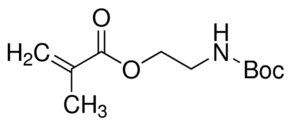
(2-Boc-amino)ethyl methacrylate
C11H19NO4
Polymer Science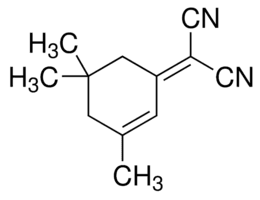
(3,5,5-Trimethylcyclohex-2-enylidene)malononitrile
Polymer Science
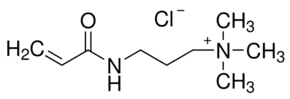
(3-Acrylamidopropyl)trimethylammonium chloride solution
Polymer Science
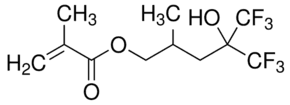
1,1,1-Trifluoro-2-(trifluoromethyl)-2-hydroxy-4-methyl-5-pentyl methacrylate
Polymer Science
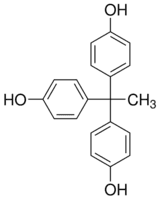
1,1,1-Tris(4-hydroxyphenyl)ethane
Polymer Science
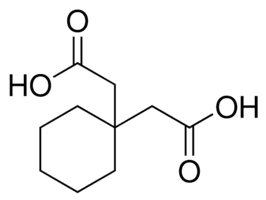
1,1-Cyclohexanediacetic acid
Polymer Science

1,12-Diisocyanatododecane
Polymer Science