
Poly(ethylene-co-1,2-butylene)diol
Poly(ethylene-co-1,2-butylene)diol (CAS 68954-10-9) is a diol polymer with an average molecular weight of approximately 2,500 g/mol. This hydrophobic polymer enhances the adhesion of polyolefins and modifies the surfaces of nonpolar polymers. It is also effective in improving the dispersibility of inorganic fillers within organic polymer matrices and imparts improved hydrophobic characteristics to urethanes and polyesters. Its good compatibility with polyolefins and rubbers makes it a versatile material in polymer science and materials applications.
- Synonyms
- Poly(ethylene-co-1,2-butylene)diolHO(-CH2CH2-)x[-CH2CH(C2H5)-]yOH
![Poly(ethylene-co-1,2-butylene)diol (HO(-CH2CH2-)x[-CH2CH(C2H5)-]yOH) — chemical structure, CAS 68954-10-9; Materials Science, fine chemical supplied by Tech Serve Solutions](/_next/image?url=https%3A%2F%2Fpub-f4d920c906024441a773a96f7098e551.r2.dev%2Fimages%2Fproducts%2F68954-10-9.png&w=3840&q=75)
Polyolefin Adhesion Promoter
This diol improves the adhesion properties of polyolefins, enhancing their performance in composite materials and blends. Its structure facilitates better bonding between otherwise incompatible polymer phases.
Surface Modifier for Nonpolar Polymers
It is used to modify the surfaces of nonpolar polymers, altering their surface energy and improving wettability or printability. This is crucial for applications requiring enhanced surface interactions.
Filler Dispersant
Poly(ethylene-co-1,2-butylene)diol aids in the uniform dispersion of inorganic fillers within organic polymer systems. This leads to improved mechanical properties and processing characteristics of filled polymers.
Hydrophobicity Enhancer
The polymer improves the hydrophobic properties of polyurethanes and polyesters, making them more resistant to moisture. This is beneficial in coatings, sealants, and films.
| Linear formula | HO(-CH2CH2-)x[-CH2CH(C2H5)-]yOH |
|---|---|
| Density | 0.89 g/mL at 25 °C |
| Viscosity | 10-16 poise(100 °C)(lit.) |
| Application | Improves adhesion of polyolefins, modifies surfaces of nonpolar polymers, and improves dispersibility of inorganic fillers in organic polymers. Improves hydrophobic properties of urethanes and polyesters.Good compatibility with polyolefins and rubbers. Has higher polyethylene content than cat. 468320 |
| Melting point | 60-70 °C |
| Protective equipment | Eyeshields, Gloves, type N95 (US), type P1 (EN143) respirator filter |
|---|---|
| Flash point | >113 °C / >235.4 °F |
| Water hazard class (WGK, DE) | 3 |
Hazard information is provided for guidance. Always consult the product Safety Data Sheet (SDS), available on request, before handling.
| Mol Wt | average Mn ~2,500 |
|---|---|
| Iodine Value | <5 g/cm3 |
Documentation
Every batch ships with a Certificate of Analysis covering assay, identity and purity; the grade is confirmed against your enquiry. Safety Data Sheets and technical data sheets are available on request.
Supply & logistics
Samples for technical evaluation; bulk MOQ by grade and packaging. In-stock material ships in 7–10 working days, worldwide, with full export documentation.
What is Poly(ethylene-co-1,2-butylene)diol used for?
+
Poly(ethylene-co-1,2-butylene)diol is used to improve the adhesion of polyolefins, modify surfaces of nonpolar polymers, enhance filler dispersibility in organic polymers, and improve the hydrophobic properties of urethanes and polyesters.
What is the CAS number and formula for Poly(ethylene-co-1,2-butylene)diol?
+
The CAS number is 68954-10-9 and the linear formula is HO(-CH2CH2-)x[-CH2CH(C2H5)-]yOH.
What grade and purity does Tech Serve Solutions supply?
+
Tech Serve Solutions supplies this product with an average Mn of ~2,500. We do not represent this product as USP, BP, or EP grade.
What are the primary safety hazards associated with this chemical?
+
This chemical has a flash point above 113°C and a melting point between 60-70°C. It is classified as WGK 3 in Germany. Users should wear appropriate personal protective equipment, including eyeshields, gloves, and a P1 respirator filter (EN143) or N95 (US).
How is Poly(ethylene-co-1,2-butylene)diol typically packaged and shipped?
+
This chemical is packaged according to industry standards for safe transport and is exported globally by Tech Serve Solutions.
How can I request a quote or sample for Poly(ethylene-co-1,2-butylene)diol?
+
To request a quote or sample, please contact our sales team through the Tech Serve Solutions website or by phone.
▶ Related products
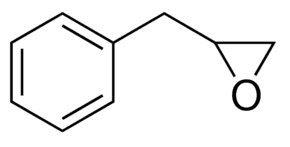
(2,3-Epoxypropyl)benzene
Polymer Science
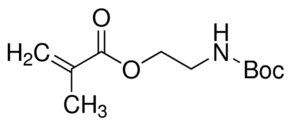
(2-Boc-amino)ethyl methacrylate
C11H19NO4
Polymer Science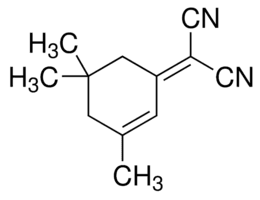
(3,5,5-Trimethylcyclohex-2-enylidene)malononitrile
Polymer Science
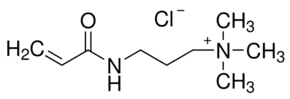
(3-Acrylamidopropyl)trimethylammonium chloride solution
Polymer Science
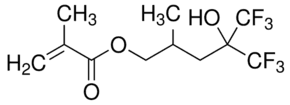
1,1,1-Trifluoro-2-(trifluoromethyl)-2-hydroxy-4-methyl-5-pentyl methacrylate
Polymer Science
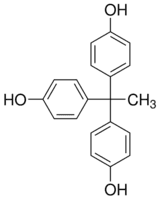
1,1,1-Tris(4-hydroxyphenyl)ethane
Polymer Science
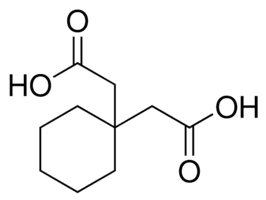
1,1-Cyclohexanediacetic acid
Polymer Science

1,12-Diisocyanatododecane
Polymer Science
▶ Explore more

Bis(cyclopentadienyl)cobalt(III) hexafluorophosphate
C10H10CoF6P
Catalysis & Inorganic
1-(4-Chlorophenyl)biguanide hydrochloride
ClC6H4NHC(NH)NHC(NH)NH2 · HCl
Chemical Synthesis
Bis(cyclopentadienyl)dimethylzirconium(IV)
Catalysis & Inorganic

1-(4-Chlorophenyl)ethanol
ClC6H4CH(CH3)OH
Chemical Synthesis