Poly(9-vinylcarbazole)
Poly(9-vinylcarbazole) (PVK), CAS 25067-59-8, is a functional polymer with an average molecular weight ranging from 25,000 to 50,000 g/mol. This material exhibits excellent hole-transporting properties and a high glass transition temperature (Tg) of 220 °C. PVK is extensively utilized in organic electronics, particularly in the development of organic light-emitting diodes (OLEDs) and organic photovoltaics (OPVs) as a hole transport or host material.
- IUPAC
- PVK
- Synonyms
- Poly(vinylcarbazole)PVK9-Vinylcarbazole polymer

Hole Transport Layers (HTLs) in Organic Electronics
Poly(9-vinylcarbazole) serves as a crucial component in the fabrication of organic electronic devices, including OLEDs and OPVs. Its efficient hole mobility facilitates charge transport, leading to improved device performance.
Host Materials for Emissive Layers
In OLED applications, PVK functions as a host material for phosphorescent emitters. It effectively facilitates energy transfer to dopant molecules, contributing to efficient light emission in various colours.
Photorefractive Materials
The unique electronic properties of PVK lend themselves to applications in photorefractive materials, which are used in optical data storage and holographic imaging technologies.
Analytical Standards
As a well-characterized polymer, PVK is also employed as an analytical standard in chromatography and material science research for calibration and comparative studies.
| Density | 1.2 g/mL at 25 °C(lit.) |
|---|---|
| Refractive index | n20/D 1.683 |
| Mol Wt | average Mn 25,000-50,000 |
|---|---|
| Transition Temp | Tg 220 °C |
| Orbital Energy | HOMO 5.8 eV LUMO 2.2 eV |
Documentation
Every batch ships with a Certificate of Analysis covering assay, identity and purity; the grade is confirmed against your enquiry. Safety Data Sheets and technical data sheets are available on request.
Supply & logistics
Samples for technical evaluation; bulk MOQ by grade and packaging. In-stock material ships in 7–10 working days, worldwide, with full export documentation.
What is Poly(9-vinylcarbazole) used for?
+
Poly(9-vinylcarbazole) is primarily used in organic electronics as a hole transport material and host material for emissive layers in OLEDs and OPVs, and also finds application in photorefractive materials and as an analytical standard.
What is the CAS number and formula for Poly(9-vinylcarbazole)?
+
The CAS number for Poly(9-vinylcarbazole) is 25067-59-8. The empirical formula is not provided, but it is a polymer of vinylcarbazole.
What grade and purity does Tech Serve Solutions supply for Poly(9-vinylcarbazole)?
+
Tech Serve Solutions supplies Poly(9-vinylcarbazole) with an average molecular weight of 25,000-50,000 g/mol. This is typically a research or technical grade material, and TSS does not represent it as USP, BP, or EP grade.
What are the safety considerations for handling Poly(9-vinylcarbazole)?
+
Poly(9-vinylcarbazole) is classified as hazardous. It is harmful if swallowed and causes skin and serious eye irritation. Appropriate personal protective equipment, including gloves and eye protection, should be worn during handling. Refer to the Safety Data Sheet for detailed information.
How is Poly(9-vinylcarbazole) packed, shipped, and exported?
+
Tech Serve Solutions ensures that Poly(9-vinylcarbazole) is carefully packed according to international shipping regulations for hazardous materials. We export globally to meet the needs of research institutions and industries worldwide.
How can I request a sample or quote for Poly(9-vinylcarbazole)?
+
To request a sample or a detailed quotation for Poly(9-vinylcarbazole), please contact our sales department through the website or via direct inquiry, providing your specific requirements.
▶ Related products
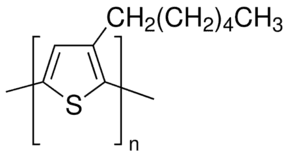
Poly(3-hexylthiophene-2,5-diyl)
Organic & Printed Electronics
![[6,6]-Phenyl C71 butyric acid methyl ester, mixture of isomers — chemical structure, CAS 609771-63-3; Organic & Printed Electronics, fine chemical supplied by Tech Serve Solutions](/_next/image?url=https%3A%2F%2Fpub-f4d920c906024441a773a96f7098e551.r2.dev%2Fimages%2Fproducts%2F609771-63-3.png&w=3840&q=75)
[6,6]-Phenyl C71 butyric acid methyl ester, mixture of isomers
Organic & Printed Electronics
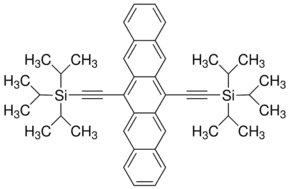
6,13-Bis(triisopropylsilylethynyl)pentacene
Organic & Printed Electronics
![[6,6]-Phenyl C61 butyric acid methyl ester — chemical structure, CAS 160848-22-6; Organic & Printed Electronics, fine chemical supplied by Tech Serve Solutions](/_next/image?url=https%3A%2F%2Fpub-f4d920c906024441a773a96f7098e551.r2.dev%2Fimages%2Fproducts%2F160848-22-6.png&w=3840&q=75)
[6,6]-Phenyl C61 butyric acid methyl ester
Organic & Printed Electronics
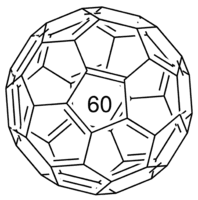
Fullerene-C60
C60
Organic & Printed Electronics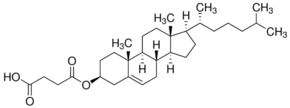
Cholesteryl hemisuccinate
C31H50O4
Organic & Printed Electronics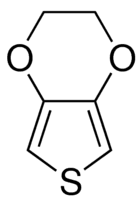
3,4-Ethylenedioxythiophene
Organic & Printed Electronics
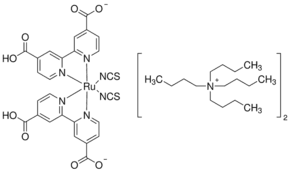
Di-tetrabutylammonium cis-bis(isothiocyanato)bis(2,2′-bipyridyl-4,4′-dicarboxylato)ruthenium(II)
Organic & Printed Electronics