
Poly(4-vinylpyridine hydrochloride)
Poly(4-vinylpyridine hydrochloride) (CAS: 29323-87-3) is a hydrophobic polymer supplied by Tech Serve Solutions. This material is typically 2% cross-linked with divinylbenzene, offering a resin loading of approximately 6.5 mmol/g. Available in a 100-200 mesh particle size, it is suitable for various applications within materials science and polymer research, serving as a valuable reagent for academic and industrial laboratories.
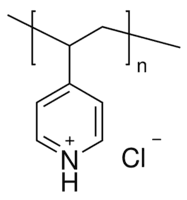
Ion Exchange Chromatography
As a hydrophobic ion-exchange resin, Poly(4-vinylpyridine hydrochloride) can be utilised in chromatographic separations, particularly for the purification of biomolecules or other compounds based on charge and hydrophobicity.
Catalysis Support
The polymer matrix can serve as a support for immobilising catalytic species, facilitating heterogeneous catalysis and enabling easier separation and recovery of the catalyst post-reaction.
Materials Science Research
Its well-defined cross-linking and functional groups make it a useful component in the development of novel materials, membranes, or functional coatings in advanced research settings.
Polymer Science Studies
Used in academic and industrial research to study polymer properties, swelling behaviour, or as a precursor in polymer synthesis and modification.
| Particle size | 100-200 mesh |
|---|
| Crosslinking | 2 % cross-linked with divinylbenzene |
|---|---|
| Extent Of Labeling | ~6.5 mmol/g Cl resin loading |
Documentation
Every batch ships with a Certificate of Analysis covering assay, identity and purity; the grade is confirmed against your enquiry. Safety Data Sheets and technical data sheets are available on request.
Supply & logistics
Samples for technical evaluation; bulk MOQ by grade and packaging. In-stock material ships in 7–10 working days, worldwide, with full export documentation.
What is Poly(4-vinylpyridine hydrochloride) used for?
+
Poly(4-vinylpyridine hydrochloride) is utilised in applications such as ion exchange chromatography, as a support for catalysis, and in general materials science and polymer research.
What is the CAS number and formula for Poly(4-vinylpyridine hydrochloride)?
+
The CAS number for Poly(4-vinylpyridine hydrochloride) is 29323-87-3. The empirical formula is not provided in the product data.
What grade and purity does Tech Serve Solutions supply?
+
Tech Serve Solutions supplies Poly(4-vinylpyridine hydrochloride) as a 2% cross-linked material with approximately 6.5 mmol/g Cl resin loading and a particle size of 100-200 mesh. TSS does not represent this product as USP/BP/EP grade.
What are the safety considerations for handling Poly(4-vinylpyridine hydrochloride)?
+
This product has a WGK Germany classification of 3, indicating it is hazardous to water. Appropriate safety precautions, including proper ventilation and personal protective equipment, should be observed during handling and storage.
How is Poly(4-vinylpyridine hydrochloride) packed, shipped, and exported?
+
Tech Serve Solutions reliably packs, ships, and exports fine chemicals globally, adhering to all relevant regulations to ensure safe and compliant delivery.
How can I request a sample or quote for Poly(4-vinylpyridine hydrochloride)?
+
To request a sample or quote for Poly(4-vinylpyridine hydrochloride), please contact our sales department through the website or by phone.
▶ Related products
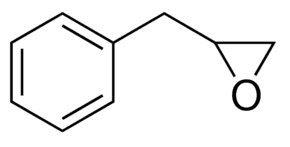
(2,3-Epoxypropyl)benzene
Polymer Science
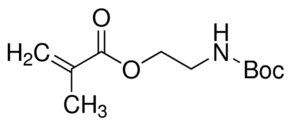
(2-Boc-amino)ethyl methacrylate
C11H19NO4
Polymer Science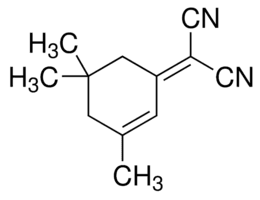
(3,5,5-Trimethylcyclohex-2-enylidene)malononitrile
Polymer Science
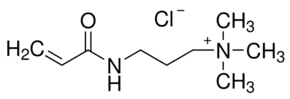
(3-Acrylamidopropyl)trimethylammonium chloride solution
Polymer Science
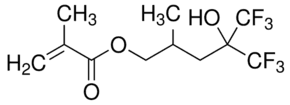
1,1,1-Trifluoro-2-(trifluoromethyl)-2-hydroxy-4-methyl-5-pentyl methacrylate
Polymer Science
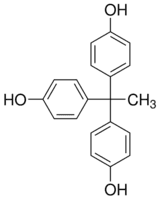
1,1,1-Tris(4-hydroxyphenyl)ethane
Polymer Science
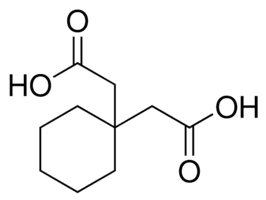
1,1-Cyclohexanediacetic acid
Polymer Science

1,12-Diisocyanatododecane
Polymer Science
▶ Explore more

Bis(cyclopentadienyl)cobalt(III) hexafluorophosphate
C10H10CoF6P
Catalysis & Inorganic
1-(4-Chlorophenyl)biguanide hydrochloride
ClC6H4NHC(NH)NHC(NH)NH2 · HCl
Chemical Synthesis
Bis(cyclopentadienyl)dimethylzirconium(IV)
Catalysis & Inorganic

1-(4-Chlorophenyl)ethanol
ClC6H4CH(CH3)OH
Chemical Synthesis