
Poly(4-vinylphenol)
Poly(4-vinylphenol) (CAS: 24979-70-2), with the linear formula [CH2CH(C6H4OH)]n, is a polymer known for its phenolic functionality. It serves as a versatile material in various scientific and industrial applications. Notably, it acts as a substitute for Novolac resins in photoresists, enhances adhesion in hot melt adhesives, and improves heat resistance. Its derivatives also find use as antioxidants and flame retardants.
- IUPAC
- PVP,Poly(4-hydroxystyrene)
- Synonyms
- Poly(4-hydroxystyrene)
![Poly(4-vinylphenol) ([CH2CH(C6H4OH)]n) — chemical structure, CAS 24979-70-2; Materials Science, fine chemical supplied by Tech Serve Solutions](/_next/image?url=https%3A%2F%2Fpub-f4d920c906024441a773a96f7098e551.r2.dev%2Fimages%2Fproducts%2F24979-70-2.png&w=3840&q=75)
Photoresist Technology
Poly(4-vinylphenol) is employed as a substitute for Novolac resins in the formulation of photoresists, crucial for photolithography processes in microelectronics manufacturing.
Adhesives and Coatings
It functions as an adhesion promoter and enhances the thermal resistance of hot melt adhesives. Additionally, it is used for surface treatments in metal finishing applications.
Polymer Modification
This polymer can be incorporated into polymer blends to modify surface characteristics and improve the impact resistance of the resulting materials.
Functional Derivatives
Derivatives of Poly(4-vinylphenol) are utilised in the plastics industry for their properties as antioxidants and flame retardants, contributing to material stability and safety.
Organic Electronics
Poly(4-vinylphenol) is relevant in the field of organic electronics, particularly as a dielectric material for flexible organic transistors (OFETs) and in printed electronics applications.
| Linear formula | [CH2CH(C6H4OH)]n |
|---|---|
| Density | 1.16 g/mL at 25 °C(lit.) |
| Refractive index | n20/D 1.6 |
| Solubility | alcohols, ethers, ketones and esters: solublearomatics, petroleum ethers and chlorinated hydrocarbons: insoluble |
| Impurities tested | ≤0.2 wt. % Monomer |
| Application | Substitute for Novolac resins in photoresists, adhesion promoter and improves heat resistance in hot melt adhesives and surface treatment in metal finishing. Derivatives used as antioxidants and flame retardants in plastics. Component of polymer blends to modify surface characteristics and improve impact resistance. |
| Melting point | 360 °C (dec.) |
| Protective equipment | Eyeshields, Gloves, type N95 (US), type P1 (EN143) respirator filter |
|---|---|
| Water hazard class (WGK, DE) | 3 |
Hazard information is provided for guidance. Always consult the product Safety Data Sheet (SDS), available on request, before handling.
| Mol Wt | average Mw ~25,000 |
|---|---|
| Transition Temp | Tg 130-185 °C |
| Intrinsic Viscosity | (α=0.50, k=9.71 × 10⁻⁴) |
Documentation
Every batch ships with a Certificate of Analysis covering assay, identity and purity; the grade is confirmed against your enquiry. Safety Data Sheets and technical data sheets are available on request.
Supply & logistics
Samples for technical evaluation; bulk MOQ by grade and packaging. In-stock material ships in 7–10 working days, worldwide, with full export documentation.
What is Poly(4-vinylphenol) used for?
+
Poly(4-vinylphenol) is used as a substitute for Novolac resins in photoresists, as an adhesion promoter and heat resistance enhancer in hot melt adhesives, and for surface treatment in metal finishing. Its derivatives are used as antioxidants and flame retardants in plastics, and it's a component in polymer blends to modify surface characteristics and improve impact resistance. It is also used in bioelectronics and as a dielectric material for organic transistors (OFETs).
What is the CAS number and formula for Poly(4-vinylphenol)?
+
The CAS number is 24979-70-2, and the linear formula is [CH2CH(C6H4OH)]n.
What grade and purity does Tech Serve Solutions supply?
+
Tech Serve Solutions supplies Poly(4-vinylphenol) with an average molecular weight (Mw) of approximately 25,000 and a monomer impurity of no more than 0.2 wt. %. TSS does not represent this product as USP, BP, or EP grade.
What are the safety and handling precautions for Poly(4-vinylphenol)?
+
When handling Poly(4-vinylphenol), it is essential to wear eyeshields and gloves. A type N95 (US) or type P1 (EN143) respirator filter is recommended. The material has a flash point of 360 °C (dec.). Ensure adequate ventilation and avoid contact with skin and eyes.
How is Poly(4-vinylphenol) packed, shipped, and exported?
+
Tech Serve Solutions can cater to various packing requirements for domestic and international shipments and exports, ensuring safe and compliant transport of chemicals globally.
How can I request a sample or a quote for Poly(4-vinylphenol)?
+
To request a sample or a quote, please contact the Tech Serve Solutions sales team through our website or by phone. Provide the product name, CAS number, and desired quantity.
▶ Related products
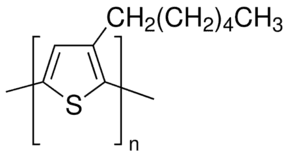
Poly(3-hexylthiophene-2,5-diyl)
Organic & Printed Electronics
![[6,6]-Phenyl C71 butyric acid methyl ester, mixture of isomers — chemical structure, CAS 609771-63-3; Organic & Printed Electronics, fine chemical supplied by Tech Serve Solutions](/_next/image?url=https%3A%2F%2Fpub-f4d920c906024441a773a96f7098e551.r2.dev%2Fimages%2Fproducts%2F609771-63-3.png&w=3840&q=75)
[6,6]-Phenyl C71 butyric acid methyl ester, mixture of isomers
Organic & Printed Electronics
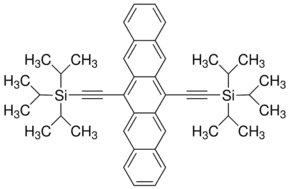
6,13-Bis(triisopropylsilylethynyl)pentacene
Organic & Printed Electronics
![[6,6]-Phenyl C61 butyric acid methyl ester — chemical structure, CAS 160848-22-6; Organic & Printed Electronics, fine chemical supplied by Tech Serve Solutions](/_next/image?url=https%3A%2F%2Fpub-f4d920c906024441a773a96f7098e551.r2.dev%2Fimages%2Fproducts%2F160848-22-6.png&w=3840&q=75)
[6,6]-Phenyl C61 butyric acid methyl ester
Organic & Printed Electronics
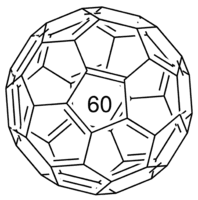
Fullerene-C60
C60
Organic & Printed Electronics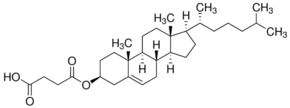
Cholesteryl hemisuccinate
C31H50O4
Organic & Printed Electronics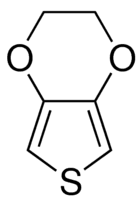
3,4-Ethylenedioxythiophene
Organic & Printed Electronics
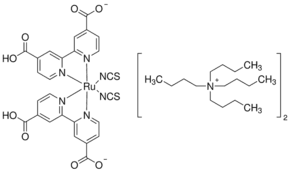
Di-tetrabutylammonium cis-bis(isothiocyanato)bis(2,2′-bipyridyl-4,4′-dicarboxylato)ruthenium(II)
Organic & Printed Electronics
▶ Explore more

Bis(cyclopentadienyl)cobalt(III) hexafluorophosphate
C10H10CoF6P
Catalysis & Inorganic
1-(4-Chlorophenyl)biguanide hydrochloride
ClC6H4NHC(NH)NHC(NH)NH2 · HCl
Chemical Synthesis
Bis(cyclopentadienyl)dimethylzirconium(IV)
Catalysis & Inorganic

1-(4-Chlorophenyl)ethanol
ClC6H4CH(CH3)OH
Chemical Synthesis