
Poly(3-dodecylthiophene-2,5-diyl)
Poly(3-dodecylthiophene-2,5-diyl) (CAS: 137191-59-4) is a π-conjugated polymer with an average molecular weight of approximately 60,000 g/mol. Supplied at 99.995% trace metals basis, this p-type semiconductor exhibits fluorescence and is soluble in chloroform. Its key applications lie in the development of organic electronics, including organic field-effect transistors (OFETs), and as a component in light-emitting diodes (LEDs) and solar cells, owing to its conductive properties.
- IUPAC
- P3DDT

Organic Field-Effect Transistors (OFETs)
This polymer functions as a p-type semiconductor, demonstrating mobilities between 1E-4 and 1E-1 cm²/V·s, making it suitable for active layers in OFETs for various electronic applications.
Organic Photovoltaics (OPVs)
It has been utilized in OPV devices, such as ITO/PEDOT:PSS/P3DDT/PC61BM/LiF/Al configurations, achieving notable short-circuit current densities and open-circuit voltages.
Light-Emitting Devices
As a Light-Emitting Polymer (LEP), it can be employed in the fabrication of organic light-emitting diodes (OLEDs) and polymer light-emitting diodes (PLEDs) due to its emissive properties.
Sensors
Its conductive nature allows for its use in chemical and optical sensors, where changes in the polymer's environment can be detected through alterations in its electrical or optical characteristics.
| Assay | 99.995% trace metals basis |
|---|---|
| Solubility | chloroform: soluble |
| Application | Conducting polymer.Rechargeable battery electrodes, electrochromic devices, chemical and optical sensors, light-emitting diodes, microelectrical amplifiers, field-effect transistors and non-linear optical materials. |
| Protective equipment | Eyeshields, Gloves, type N95 (US), type P1 (EN143) respirator filter |
|---|---|
| Water hazard class (WGK, DE) | 3 |
Hazard information is provided for guidance. Always consult the product Safety Data Sheet (SDS), available on request, before handling.
| Mol Wt | average Mw ~60,000 |
|---|---|
| Transition Temp | Tm (DSC) 165.6 °C (peak) |
| Fluorescence | λex 442 nm; λem 568 nm in chloroform |
| Semiconductor Properties | P-type (mobility=1E-4-1E-1 cm2/V·s) |
| Orbital Energy | HOMO 5.29 eV LUMO 3.55 eV |
| Opv Device Performance | ITO/PEDOT:PSS/P3DDT/PC61BM (1:3)/LiF/Al1• Short-circuit current density (Jsc): 2.9 mA/cm2• Open-circuit voltage (Voc): 0.6 V• Fill Factor (FF): 0.38• Power Conversion Efficiency (PCE): 0.65 % |
Documentation
Every batch ships with a Certificate of Analysis covering assay, identity and purity; the grade is confirmed against your enquiry. Safety Data Sheets and technical data sheets are available on request.
Supply & logistics
Samples for technical evaluation; bulk MOQ by grade and packaging. In-stock material ships in 7–10 working days, worldwide, with full export documentation.
What is Poly(3-dodecylthiophene-2,5-diyl) used for?
+
Poly(3-dodecylthiophene-2,5-diyl) is primarily used in advanced materials science and electronics. It serves as a p-type semiconductor in organic field-effect transistors (OFETs), a component in organic photovoltaics (OPVs), and can be used in light-emitting diodes (LEDs) and sensors.
What is the CAS number and formula for Poly(3-dodecylthiophene-2,5-diyl)?
+
The CAS number for Poly(3-dodecylthiophene-2,5-diyl) is 137191-59-4. The exact chemical formula is not provided as it is a polymer, but it is a repeating unit of 3-dodecylthiophene.
What grade and purity does Tech Serve Solutions supply?
+
Tech Serve Solutions supplies Poly(3-dodecylthiophene-2,5-diyl) at 99.995% trace metals basis, with an average molecular weight of approximately 60,000 g/mol. We do not represent this product as USP, BP, or EP grade.
What are the safety and handling considerations for this chemical?
+
When handling Poly(3-dodecylthiophene-2,5-diyl), it is essential to use appropriate personal protective equipment, including eyeshields and gloves. A type N95 (US) or type P1 (EN143) respirator filter is recommended. The chemical has a WGK Germany rating of 3, indicating it is hazardous to water.
How is Poly(3-dodecylthiophene-2,5-diyl) packed, shipped, and exported?
+
Tech Serve Solutions, as a specialist global supplier and exporter since 1998, ensures that Poly(3-dodecylthiophene-2,5-diyl) is packed, shipped, and exported in accordance with all relevant international regulations for chemical products.
How can I request a sample or quote for this product?
+
To request a sample or a quote for Poly(3-dodecylthiophene-2,5-diyl), please contact our sales department through the channels provided on the Tech Serve Solutions website.
▶ Related products
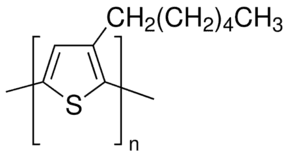
Poly(3-hexylthiophene-2,5-diyl)
Organic & Printed Electronics
![[6,6]-Phenyl C71 butyric acid methyl ester, mixture of isomers — chemical structure, CAS 609771-63-3; Organic & Printed Electronics, fine chemical supplied by Tech Serve Solutions](/_next/image?url=https%3A%2F%2Fpub-f4d920c906024441a773a96f7098e551.r2.dev%2Fimages%2Fproducts%2F609771-63-3.png&w=3840&q=75)
[6,6]-Phenyl C71 butyric acid methyl ester, mixture of isomers
Organic & Printed Electronics
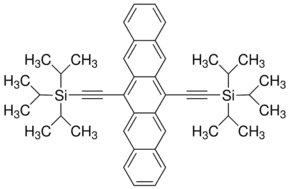
6,13-Bis(triisopropylsilylethynyl)pentacene
Organic & Printed Electronics
![[6,6]-Phenyl C61 butyric acid methyl ester — chemical structure, CAS 160848-22-6; Organic & Printed Electronics, fine chemical supplied by Tech Serve Solutions](/_next/image?url=https%3A%2F%2Fpub-f4d920c906024441a773a96f7098e551.r2.dev%2Fimages%2Fproducts%2F160848-22-6.png&w=3840&q=75)
[6,6]-Phenyl C61 butyric acid methyl ester
Organic & Printed Electronics
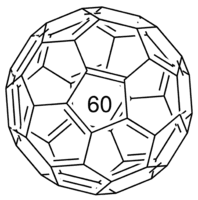
Fullerene-C60
C60
Organic & Printed Electronics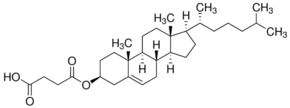
Cholesteryl hemisuccinate
C31H50O4
Organic & Printed Electronics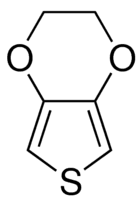
3,4-Ethylenedioxythiophene
Organic & Printed Electronics
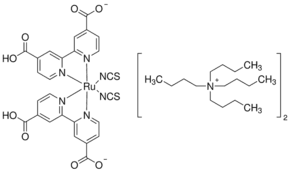
Di-tetrabutylammonium cis-bis(isothiocyanato)bis(2,2′-bipyridyl-4,4′-dicarboxylato)ruthenium(II)
Organic & Printed Electronics
▶ Explore more

Bis(cyclopentadienyl)cobalt(III) hexafluorophosphate
C10H10CoF6P
Catalysis & Inorganic
1-(4-Chlorophenyl)biguanide hydrochloride
ClC6H4NHC(NH)NHC(NH)NH2 · HCl
Chemical Synthesis
Bis(cyclopentadienyl)dimethylzirconium(IV)
Catalysis & Inorganic

1-(4-Chlorophenyl)ethanol
ClC6H4CH(CH3)OH
Chemical Synthesis