
Poly(3,3′,4,4′-biphenyltetracarboxylic dianhydride-co-1,4-phenylenediamine), amic acid solution
Poly(3,3′,4,4′-biphenyltetracarboxylic dianhydride-co-1,4-phenylenediamine), amic acid solution (CAS: 29319-22-0) is a polymer solution vital for advanced electronics. Supplied as a 9.5-11.5 wt.% solution in 1-methyl-2-pyrrolidinone, it is processed via filtration and exhibits excellent thermal stability with a glass transition temperature exceeding 400°C. This material is primarily utilised in semiconductor fabrication and as a dielectric component in thin films and interconnect systems.
- Synonyms
- 4′-biphenyltetracarboxylic dianhydride-co-1,4-phenylenediamine), amic acid solution
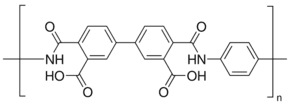
Semiconductor Materials
Serves as a critical semi-conductor material in advanced microelectronic fabrication processes. Its properties are leveraged for creating essential components within integrated circuits.
Dielectric Thin Films
Used as a dielectric component in the creation of thin films. These films are essential for insulation and performance enhancement in electronic devices.
High-Density Interconnects
A key material for high-density interconnect (HDI) systems, enabling more complex and efficient circuitry in modern electronic packaging.
Multichip Modules (MCMs)
Employed in the construction of multichip modules, facilitating the integration of multiple semiconductor devices into a single package.
| Boiling point | 202 °C |
|---|---|
| Density | 1.07 g/mL at 25 °C |
| Refractive index | n20/D 1.497 |
| Concentration | 9.5-11.5 wt. % in 1-methyl-2-pyrrolidinone |
| Viscosity | 25-30 poise(25 °C, Brookfield)(lit.) |
| Storage temperature | −20°C |
| Impurities tested | ≤10 ppm total metals |
| Application | Semi-conductor material. Dielectric component in thin films, high density interconnect systems and multichip modules. |


Hazard statements
- H315Causes skin irritation
- H319Causes serious eye irritation
- H335May cause respiratory irritation
- H360D
Precautionary statements
- P201Obtain special instructions before use
- P261Avoid breathing dust, fume, gas or vapours
- P305IF IN EYES
- P308IF exposed or concerned
| Flash point | 91 °C / 195.8 °F |
|---|---|
| Transport (UN / ADR) | NA 1993 / PGIII |
| Water hazard class (WGK, DE) | 3 |
| Hazard codes (EU) | T |
| Risk statements (R) | 61-36/37/38 |
| Safety statements (S) | 53-26-45 |
| Anion traces | chloride (Cl-): ≤5 ppm |
Hazard information is provided for guidance. Always consult the product Safety Data Sheet (SDS), available on request, before handling.
| Transition Temp | Tg >400 °C (imide) |
|---|---|
| Purified By | filtration through 1.0μm medium |
Documentation
Every batch ships with a Certificate of Analysis covering assay, identity and purity; the grade is confirmed against your enquiry. Safety Data Sheets and technical data sheets are available on request.
Supply & logistics
Samples for technical evaluation; bulk MOQ by grade and packaging. In-stock material ships in 7–10 working days, worldwide, with full export documentation.
What is Poly(3,3′,4,4′-biphenyltetracarboxylic dianhydride-co-1,4-phenylenediamine), amic acid solution used for?
+
This amic acid solution is primarily used as a semi-conductor material and a dielectric component in thin films, high-density interconnect systems, and multichip modules within the electronics industry.
What are the CAS number and chemical formula for this product?
+
The CAS number for Poly(3,3′,4,4′-biphenyltetracarboxylic dianhydride-co-1,4-phenylenediamine), amic acid solution is 29319-22-0. The formula is provided as '4'.
What grade and purity does Tech Serve Solutions supply?
+
Tech Serve Solutions supplies this product as a 9.5-11.5 wt.% solution in 1-methyl-2-pyrrolidinone, purified by filtration through 1.0µm medium. TSS does not represent this product as USP, BP, EP or other pharmacopoeia grades.
What are the safety considerations for handling this chemical?
+
This product carries a Danger signal word and is labelled with GHS07 and GHS08 symbols. It has hazard statements including H315 (Causes skin irritation), H319 (Causes serious eye irritation), H335 (May cause respiratory irritation), and H360D (May damage the unborn child). Handle with appropriate personal protective equipment in a well-ventilated area. Refer to the Safety Data Sheet for full details.
Is this chemical shipped or exported internationally?
+
Yes, Tech Serve Solutions specialises in global supply and export of fine chemicals, pharmaceutical intermediates, and laboratory reagents, including this product.
How can I request a sample or a quote?
+
Please contact our sales team directly through the Tech Serve Solutions website or via our established communication channels to request a sample or a quotation for this product.
▶ Related products
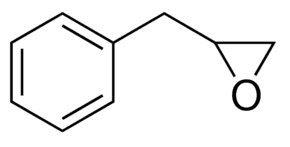
(2,3-Epoxypropyl)benzene
Polymer Science
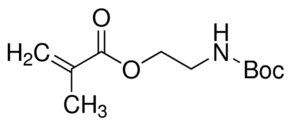
(2-Boc-amino)ethyl methacrylate
C11H19NO4
Polymer Science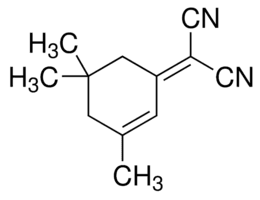
(3,5,5-Trimethylcyclohex-2-enylidene)malononitrile
Polymer Science
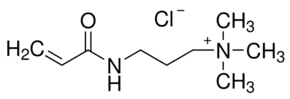
(3-Acrylamidopropyl)trimethylammonium chloride solution
Polymer Science
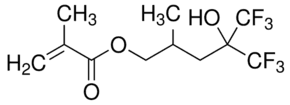
1,1,1-Trifluoro-2-(trifluoromethyl)-2-hydroxy-4-methyl-5-pentyl methacrylate
Polymer Science
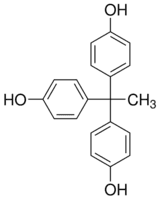
1,1,1-Tris(4-hydroxyphenyl)ethane
Polymer Science
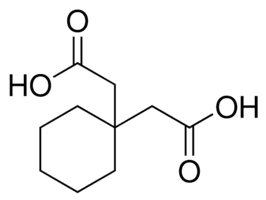
1,1-Cyclohexanediacetic acid
Polymer Science

1,12-Diisocyanatododecane
Polymer Science
▶ Explore more

Bis(cyclopentadienyl)cobalt(III) hexafluorophosphate
C10H10CoF6P
Catalysis & Inorganic
1-(4-Chlorophenyl)biguanide hydrochloride
ClC6H4NHC(NH)NHC(NH)NH2 · HCl
Chemical Synthesis
Bis(cyclopentadienyl)dimethylzirconium(IV)
Catalysis & Inorganic

1-(4-Chlorophenyl)ethanol
ClC6H4CH(CH3)OH
Chemical Synthesis