
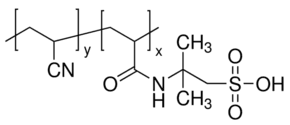
Poly(2-acrylamido-2-methyl-1-propanesulfonic acid-co-acrylonitrile)
Poly(2-acrylamido-2-methyl-1-propanesulfonic acid-co-acrylonitrile) (CAS: 54640-82-3) is an anionic copolymer synthesised from 2-acrylamido-2-methyl-1-propanesulfonic acid and acrylonitrile. It is a hydrophilic polymer with a high proportion of acrylonitrile (~95 wt. %). This anionic polyelectrolyte finds applications in materials science and is particularly useful in micro/nanoelectronics and for the creation of self-assembled monolayers.
Materials Science Research
This copolymer serves as a valuable building block in materials science, enabling the development of novel functional materials with tailored properties for advanced applications.
Micro/Nanoelectronics
The unique properties of this anionic polyelectrolyte make it suitable for use in microelectronics and nanoelectronics fabrication processes, potentially as a component in lithography or surface modification.
Self-Assembled Monolayers (SAMs)
It is employed in the formation of self-assembled monolayers on various surfaces, facilitating precise control over surface chemistry and functionality in research settings.
Hydrophilic Polymer Applications
As a hydrophilic polymer, it can be utilised in applications requiring water solubility or interaction, contributing to the development of specialised aqueous systems.
| Composition | acrylonitrile, ~95 wt. % |
|---|
Documentation
Every batch ships with a Certificate of Analysis covering assay, identity and purity; the grade is confirmed against your enquiry. Safety Data Sheets and technical data sheets are available on request.
Supply & logistics
Samples for technical evaluation; bulk MOQ by grade and packaging. In-stock material ships in 7–10 working days, worldwide, with full export documentation.
What is Poly(2-acrylamido-2-methyl-1-propanesulfonic acid-co-acrylonitrile) used for?
+
This anionic copolymer is used in materials science research, micro/nanoelectronics, and for the formation of self-assembled monolayers. Its hydrophilic nature also lends itself to other aqueous-based applications.
What is the CAS number and formula for this compound?
+
The CAS number is 54640-82-3. The chemical formula is not provided in the product data.
What grade and purity does Tech Serve Solutions supply?
+
Tech Serve Solutions supplies this product with a composition of acrylonitrile at approximately 95 wt. %. This is a research-grade material and is not represented as USP, BP, or EP.
What are the safety and handling recommendations for this product?
+
This product has a WGK (German water hazard class) of 3, indicating it is hazardous to water. Consult the Safety Data Sheet (SDS) for comprehensive handling, storage, and disposal information.
How is this product packed, shipped, and exported?
+
Tech Serve Solutions handles packing, shipping, and exporting of chemicals with adherence to international regulations. Specific details for this product are available upon request.
How can I request a sample or quote for this chemical?
+
To request a sample or a quote, please contact our sales team through the website or by phone, providing the product name and CAS number (54640-82-3).
▶ Related products
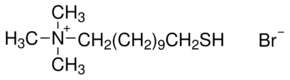
(11-Mercaptoundecyl)-N,N,N-trimethylammonium bromide
Micro / NanoElectronics

(11-Mercaptoundecyl)hexa(ethylene glycol)
C23H48O7S
Micro / NanoElectronics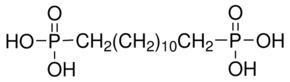
(12-Phosphonododecyl)phosphonic acid
C12H28O6P2
Micro / NanoElectronics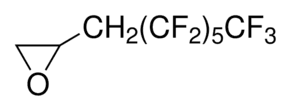
(2,2,3,3,4,4,5,5,6,6,7,7,7-Tridecafluoroheptyl)oxirane
C9H5F13O
Micro / NanoElectronics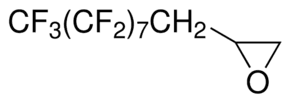
(2,2,3,3,4,4,5,5,6,6,7,7,8,8,9,9,9-Heptadecafluorononyl)oxirane
C11H5F17O
Micro / NanoElectronics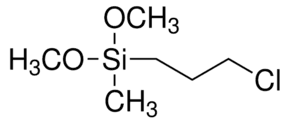
(3-Chloropropyl)dimethoxymethylsilane
Cl(CH2)3Si(OCH3)2CH3
Micro / NanoElectronics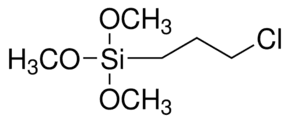
(3-Chloropropyl)trimethoxysilane
Cl(CH2)3Si(OCH3)3
Micro / NanoElectronics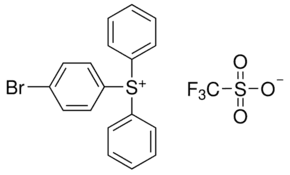
(4-Bromophenyl)diphenylsulfonium triflate
C19H14BrF3O3S2
Micro / NanoElectronics▶ Explore more

Bis(cyclopentadienyl)cobalt(III) hexafluorophosphate
C10H10CoF6P
Catalysis & Inorganic
1-(4-Chlorophenyl)biguanide hydrochloride
ClC6H4NHC(NH)NHC(NH)NH2 · HCl
Chemical Synthesis
Bis(cyclopentadienyl)dimethylzirconium(IV)
Catalysis & Inorganic

1-(4-Chlorophenyl)ethanol
ClC6H4CH(CH3)OH
Chemical Synthesis