Poly(1-vinylnaphthalene)
Poly(1-vinylnaphthalene), CAS: 29793-40-6, with the linear formula [CH2CH(C10H7)]n, is a polymer with an average molecular weight of approximately 30,000. This naphthalene-based material exhibits a glass transition temperature (Tm) of 148 °C as determined by DSC. It is recognised for its utility in optical applications, specifically for measuring the optical Kerr effect, and functions as an efficient hole transporter in electronic devices.
![Poly(1-vinylnaphthalene) ([CH2CH(C10H7)]n) — chemical structure, CAS 29793-40-6; Materials Science, fine chemical supplied by Tech Serve Solutions](/_next/image?url=https%3A%2F%2Fpub-f4d920c906024441a773a96f7098e551.r2.dev%2Fimages%2Fproducts%2F29793-40-6.png&w=3840&q=75)
Optical Kerr Effect Measurement
Poly(1-vinylnaphthalene) is employed in scientific research for the precise measurement of the optical Kerr effect, a non-linear optical phenomenon. Its specific properties make it a suitable medium for such investigations.
Hole Transport Material
This polymer serves as an efficient hole transporter, a critical function in organic electronic devices. Its molecular structure facilitates the movement of positive charge carriers.
Materials Science Research
As a polymer with distinct optical and electronic properties, Poly(1-vinylnaphthalene) is utilised in materials science for the development and study of novel organic materials. It finds applications in areas such as Non-Linear Optical (NLO) materials and photonic applications.
| Linear formula | [CH2CH(C10H7)]n |
|---|---|
| Form | powder |
| Application | Used to measure optical Kerr effect. Also used as an efficient hole transporter.1 |
| Protective equipment | Eyeshields, Gloves, type N95 (US), type P1 (EN143) respirator filter |
|---|---|
| Water hazard class (WGK, DE) | 3 |
Hazard information is provided for guidance. Always consult the product Safety Data Sheet (SDS), available on request, before handling.
| Mol Wt | average Mw ~30,000 |
|---|---|
| Transition Temp | Tm 148 °C (DSC) |
Documentation
Every batch ships with a Certificate of Analysis covering assay, identity and purity; the grade is confirmed against your enquiry. Safety Data Sheets and technical data sheets are available on request.
Supply & logistics
Samples for technical evaluation; bulk MOQ by grade and packaging. In-stock material ships in 7–10 working days, worldwide, with full export documentation.
What is Poly(1-vinylnaphthalene) used for?
+
Poly(1-vinylnaphthalene) is used to measure the optical Kerr effect and as an efficient hole transporter. It is also found in applications related to Non-Linear Optical (NLO) materials, OLED and PLED materials, and photonic and optical materials.
What are the CAS number and formula for Poly(1-vinylnaphthalene)?
+
The CAS number for Poly(1-vinylnaphthalene) is 29793-40-6, and its linear formula is [CH2CH(C10H7)]n.
What grade and purity does Tech Serve Solutions supply?
+
Tech Serve Solutions supplies Poly(1-vinylnaphthalene) with an average Mw of ~30,000. It is supplied as a technical/research grade material and TSS does not represent it as USP/BP/EP or for any pharmaceutical or food applications.
How should Poly(1-vinylnaphthalene) be handled?
+
When handling Poly(1-vinylnaphthalene), it is recommended to use eyeshields and gloves. A type N95 (US) or type P1 (EN143) respirator filter should be used to protect against airborne particles. The material is classified under WGK 2 in Germany, indicating environmental hazard.
How is Poly(1-vinylnaphthalene) shipped and exported?
+
Tech Serve Solutions is a specialist global supplier and exporter of fine chemicals and reagents, including Poly(1-vinylnaphthalene). We adhere to all relevant shipping and export regulations for chemical products.
How can I request a sample or quote for Poly(1-vinylnaphthalene)?
+
To request a sample or a quote for Poly(1-vinylnaphthalene), please contact our sales team through the provided channels on the Tech Serve Solutions website.
▶ Related products
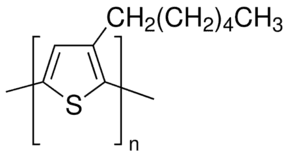
Poly(3-hexylthiophene-2,5-diyl)
Organic & Printed Electronics
![[6,6]-Phenyl C71 butyric acid methyl ester, mixture of isomers — chemical structure, CAS 609771-63-3; Organic & Printed Electronics, fine chemical supplied by Tech Serve Solutions](/_next/image?url=https%3A%2F%2Fpub-f4d920c906024441a773a96f7098e551.r2.dev%2Fimages%2Fproducts%2F609771-63-3.png&w=3840&q=75)
[6,6]-Phenyl C71 butyric acid methyl ester, mixture of isomers
Organic & Printed Electronics
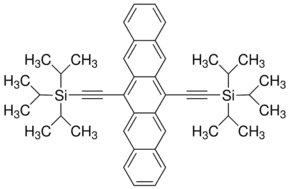
6,13-Bis(triisopropylsilylethynyl)pentacene
Organic & Printed Electronics
![[6,6]-Phenyl C61 butyric acid methyl ester — chemical structure, CAS 160848-22-6; Organic & Printed Electronics, fine chemical supplied by Tech Serve Solutions](/_next/image?url=https%3A%2F%2Fpub-f4d920c906024441a773a96f7098e551.r2.dev%2Fimages%2Fproducts%2F160848-22-6.png&w=3840&q=75)
[6,6]-Phenyl C61 butyric acid methyl ester
Organic & Printed Electronics
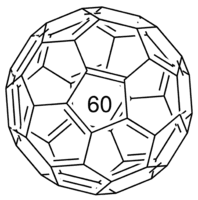
Fullerene-C60
C60
Organic & Printed Electronics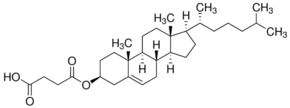
Cholesteryl hemisuccinate
C31H50O4
Organic & Printed Electronics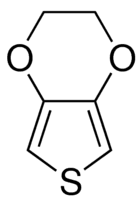
3,4-Ethylenedioxythiophene
Organic & Printed Electronics
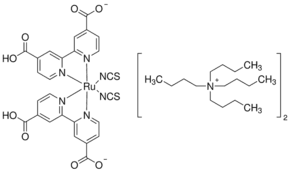
Di-tetrabutylammonium cis-bis(isothiocyanato)bis(2,2′-bipyridyl-4,4′-dicarboxylato)ruthenium(II)
Organic & Printed Electronics