Poly(1,3-propylene succinate)
Poly(1,3-propylene succinate) (CAS: 28158-21-6) is a hydrophobic polymer synthesized from propylene succinate. Its chemical structure is represented by the linear formula [O(CH2)3O2CCH2CH2CO]n. This polyester exhibits a melting point (Tm) of 51°C, determined by DSC. It finds utility in materials science and polymer research, serving as a building block for advanced polymeric materials.
- Synonyms
- [O(CH2)3O2CCH2CH2CO]n
![Poly(1,3-propylene succinate) ([O(CH2)3O2CCH2CH2CO]n) — chemical structure, CAS 28158-21-6; Materials Science, fine chemical supplied by Tech Serve Solutions](/_next/image?url=https%3A%2F%2Fpub-f4d920c906024441a773a96f7098e551.r2.dev%2Fimages%2Fproducts%2F28158-21-6.png&w=3840&q=75)
Materials Science Research
Poly(1,3-propylene succinate) can be employed in the development of novel polymeric materials with specific hydrophobic characteristics. Its properties make it a candidate for applications requiring tailored surface or bulk material attributes.
Polymer Science Studies
This polymer serves as a subject for investigation in polymer science, allowing researchers to study its thermal properties, degradation pathways, and potential for modification. Its ester linkages offer sites for chemical reactivity.
Specialty Polymer Synthesis
It acts as a monomer or co-monomer in the synthesis of specialty polymers. Researchers can incorporate this unit to influence the overall hydrophobicity, flexibility, or other physical properties of the resulting macromolecules.
| Linear formula | [O(CH2)3O2CCH2CH2CO]n |
|---|
| Protective equipment | Eyeshields, Gloves, type N95 (US), type P1 (EN143) respirator filter |
|---|---|
| Water hazard class (WGK, DE) | 3 |
Hazard information is provided for guidance. Always consult the product Safety Data Sheet (SDS), available on request, before handling.
| Transition Temp | Tm 51 °C (DSC at peak) |
|---|
Documentation
Every batch ships with a Certificate of Analysis covering assay, identity and purity; the grade is confirmed against your enquiry. Safety Data Sheets and technical data sheets are available on request.
Supply & logistics
Samples for technical evaluation; bulk MOQ by grade and packaging. In-stock material ships in 7–10 working days, worldwide, with full export documentation.
What is Poly(1,3-propylene succinate) used for?
+
Poly(1,3-propylene succinate) is used in materials science research and polymer science studies, potentially serving as a component in specialty polymer synthesis.
What are the CAS number and formula for Poly(1,3-propylene succinate)?
+
The CAS number for Poly(1,3-propylene succinate) is 28158-21-6. The linear formula is [O(CH2)3O2CCH2CH2CO]n.
What grade and purity does Tech Serve Solutions supply?
+
Tech Serve Solutions supplies Poly(1,3-propylene succinate) typically as a research or technical grade material. We do not represent this product as USP, BP, EP, or other pharmacopoeia grades unless explicitly stated otherwise in the product specifications.
How should Poly(1,3-propylene succinate) be handled?
+
Handling requires appropriate personal protective equipment, including eyeshields and gloves. For airborne particles, use a type N95 (US) or type P1 (EN143) respirator filter. Observe standard laboratory safety protocols.
Is Poly(1,3-propylene succinate) a hazardous substance?
+
According to GHS classifications, this substance has a WGK Germany rating of 3, indicating it is considered hazardous to water. Handle with care to prevent environmental release.
How is Poly(1,3-propylene succinate) shipped and exported?
+
Tech Serve Solutions is an experienced global supplier and exporter of fine chemicals. We adhere to all relevant regulations for the safe and compliant packaging, shipping, and export of our products worldwide.
How can I request a sample or quote for Poly(1,3-propylene succinate)?
+
To request a sample or a quotation, please contact our sales team through the website or by phone. Provide the product name (Poly(1,3-propylene succinate)) and CAS number (28158-21-6) for prompt service.
▶ Related products
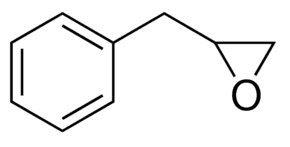
(2,3-Epoxypropyl)benzene
Polymer Science
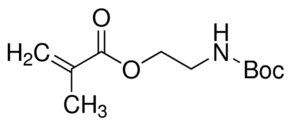
(2-Boc-amino)ethyl methacrylate
C11H19NO4
Polymer Science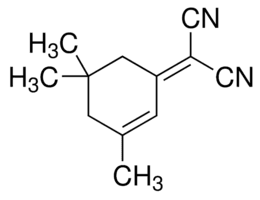
(3,5,5-Trimethylcyclohex-2-enylidene)malononitrile
Polymer Science
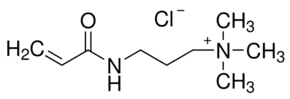
(3-Acrylamidopropyl)trimethylammonium chloride solution
Polymer Science
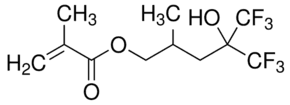
1,1,1-Trifluoro-2-(trifluoromethyl)-2-hydroxy-4-methyl-5-pentyl methacrylate
Polymer Science
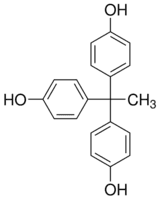
1,1,1-Tris(4-hydroxyphenyl)ethane
Polymer Science
1,1-Cyclohexanediacetic acid
Polymer Science

1,12-Diisocyanatododecane
Polymer Science