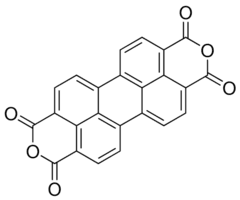
Perylene-3,4,9,10-tetracarboxylic dianhydride
Perylene-3,4,9,10-tetracarboxylic dianhydride (CAS: 128-69-8), with the molecular formula C24H8O6 and a molecular weight of 392.32 g/mol, is an n-channel organic semiconductor. It is recognised for its acceptor material properties, making it valuable in organic electronics. Key applications include organic field-effect transistors (OFETs) and organic photovoltaics (OPVs), contributing to advancements in printable electronics and optoelectronic devices.
- IUPAC
- PTCDA,Pigment Red 224
- Synonyms
- 10-tetracarboxylic dianhydride128-69-8C24H8O6PTCDAPigment Red 224
Organic Field-Effect Transistors (OFETs)
As an n-channel organic semiconductor, PTCDA is employed in the development of OFETs. Its electronic properties facilitate charge transport, crucial for the functionality of these advanced electronic components.
Organic Photovoltaics (OPVs)
PTCDA serves as an acceptor material in OPVs. It plays a role in the photoactive layer, contributing to the efficiency of solar energy conversion in organic photovoltaic devices.
Materials Science Research
This compound is utilised in materials science for its unique optical and electronic characteristics. It is a subject of research for novel photoluminescent and photonic applications.
Acceptor Materials
PTCDA functions as an electron acceptor in various organic electronic systems. Its specific orbital energies (HOMO 6.8 eV, LUMO 4.7 eV) make it suitable for certain charge transfer applications.
| Molecular weight | 392.32 |
|---|---|
| Empirical formula | C24H8O6 |
| Assay | 97% |
| Application | An n-channel organic semiconductor.1 |
| Melting point | >300 °C(lit.) |

Hazard statements
- H315Causes skin irritation
- H319Causes serious eye irritation
- H335May cause respiratory irritation
Precautionary statements
- P261Avoid breathing dust, fume, gas or vapours
- P305IF IN EYES
| Protective equipment | dust mask type N95 (US), Eyeshields, Gloves |
|---|---|
| Water hazard class (WGK, DE) | 3 |
| Hazard codes (EU) | Xi |
| Risk statements (R) | 36/37/38 |
| Safety statements (S) | 26-36 |
Hazard information is provided for guidance. Always consult the product Safety Data Sheet (SDS), available on request, before handling.
| Semiconductor Properties | N-type (mobility=10−4 cm2/V·s) |
|---|---|
| Orbital Energy | HOMO 6.8 eV LUMO 4.7 eV |
| Opv Device Performance | ITO/CuPc/PTCDA/In2• Short-circuit current density (Jsc): 2 mA/cm2• Open-circuit voltage (Voc): 0.55 V• Fill Factor (FF): 0.35• Power Conversion Efficiency (PCE): 1.8 % |
Documentation
Every batch ships with a Certificate of Analysis covering assay, identity and purity; the grade is confirmed against your enquiry. Safety Data Sheets and technical data sheets are available on request.
Supply & logistics
Samples for technical evaluation; bulk MOQ by grade and packaging. In-stock material ships in 7–10 working days, worldwide, with full export documentation.
What is Perylene-3,4,9,10-tetracarboxylic dianhydride used for?
+
Perylene-3,4,9,10-tetracarboxylic dianhydride (PTCDA) is primarily used as an n-channel organic semiconductor in applications such as organic field-effect transistors (OFETs) and organic photovoltaics (OPVs). It is also recognised as an acceptor material in materials science and for developing photoluminescent and photonic devices.
What are the CAS number and chemical formula for Perylene-3,4,9,10-tetracarboxylic dianhydride?
+
The CAS number for Perylene-3,4,9,10-tetracarboxylic dianhydride is 128-69-8, and its empirical formula (Hill notation) is C24H8O6.
What grade and purity does Tech Serve Solutions supply?
+
Tech Serve Solutions supplies Perylene-3,4,9,10-tetracarboxylic dianhydride with an assay of 97%. This is typically considered a research or technical grade; TSS does not represent this product as USP, BP, or EP grade.
How should Perylene-3,4,9,10-tetracarboxylic dianhydride be handled safely?
+
Perylene-3,4,9,10-tetracarboxylic dianhydride is classified with a Warning signal word. It may cause skin irritation (H315), serious eye irritation (H319), and respiratory irritation (H335). When handling, use a dust mask type N95 (US), wear eyeshields, and gloves. Ensure good ventilation and avoid breathing dust.
How is this chemical packed, shipped, and exported?
+
Tech Serve Solutions offers Perylene-3,4,9,10-tetracarboxylic dianhydride for global export. Packaging is designed to maintain product integrity during transit, adhering to international shipping regulations for chemical substances.
How can I request a quote or sample?
+
To request a quote or a sample of Perylene-3,4,9,10-tetracarboxylic dianhydride, please visit the Tech Serve Solutions website or contact our sales department directly with your inquiry.
▶ Related products
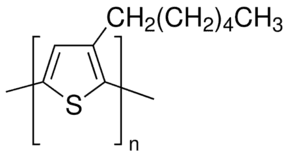
Poly(3-hexylthiophene-2,5-diyl)
Organic & Printed Electronics
![[6,6]-Phenyl C71 butyric acid methyl ester, mixture of isomers — chemical structure, CAS 609771-63-3; Organic & Printed Electronics, fine chemical supplied by Tech Serve Solutions](/_next/image?url=https%3A%2F%2Fpub-f4d920c906024441a773a96f7098e551.r2.dev%2Fimages%2Fproducts%2F609771-63-3.png&w=3840&q=75)
[6,6]-Phenyl C71 butyric acid methyl ester, mixture of isomers
Organic & Printed Electronics
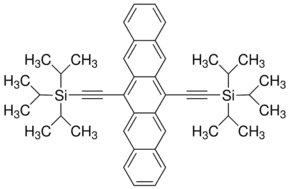
6,13-Bis(triisopropylsilylethynyl)pentacene
Organic & Printed Electronics
![[6,6]-Phenyl C61 butyric acid methyl ester — chemical structure, CAS 160848-22-6; Organic & Printed Electronics, fine chemical supplied by Tech Serve Solutions](/_next/image?url=https%3A%2F%2Fpub-f4d920c906024441a773a96f7098e551.r2.dev%2Fimages%2Fproducts%2F160848-22-6.png&w=3840&q=75)
[6,6]-Phenyl C61 butyric acid methyl ester
Organic & Printed Electronics
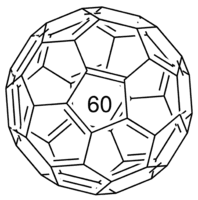
Fullerene-C60
C60
Organic & Printed Electronics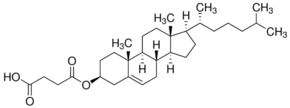
Cholesteryl hemisuccinate
C31H50O4
Organic & Printed Electronics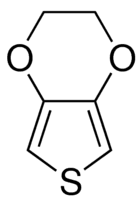
3,4-Ethylenedioxythiophene
Organic & Printed Electronics
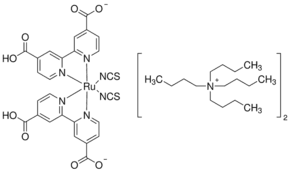
Di-tetrabutylammonium cis-bis(isothiocyanato)bis(2,2′-bipyridyl-4,4′-dicarboxylato)ruthenium(II)
Organic & Printed Electronics