
PCPDTBT
Poly[2,6-(4,4-bis-(2-ethylhexyl)-4H-cyclopenta [2,1-b;3,4-b′]dithiophene)-alt-4,7(2,1,3-benzothiadiazole)] (CAS: 920515-34-0) is a high-performance p-type organic semiconductor. With an average molecular weight of 7,000-20,000 and a maximum absorption wavelength (λmax) of 700 nm, it is primarily utilised in the development of advanced organic electronic devices. Its favourable semiconductor properties make it a key material in applications such as organic field-effect transistors and organic photovoltaics.
- IUPAC
- Poly[2,6-(4,4-bis-(2-ethylhexyl)-4H-cyclopenta [2,1-b;3,4-b′]dithiophene)-alt-4,7(2,1,3-benzothiadiazole)]

Organic Field-Effect Transistors (OFETs)
PCPDTBT serves as an active layer material in OFETs. Its p-type semiconducting nature and measured charge carrier mobility of 2x10⁻² cm²/V·s enable efficient charge transport, crucial for transistor functionality in flexible electronics and sensors.
Organic Photovoltaics (OPVs)
This polymer is a well-established donor material for bulk heterojunction OPVs. Devices utilising PCPDTBT:PC61BM blends have demonstrated notable performance, including short-circuit current densities of 16.2 mA/cm² and power conversion efficiencies up to 5.2%.
Organic and Printed Electronics
As a soluble polymer semiconductor, PCPDTBT is suitable for solution-processing techniques common in organic and printed electronics manufacturing. This facilitates the development of large-area, low-cost electronic components.
Materials Science Research
Its defined optoelectronic properties and structure make PCPDTBT a valuable material for fundamental research in polymer science, organic electronics, and the development of novel semiconductor materials.
| Linear formula | (C31H38N2S3)n |
|---|---|
| Loss on drying | 0.5 wt. % TGA, 350 °C |
| Melting point | >400 °C |
| Mol Wt | average Mw 7,000-20,000 |
|---|---|
| Absorption | λmax 700 nm |
| Semiconductor Properties | P-type (mobility=2×10⁻² cm2/V·s) |
| Orbital Energy | HOMO 5.3 eV LUMO 3.55 eV |
| Opv Device Performance | ITO/PEDOT:PSS/PCPDTBT:PC61BM/Al1• Short-circuit current density (Jsc): 16.2 mA/cm2• Open-circuit voltage (Voc): 0.62 V• Fill Factor (FF): 0.55• Power Conversion Efficiency (PCE): 5.2 % |
Documentation
Every batch ships with a Certificate of Analysis covering assay, identity and purity; the grade is confirmed against your enquiry. Safety Data Sheets and technical data sheets are available on request.
Supply & logistics
Samples for technical evaluation; bulk MOQ by grade and packaging. In-stock material ships in 7–10 working days, worldwide, with full export documentation.
What is PCPDTBT used for?
+
PCPDTBT is primarily used as a p-type organic semiconductor in applications such as organic field-effect transistors (OFETs) and organic photovoltaics (OPVs), and for research in organic electronics.
What is the CAS number and chemical formula for PCPDTBT?
+
The CAS number is 920515-34-0. The linear formula is (C₃₁H₃₈N₂S₃)n.
What grade and purity does Tech Serve Solutions supply?
+
Tech Serve Solutions supplies PCPDTBT typically as a research or technical grade material. We do not represent this product as USP, BP, or EP grade.
How should PCPDTBT be handled and stored?
+
PCPDTBT has a high melting point (>400 °C) and exhibits moderate thermal stability, losing 0.5 wt.% at 350 °C via TGA. Handle in accordance with standard laboratory safety protocols. Consult the Safety Data Sheet for specific hazard information. Storage conditions should be appropriate for sensitive organic materials.
Is PCPDTBT a controlled substance?
+
The provided data does not indicate that PCPDTBT is a controlled substance.
How is PCPDTBT packed, shipped, and exported?
+
Tech Serve Solutions packs and ships PCPDTBT in accordance with international regulations for chemical transport. As a global supplier, we facilitate expert export services.
How can I request a sample or quote for PCPDTBT?
+
To request a sample or a quotation for PCPDTBT, please contact the Tech Serve Solutions sales team through our website or by phone.
▶ Related products
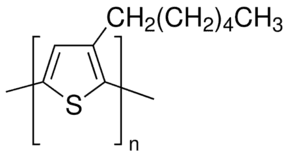
Poly(3-hexylthiophene-2,5-diyl)
Organic & Printed Electronics
![[6,6]-Phenyl C71 butyric acid methyl ester, mixture of isomers — chemical structure, CAS 609771-63-3; Organic & Printed Electronics, fine chemical supplied by Tech Serve Solutions](/_next/image?url=https%3A%2F%2Fpub-f4d920c906024441a773a96f7098e551.r2.dev%2Fimages%2Fproducts%2F609771-63-3.png&w=3840&q=75)
[6,6]-Phenyl C71 butyric acid methyl ester, mixture of isomers
Organic & Printed Electronics
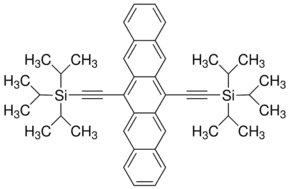
6,13-Bis(triisopropylsilylethynyl)pentacene
Organic & Printed Electronics
![[6,6]-Phenyl C61 butyric acid methyl ester — chemical structure, CAS 160848-22-6; Organic & Printed Electronics, fine chemical supplied by Tech Serve Solutions](/_next/image?url=https%3A%2F%2Fpub-f4d920c906024441a773a96f7098e551.r2.dev%2Fimages%2Fproducts%2F160848-22-6.png&w=3840&q=75)
[6,6]-Phenyl C61 butyric acid methyl ester
Organic & Printed Electronics
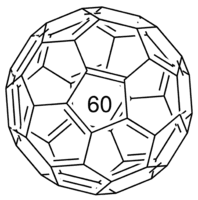
Fullerene-C60
C60
Organic & Printed Electronics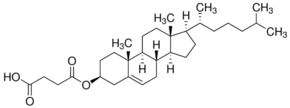
Cholesteryl hemisuccinate
C31H50O4
Organic & Printed Electronics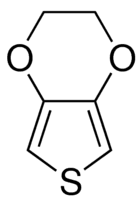
3,4-Ethylenedioxythiophene
Organic & Printed Electronics
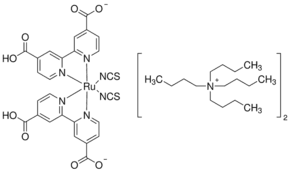
Di-tetrabutylammonium cis-bis(isothiocyanato)bis(2,2′-bipyridyl-4,4′-dicarboxylato)ruthenium(II)
Organic & Printed Electronics
▶ Explore more

Bis(cyclopentadienyl)cobalt(III) hexafluorophosphate
C10H10CoF6P
Catalysis & Inorganic
1-(4-Chlorophenyl)biguanide hydrochloride
ClC6H4NHC(NH)NHC(NH)NH2 · HCl
Chemical Synthesis
Bis(cyclopentadienyl)dimethylzirconium(IV)
Catalysis & Inorganic

1-(4-Chlorophenyl)ethanol
ClC6H4CH(CH3)OH
Chemical Synthesis