
Oxalyl chloride
Oxalyl chloride (CAS 79-37-8), with the linear formula ClCOCOCl and a molecular weight of 126.93 g/mol, is a highly reactive acyl halide. It is a colourless fuming liquid employed as a versatile reagent in organic synthesis, particularly for activating carboxylic acids, facilitating chlorination reactions, and acting as a carbonyl synthon in various carbonylation processes. Its high reactivity necessitates careful handling.
- IUPAC
- Ethanedioyl dichloride
- Synonyms
- Ethanedioyl dichloride

Carboxylic Acid Activation
Oxalyl chloride is widely used to convert carboxylic acids into more reactive intermediates, such as acyl chlorides. This activation is crucial for subsequent reactions like esterification and amidation, especially in the synthesis of complex organic molecules including N-heterocyclic ynones and ynediones.
Chlorination and Halogenation
It serves as an effective chlorinating agent in organic synthesis. Its reactivity allows for the introduction of chlorine atoms into organic substrates, a fundamental transformation in the preparation of various chemical intermediates.
Carbonyl Synthon
As a carbonyl synthon, oxalyl chloride participates in carbonylation reactions, enabling the formation of new carbon-carbon bonds and the construction of various cyclic structures such as cyclopentenones.
Cycloaddition Reactions
Oxalyl chloride is employed in cycloaddition reactions, notably in three-component [3+2] cycloadditions. These reactions are valuable for generating heterocyclic compounds and complex ring systems.
| Molecular weight | 126.93 |
|---|---|
| Linear formula | ClCOCOCl |
| Assay | ≥96.0% (AT) |
| Grade | reagent grade |
| Boiling point | 62-65 °C(lit.) |
| Density | 1.5 g/mL at 20 °C(lit.) |
| Refractive index | n20/D 1.429(lit.) |
| Melting point | −10-−8 °C(lit.) |
| Concentration | 2.0 M in methylene chloride |
| Vapour pressure | 150 mmHg (20 °C) |
| Vapour density | 4.4 (vs air) |
| Application | Reactant involved in:• Synthesis of N-heterocyclic ynones and ynediones, used to activate carboxylic acids1• Chlorination and halogenation2• Three-component [3+2] cycloadditions3• Reactions with organostannanes4• Synthesis of cyclopentenones5• Carbonylations, used as a carbonyl synthon6 |


Hazard statements
- H314Causes severe skin burns and eye damage
- H331Toxic if inhaled
- H335May cause respiratory irritation
Precautionary statements
- P261Avoid breathing dust, fume, gas or vapours
- P280Wear protective gloves, clothing and eye/face protection
- P305IF IN EYES
- P310Immediately call a POISON CENTER or doctor
| Protective equipment | Faceshields, full-face respirator (US), Gloves, Goggles, multi-purpose combination respirator cartridge (US) |
|---|---|
| Transport (UN / ADR) | UN 2922 6.1(8) / PGI |
| Water hazard class (WGK, DE) | 2 |
| Hazard codes (EU) | T |
| Risk statements (R) | 14-23-29-34-37 |
| Safety statements (S) | 26-36/37/39-45 |
| Supplemental hazards | Contact with water liberates toxic gas., Reacts violently with water. |
Hazard information is provided for guidance. Always consult the product Safety Data Sheet (SDS), available on request, before handling.
Documentation
Every batch ships with a Certificate of Analysis covering assay, identity and purity; the grade is confirmed against your enquiry. Safety Data Sheets and technical data sheets are available on request.
Supply & logistics
Samples for technical evaluation; bulk MOQ by grade and packaging. In-stock material ships in 7–10 working days, worldwide, with full export documentation.
What is Oxalyl Chloride (CAS 79-37-8) used for?
+
Oxalyl chloride (CAS 79-37-8) is used as a reagent in organic synthesis for activating carboxylic acids, chlorination, halogenation, carbonylation reactions, and in cycloaddition processes.
What are the CAS number and formula for Oxalyl Chloride?
+
The CAS number for Oxalyl Chloride is 79-37-8, and its linear formula is ClCOCOCl.
What grade and purity does Tech Serve Solutions supply for Oxalyl Chloride?
+
Tech Serve Solutions supplies Oxalyl Chloride in reagent grade with an assay of ≥96.0% (AT). We do not represent this product as USP, BP, or EP grade.
How should Oxalyl Chloride be handled safely?
+
Oxalyl chloride is dangerous and reacts violently with water, liberating toxic gas. It causes severe skin burns and eye damage and may cause respiratory irritation. Handle with extreme care, using appropriate personal protective equipment including face shields, gloves, goggles, and a suitable respirator in a well-ventilated area or fume hood. Refer to the Safety Data Sheet for full details.
How is Oxalyl Chloride packed and shipped?
+
Oxalyl chloride is packed in UN 2922 6.1(8) / PGI compliant containers. As a specialist global supplier, Tech Serve Solutions can arrange export to qualified international customers.
How can I request a sample or quote for Oxalyl Chloride?
+
Please contact our sales department via the website or direct inquiry to request a sample or a quotation for Oxalyl Chloride.
▶ Related products
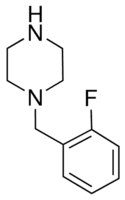
1-(2-Fluorobenzyl)piperazine
C11H15FN2
Chemical Synthesis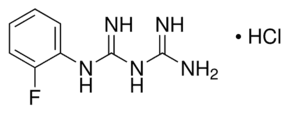
1-(2-Fluorophenyl)biguanide hydrochloride
Chemical Synthesis
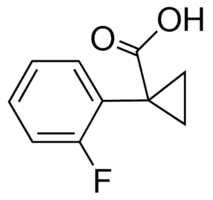
1-(2-Fluorophenyl)cyclopropanecarboxylic acid
C10H9FO2
Chemical Synthesis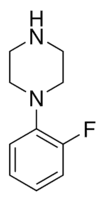
1-(2-Fluorophenyl)piperazine
C10H13FN2
Chemical Synthesis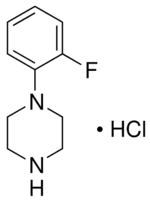
1-(2-Fluorophenyl)piperazine monohydrochloride
C10H13FN2 · HCl
Chemical Synthesis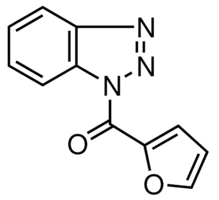
1-(2-Furoyl)-1H-benzotriazole
C11H7N3O2
Chemical Synthesis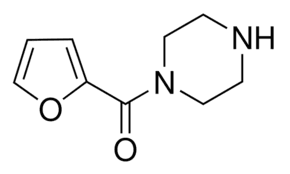
1-(2-Furoyl)piperazine
C9H12N2O2
Chemical Synthesis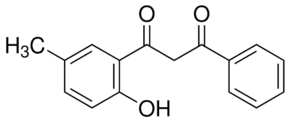
1-(2-Hydroxy-5-methylphenyl)-3-phenyl-1,3-propanedione
Chemical Synthesis
▶ Explore more

Bis(cyclopentadienyl)cobalt(III) hexafluorophosphate
C10H10CoF6P
Catalysis & Inorganic
1-(4-Chlorophenyl)biguanide hydrochloride
ClC6H4NHC(NH)NHC(NH)NH2 · HCl
Chemical Synthesis
Bis(cyclopentadienyl)dimethylzirconium(IV)
Catalysis & Inorganic

1-(4-Chlorophenyl)ethanol
ClC6H4CH(CH3)OH
Chemical Synthesis