
Niobium
Niobium (Nb, CAS: 7440-03-1) is a lustrous, silvery-white, ductile transition metal with a high melting point and excellent corrosion resistance. Its high critical temperature makes it a superconductor. Niobium is primarily used in the production of high-strength, low-alloy steels, superalloys for jet engines and gas turbines, and in superconducting magnets for MRI scanners and particle accelerators. It also finds applications in electronics and jewellery.
- IUPAC
- Columbium

Alloy Production
Niobium is a key additive in high-strength, low-alloy (HSLA) steels, significantly enhancing their tensile strength and toughness. It is also used in superalloys for high-temperature applications like aerospace components.
Superconductors
Its superconducting properties at relatively high temperatures make niobium essential for manufacturing superconducting magnets used in MRI machines, particle accelerators, and fusion research.
Electronics
Niobium is utilized in the production of capacitors and other electronic components due to its electrical properties and ability to form stable oxide layers.
Chemical Industry
It serves as a catalyst in certain chemical processes and is used in corrosion-resistant equipment for handling aggressive chemicals.
| Molecular weight | 92.91 |
|---|---|
| Empirical formula | Nb |
| Assay | 99.8% trace metals basis |
| Form | foil |
| Boiling point | 4742 °C(lit.) |
| Density | 8.57 g/mL at 25 °C(lit.) |
| Melting point | 2468 °C(lit.) |
| Protective equipment | Eyeshields, Gloves, type N95 (US), type P1 (EN143) respirator filter |
|---|---|
| Water hazard class (WGK, DE) | nwg |
Hazard information is provided for guidance. Always consult the product Safety Data Sheet (SDS), available on request, before handling.
| Resistivity | 13-16 μΩ-cm, 20°C |
|---|---|
| Thickness | 0.25 mm |
Documentation
Every batch ships with a Certificate of Analysis covering assay, identity and purity; the grade is confirmed against your enquiry. Safety Data Sheets and technical data sheets are available on request.
Supply & logistics
Samples for technical evaluation; bulk MOQ by grade and packaging. In-stock material ships in 7–10 working days, worldwide, with full export documentation.
What is Niobium (CAS 7440-03-1) used for?
+
Niobium (CAS 7440-03-1) is primarily used in alloy production for steels and superalloys, in superconductors for magnets, and in electronics and chemical applications.
What is the CAS number and formula for Niobium?
+
The CAS number for Niobium is 7440-03-1, and its chemical formula is Nb.
What grade and purity does Tech Serve Solutions supply?
+
Tech Serve Solutions supplies Niobium with an assay of 99.8% on a trace metals basis in foil form. This is a technical grade material and is not represented as USP, BP, or EP.
How should Niobium be handled?
+
When handling Niobium, it is recommended to wear eyeshields and gloves. A type N95 (US) or type P1 (EN143) respirator filter should be used if airborne particles are a concern.
Is Niobium a controlled substance?
+
No, Niobium (CAS 7440-03-1) is not listed as a controlled substance.
How is Niobium packed and shipped?
+
Niobium is carefully packed to ensure safe transit and is exported globally by Tech Serve Solutions.
How can I request a quote or sample of Niobium?
+
Please contact Tech Serve Solutions directly to request a quote or a sample of Niobium (CAS 7440-03-1).
▶ Related products
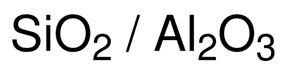
Aluminosilicate, mesostructured
Metal & Ceramic Science
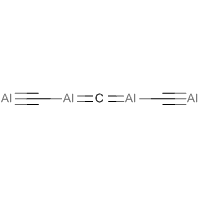
Aluminum carbide
Al4C3
Metal & Ceramic Science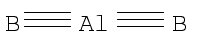
Aluminum diboride
AlB2
Metal & Ceramic Science
Aluminum dodecaboride
AlB12
Metal & Ceramic Science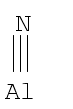
Aluminum nitride
AlN
Metal & Ceramic Science
Aluminum sulfide
Al2S3
Metal & Ceramic Science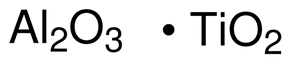
Aluminum titanate
Al2O3·TiO2
Metal & Ceramic Science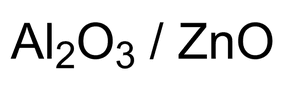
Aluminum zinc oxide
Al2O3/ZnO
Metal & Ceramic Science▶ Explore more

Bis(cyclopentadienyl)cobalt(III) hexafluorophosphate
C10H10CoF6P
Catalysis & Inorganic
1-(4-Chlorophenyl)biguanide hydrochloride
ClC6H4NHC(NH)NHC(NH)NH2 · HCl
Chemical Synthesis
Bis(cyclopentadienyl)dimethylzirconium(IV)
Catalysis & Inorganic

1-(4-Chlorophenyl)ethanol
ClC6H4CH(CH3)OH
Chemical Synthesis