
New Coccine
New Coccine (CAS 2611-82-7), a vibrant azo dye with the molecular formula C20H11N2Na3O10S3 and a molecular weight of 604.47 g/mol, is a key reagent in biological staining. Its distinct chromophoric properties make it valuable for differentiating cellular structures. Commonly employed in histology and cell biology, it serves as a reliable stain for microscopic examination and diagnostic procedures, offering clear visual contrast.
- IUPAC
- Acid Red 18,Ponceau 4 R
- Synonyms
- Acid Red 18Ponceau 4R
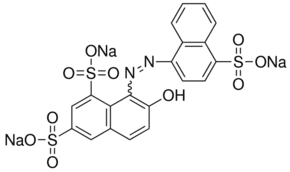
Histological Staining
New Coccine is widely utilised as a histological stain for differentiating tissues and cellular components under microscopic observation. Its specific affinity aids in the visualisation of various tissue structures.
Cell Biology Research
In cell biology, this dye serves as a valuable tool for staining cells and observing morphological details. It is essential for experiments requiring precise visual identification of cellular features and organisation.
Diagnostic Staining Procedures
The compound is applied in various diagnostic staining protocols within laboratories. Its reliable performance ensures consistent and accurate results for pathological examinations.
| Molecular weight | 604.47 |
|---|---|
| Empirical formula | C20H11N2Na3O10S3 |
| Protective equipment | Eyeshields, Gloves, type N95 (US), type P1 (EN143) respirator filter |
|---|---|
| Water hazard class (WGK, DE) | 2 |
Hazard information is provided for guidance. Always consult the product Safety Data Sheet (SDS), available on request, before handling.
| Colour Index Number | 16255 |
|---|---|
| Absorption | λmax 350 nm (2nd)λmax 506 nm |
Documentation
Every batch ships with a Certificate of Analysis covering assay, identity and purity; the grade is confirmed against your enquiry. Safety Data Sheets and technical data sheets are available on request.
Supply & logistics
Samples for technical evaluation; bulk MOQ by grade and packaging. In-stock material ships in 7–10 working days, worldwide, with full export documentation.
What is New Coccine used for?
+
New Coccine is primarily used as a stain in histology and cell biology for differentiating tissues and cellular components, and in diagnostic staining procedures.
What are the CAS number and formula for New Coccine?
+
The CAS number for New Coccine is 2611-82-7 and its molecular formula is C20H11N2Na3O10S3.
What grade and purity does Tech Serve Solutions supply?
+
Tech Serve Solutions supplies New Coccine typically as a technical or research grade. We do not represent this product as USP, BP, or EP grade unless explicitly stated otherwise in the product specifications.
What safety precautions should be taken when handling New Coccine?
+
When handling New Coccine, it is essential to wear eyeshields and gloves. A type N95 (US) or type P1 (EN143) respirator filter should be used if airborne exposure is a concern. Refer to the safety data sheet for comprehensive handling information.
How is New Coccine packed and shipped?
+
New Coccine is carefully packed to ensure stability during transit and is available for export globally by Tech Serve Solutions, adhering to all relevant shipping regulations.
How can I request a quote or sample for New Coccine?
+
To request a quote or sample for New Coccine, please contact our sales team through the website or by phone. Provide your specific requirements for prompt assistance.
▶ Related products
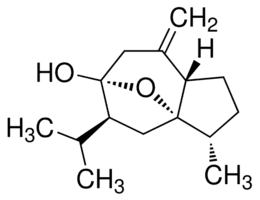
(−)-Curcumol
C15H24O2
Cell Biology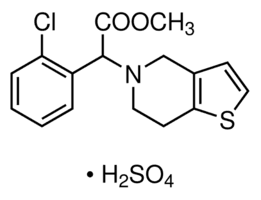
(±) Clopidogrel hydrogensulfate
Cell Biology
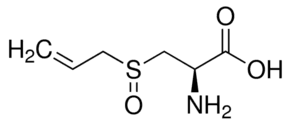
(±)-L-Alliin
C6H11NO3S
Cell Biology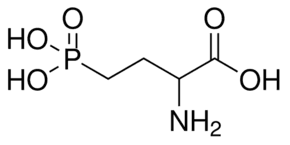
(±)-2-Amino-4-phosphonobutyric acid
C4H10NO5P
Cell Biology
(±)-2-Methylarachidonoyl-2′-fluoroethylamide
C23H38NOF
Cell Biology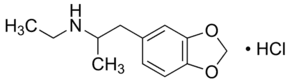
(±)-3,4-Methylenedioxy-N-ethylamphetamine hydrochloride
Cell Biology
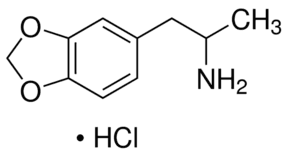
(±)-3,4-Methylenedioxyamphetamine hydrochloride
Cell Biology
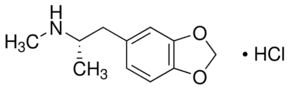
(±)-3,4-Methylenedioxymethamphetamine hydrochloride
Cell Biology
▶ Explore more

Bis(cyclopentadienyl)cobalt(III) hexafluorophosphate
C10H10CoF6P
Catalysis & Inorganic
1-(4-Chlorophenyl)biguanide hydrochloride
ClC6H4NHC(NH)NHC(NH)NH2 · HCl
Chemical Synthesis
Bis(cyclopentadienyl)dimethylzirconium(IV)
Catalysis & Inorganic

1-(4-Chlorophenyl)ethanol
ClC6H4CH(CH3)OH
Chemical Synthesis