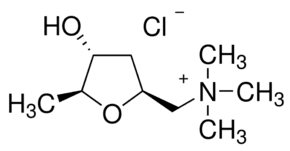
(+)-Muscarine chloride
(+)-Muscarine chloride (CAS 2303-35-7) is a potent cholinergic agonist with the molecular formula C9H20ClNO2 and a molecular weight of 209.71 g/mol. This highly toxic compound is primarily utilised in scientific research for its ability to stimulate muscarinic acetylcholine receptors. Its specific applications are concentrated within neuroscience, cell signalling studies, and investigations into cholinergic pathways, making it a valuable reagent for biological and pharmacological research.
- IUPAC
- (+)-Tetrahydro-4β-hydroxy-N,N,N,5α-tetramethyl-2α-furanmethanaminium chloride,(+)-(2S,4R,5S)-Tetrahydro-4-hydroxy-N,N,N,5-tetramethyl-2-furanmethanammonium chloride
- Synonyms
- (+)-(2S,4R,5S)-Tetrahydro-4-hydroxy-N,N,N,5-tetramethyl-2-furanmethanaminium chloride(+)-Tetrahydro-4β-hydroxy-N,N,N,5α-tetramethyl-2α-furanmethanaminium chloride
Neuroscience Research
Serves as a critical tool for studying neurotransmission and the function of muscarinic acetylcholine receptors in the central and peripheral nervous systems. It aids in understanding neurological processes and disorders.
Pharmacological Investigations
Used to investigate the physiological effects of cholinergic stimulation and to screen potential therapeutic agents targeting muscarinic receptors. Its known toxicity requires careful handling in experimental settings.
Cell Biology Studies
Employed in cell-based assays to explore cellular responses mediated by acetylcholine, contributing to a deeper understanding of cell signalling pathways and receptor-ligand interactions.
| Molecular weight | 209.71 |
|---|---|
| Empirical formula | C9H20ClNO2 |
| Assay | ~95% (TLC) |
| Form | powder |
| Colour | white |
| Solubility | H2O: soluble50 mg/mL |

Hazard statements
- H300Fatal if swallowed
- H310Fatal in contact with skin
- H330Fatal if inhaled
Precautionary statements
- P260Do not breathe dust, fume, gas, mist, vapours or spray
- P264Wash thoroughly after handling
- P280Wear protective gloves, clothing and eye/face protection
- P284Wear respiratory protection
- P302IF ON SKIN
- P310Immediately call a POISON CENTER or doctor
| Protective equipment | Eyeshields, Faceshields, full-face particle respirator type N100 (US), Gloves, respirator cartridge type N100 (US), type P1 (EN143) respirator filter, type P3 (EN 143) respirator cartridges |
|---|---|
| Transport (UN / ADR) | UN 2811 6.1 / PGII |
| Water hazard class (WGK, DE) | 3 |
| Hazard codes (EU) | T+ |
| Risk statements (R) | 26/27/28 |
| Safety statements (S) | 28-36/37-45 |
Hazard information is provided for guidance. Always consult the product Safety Data Sheet (SDS), available on request, before handling.
Documentation
Every batch ships with a Certificate of Analysis covering assay, identity and purity; the grade is confirmed against your enquiry. Safety Data Sheets and technical data sheets are available on request.
Supply & logistics
Samples for technical evaluation; bulk MOQ by grade and packaging. In-stock material ships in 7–10 working days, worldwide, with full export documentation.
What is (+)-Muscarine chloride used for?
+
(+)-Muscarine chloride is primarily used in scientific research as a potent cholinergic agonist for studying muscarinic acetylcholine receptors, neurotransmission, and cell signalling pathways, particularly within neuroscience and pharmacology.
What are the CAS number and chemical formula for (+)-Muscarine chloride?
+
The CAS number for (+)-Muscarine chloride is 2303-35-7, and its empirical formula (Hill notation) is C9H20ClNO2.
What grade and purity does Tech Serve Solutions supply?
+
Tech Serve Solutions supplies (+)-Muscarine chloride with an assay of approximately 95% (determined by TLC). This product is supplied for research and laboratory use and is not represented as USP, BP, EP, or pharmacopoeia grade.
How should (+)-Muscarine chloride be handled safely?
+
(+)-Muscarine chloride is extremely toxic and requires stringent safety precautions. It is classified with Danger signal word and Hazard statements H300 (Fatal if swallowed), H310 (Fatal in contact with skin), and H330 (Fatal if inhaled). Appropriate personal protective equipment, including eyeshields, face shields, gloves, and a full-face particle respirator (type N100 US or P3 EN143), must be used. Handle only in well-ventilated areas or under containment.
Is (+)-Muscarine chloride a controlled substance?
+
The provided data does not indicate that (+)-Muscarine chloride is a controlled or scheduled substance.
How is (+)-Muscarine chloride packed and shipped?
+
(+)-Muscarine chloride is classified under UN 2811, Hazard Class 6.1 (Toxic substances), Packing Group II, for transportation. Tech Serve Solutions ensures compliance with all relevant regulations for packing and exporting hazardous materials globally.
How can I request a quote or sample?
+
To request a quote or sample of (+)-Muscarine chloride, please contact the Tech Serve Solutions sales team via our website or direct email, providing your specific requirements.
▶ Related products
(−)-Curcumol
C15H24O2
Cell Biology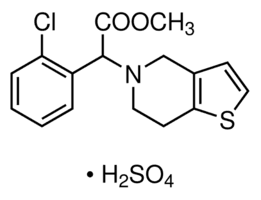
(±) Clopidogrel hydrogensulfate
Cell Biology
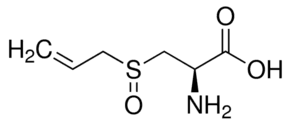
(±)-L-Alliin
C6H11NO3S
Cell Biology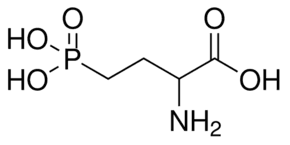
(±)-2-Amino-4-phosphonobutyric acid
C4H10NO5P
Cell Biology
(±)-2-Methylarachidonoyl-2′-fluoroethylamide
C23H38NOF
Cell Biology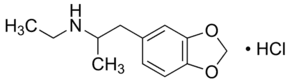
(±)-3,4-Methylenedioxy-N-ethylamphetamine hydrochloride
Cell Biology
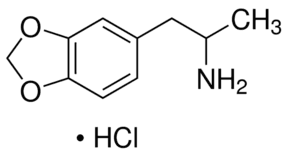
(±)-3,4-Methylenedioxyamphetamine hydrochloride
Cell Biology
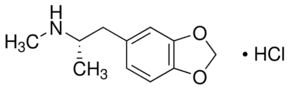
(±)-3,4-Methylenedioxymethamphetamine hydrochloride
Cell Biology