
Melphalan
Melphalan (CAS: 148-82-3, C13H18Cl2N2O2) is a bifunctional alkylating agent with a molecular weight of 305.20 g/mol. It functions as an antineoplastic agent, primarily used in cancer research and therapy. Melphalan is a white powder that works by cross-linking DNA strands, inhibiting DNA replication and ultimately leading to cell death. Its applications are mainly confined to specific medical and research settings.
- IUPAC
- 4-[Bis(2-chloroethyl)amino]-L-phenylalanine,L-PAM,L-Phenylalanine mustard
- Synonyms
- 4-[Bis(2-chloroethyl)amino]-L-phenylalanineL-PAML-Phenylalanine mustard
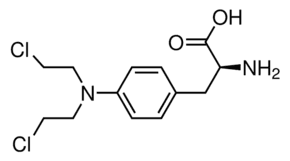
Antineoplastic Agent
Melphalan is used as a chemotherapeutic agent in the treatment of certain cancers, particularly multiple myeloma and ovarian cancer. Its mechanism involves alkylation and cross-linking of DNA strands, which disrupts DNA replication and inhibits cancer cell proliferation.
Cancer Research
This compound serves as a valuable tool in cancer research laboratories to study DNA damage, repair mechanisms, and drug resistance in various cancer models. Researchers utilise Melphalan to investigate cellular responses to DNA-damaging agents.
Apoptosis and Cell Cycle Studies
Melphalan is employed in studies investigating the induction of apoptosis (programmed cell death) and disruption of the cell cycle in cancer cells. Its cytotoxic effects make it useful for understanding pathways that lead to cell death.
Bioactive Small Molecule Research
As a bioactive small molecule, Melphalan is used in broader biological research to probe cellular pathways and signalling mechanisms. Its specific interactions with DNA make it a compound of interest in molecular biology.
| Molecular weight | 305.20 |
|---|---|
| Empirical formula | C13H18Cl2N2O2 |
| Form | powder |
| Colour | white |


Hazard statements
- H300Fatal if swallowed
- H310Fatal in contact with skin
- H330Fatal if inhaled
- H350May cause cancer
- H361Suspected of damaging fertility or the unborn child
Precautionary statements
- P201Obtain special instructions before use
- P260Do not breathe dust, fume, gas, mist, vapours or spray
- P264Wash thoroughly after handling
- P280Wear protective gloves, clothing and eye/face protection
- P284Wear respiratory protection
- P302IF ON SKIN
| Protective equipment | Eyeshields, Faceshields, Gloves, type P2 (EN 143) respirator cartridges |
|---|---|
| Transport (UN / ADR) | UN 2811 6.1/PG 2 |
| Water hazard class (WGK, DE) | 3 |
| Hazard codes (EU) | T+ |
| Risk statements (R) | 45-46-63-26/27/28 |
| Safety statements (S) | 53-22-36/37/39-45 |
Hazard information is provided for guidance. Always consult the product Safety Data Sheet (SDS), available on request, before handling.
Documentation
Every batch ships with a Certificate of Analysis covering assay, identity and purity; the grade is confirmed against your enquiry. Safety Data Sheets and technical data sheets are available on request.
Supply & logistics
Samples for technical evaluation; bulk MOQ by grade and packaging. In-stock material ships in 7–10 working days, worldwide, with full export documentation.
What is Melphalan used for?
+
Melphalan (CAS: 148-82-3) is primarily used as an antineoplastic agent in cancer therapy and as a tool in cancer research to study DNA damage and cellular responses.
What is the CAS number and molecular formula for Melphalan?
+
The CAS number for Melphalan is 148-82-3, and its molecular formula is C13H18Cl2N2O2.
What grade and purity does Tech Serve Solutions supply for Melphalan?
+
Tech Serve Solutions supplies Melphalan as a research-grade chemical. We do not claim USP, BP, or EP grades unless explicitly stated in the product specifications. Please refer to the Certificate of Analysis for specific purity details.
How should Melphalan be handled safely?
+
Melphalan is a dangerous substance (Danger signal word) with hazards including acute toxicity (H300, H310, H330), carcinogenicity (H350), and potential reproductive toxicity (H361). Handle with extreme care using appropriate personal protective equipment, including eyeshields, face shields, gloves, and respiratory protection (P2 cartridges).
Is Melphalan a controlled substance?
+
Based on the provided data, Melphalan is classified with hazard codes T+ (Very Toxic) and carries significant health warnings, including carcinogenicity and reproductive toxicity. It is subject to strict handling regulations. Specific national controlled substance status should be verified.
How is Melphalan shipped and exported by TSS?
+
Tech Serve Solutions exports chemicals globally and adheres to all necessary regulations for the safe and compliant shipment of hazardous materials like Melphalan, including UN 2811 classification.
How can I request a quote or sample of Melphalan?
+
To request a quote or sample of Melphalan, please contact our sales team via the website or email, providing your specific requirements and delivery details.
▶ Related products
(−)-Curcumol
C15H24O2
Cell Biology
(±) Clopidogrel hydrogensulfate
Cell Biology
(±)-L-Alliin
C6H11NO3S
Cell Biology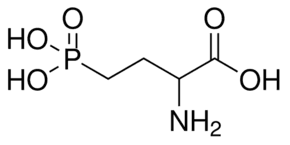
(±)-2-Amino-4-phosphonobutyric acid
C4H10NO5P
Cell Biology
(±)-2-Methylarachidonoyl-2′-fluoroethylamide
C23H38NOF
Cell Biology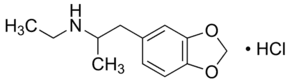
(±)-3,4-Methylenedioxy-N-ethylamphetamine hydrochloride
Cell Biology
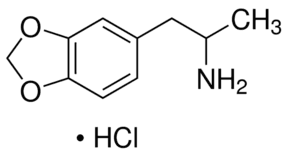
(±)-3,4-Methylenedioxyamphetamine hydrochloride
Cell Biology
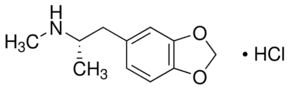
(±)-3,4-Methylenedioxymethamphetamine hydrochloride
Cell Biology
▶ Explore more

Bis(cyclopentadienyl)cobalt(III) hexafluorophosphate
C10H10CoF6P
Catalysis & Inorganic
1-(4-Chlorophenyl)biguanide hydrochloride
ClC6H4NHC(NH)NHC(NH)NH2 · HCl
Chemical Synthesis
Bis(cyclopentadienyl)dimethylzirconium(IV)
Catalysis & Inorganic

1-(4-Chlorophenyl)ethanol
ClC6H4CH(CH3)OH
Chemical Synthesis