Lithium tris[(3-ethyl-3-pentyl)oxy]aluminohydride solution
Lithium tris[(3-ethyl-3-pentyl)oxy]aluminohydride solution (CAS 79172-99-9) is a powerful reducing agent supplied by Tech Serve Solutions. With a molecular weight of 380.51 g/mol, this organometallic compound is specifically formulated as a 0.5 M solution in Tetrahydrofuran (THF). Its primary applications lie in organic synthesis, particularly for stereocontrolled reductions and the selective reduction of various functional groups, making it a valuable reagent for chemical research and development.
![Lithium tris[(3-ethyl-3-pentyl)oxy]aluminohydride solution (LiAl[OC(C2H5)3]3H) — chemical structure, CAS 79172-99-9; Chemistry, fine chemical supplied by Tech Serve Solutions](/_next/image?url=https%3A%2F%2Fpub-f4d920c906024441a773a96f7098e551.r2.dev%2Fimages%2Fproducts%2F79172-99-9.png&w=3840&q=75)
Stereocontrolled Synthesis of Sterols
This reagent is employed as a reactant in the stereocontrolled synthesis of sterols. Its specific reactivity allows for precise control over stereochemical outcomes in complex molecular structures.
General Reduction Reactions
As a potent reducing agent, it is utilized in a variety of reduction reactions within organic synthesis. It efficiently reduces a range of functional groups, facilitating molecular transformations.
Stereoselective Reduction of α-Keto Esters
The compound demonstrates efficacy in the stereoselective reduction of α-keto esters. This application is crucial for synthesizing chiral intermediates with high enantiomeric purity.
Reduction of Weinreb Amides
It serves as a reducing agent for Weinreb amides, enabling the conversion of these intermediates into aldehydes or ketones with good control and yield.
| Molecular weight | 380.51 |
|---|---|
| Linear formula | LiAl[OC(C2H5)3]3H |
| Density | 0.904 g/mL at 25 °C |
| Concentration | 0.5 M in THF |
| Application | Reactant for:• Stereocontrolled synthesis of sterols1• Reduction reactions (reducing agent)2• Stereoselective reduction of a-keto esters3• Reduction of Weinreb amides4 |


Hazard statements
- H225Highly flammable liquid and vapour
- H319Causes serious eye irritation
- H335May cause respiratory irritation
- H351Suspected of causing cancer
Precautionary statements
- P210Keep away from heat, sparks and open flames. No smoking
- P261Avoid breathing dust, fume, gas or vapours
- P281Use personal protective equipment as required
- P305IF IN EYES
| Flash point | -17 °C / 1.4 °F |
|---|---|
| Transport (UN / ADR) | UN 2924 8(3) / PGII |
| Water hazard class (WGK, DE) | 3 |
| Hazard codes (EU) | F,Xn |
| Risk statements (R) | 11-14-19-36/37-40 |
| Safety statements (S) | 16-26-36/37 |
| Supplemental hazards | May form explosive peroxides. |
Hazard information is provided for guidance. Always consult the product Safety Data Sheet (SDS), available on request, before handling.
Documentation
Every batch ships with a Certificate of Analysis covering assay, identity and purity; the grade is confirmed against your enquiry. Safety Data Sheets and technical data sheets are available on request.
Supply & logistics
Samples for technical evaluation; bulk MOQ by grade and packaging. In-stock material ships in 7–10 working days, worldwide, with full export documentation.
What is Lithium tris[(3-ethyl-3-pentyl)oxy]aluminohydride solution used for?
+
Lithium tris[(3-ethyl-3-pentyl)oxy]aluminohydride solution is used as a powerful reducing agent in organic synthesis, particularly for stereocontrolled synthesis of sterols, reduction of α-keto esters, and reduction of Weinreb amides.
What are the CAS number and formula for this compound?
+
The CAS number is 79172-99-9. The linear formula is LiAl[OC(C₂H₅)₃]₃H.
What grade and purity does Tech Serve Solutions supply?
+
Tech Serve Solutions supplies this chemical as a 0.5 M solution in THF. We do not represent this product as USP, BP, EP, or any pharmacopoeia grade.
What are the main safety hazards associated with this product?
+
This product is highly flammable (H225) and may form explosive peroxides. It can cause serious eye irritation (H319) and may cause respiratory irritation (H335). There is also a suspected of causing cancer (H351). Handle with extreme care in a well-ventilated area, away from ignition sources.
How is this chemical packed, shipped, and exported?
+
This product is packed and shipped according to international regulations for hazardous materials, identified under UN 2924, Hazard Class 8(3), Packing Group II. Tech Serve Solutions is experienced in global export.
How can I request a sample or a quote?
+
To request a sample or a quote, please contact our sales team via the website or direct inquiry, providing the product name and CAS number.
▶ Related products
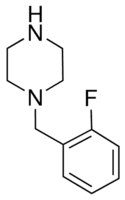
1-(2-Fluorobenzyl)piperazine
C11H15FN2
Chemical Synthesis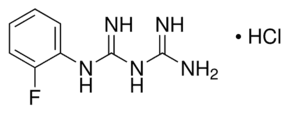
1-(2-Fluorophenyl)biguanide hydrochloride
Chemical Synthesis
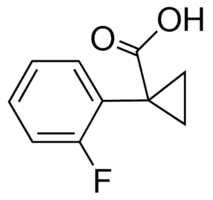
1-(2-Fluorophenyl)cyclopropanecarboxylic acid
C10H9FO2
Chemical Synthesis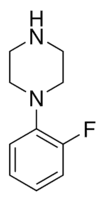
1-(2-Fluorophenyl)piperazine
C10H13FN2
Chemical Synthesis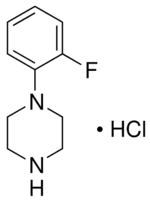
1-(2-Fluorophenyl)piperazine monohydrochloride
C10H13FN2 · HCl
Chemical Synthesis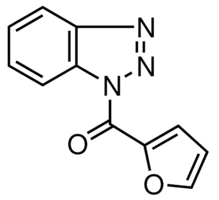
1-(2-Furoyl)-1H-benzotriazole
C11H7N3O2
Chemical Synthesis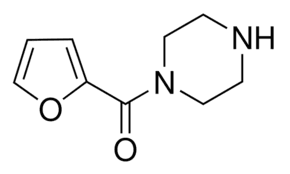
1-(2-Furoyl)piperazine
C9H12N2O2
Chemical Synthesis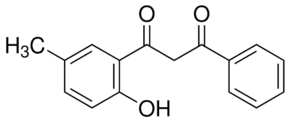
1-(2-Hydroxy-5-methylphenyl)-3-phenyl-1,3-propanedione
Chemical Synthesis