Lidocaine hydrochloride monohydrate
Lidocaine hydrochloride monohydrate (CAS: 6108-05-0), with the empirical formula C14H22N2O · HCl · H2O and a molecular weight of 288.81 g/mol, is a white crystalline solid. It is known for its solubility in water. This compound is primarily recognised for its applications in biological research, particularly in the study of ion channels and cell signalling pathways.
- IUPAC
- 2-Diethylamino-N-(2,6-dimethylphenyl)acetamide hydrochloride monohydrate,Lignocaine hydrochloride monohydrate,Xylocaine hydrochloride monohydrate
- Synonyms
- 2-Diethylamino-N-(2,6-dimethylphenyl)acetamide hydrochloride monohydrateLignocaine hydrochloride monohydrateXylocaine hydrochloride monohydrate

Ion Channel Research
Lidocaine hydrochloride monohydrate is utilised as a tool compound in electrophysiology to investigate the function of voltage-gated sodium channels and other ion channels. It helps researchers understand channel gating mechanisms and modulation.
Neuroscience Studies
This chemical serves as a valuable reagent in neuroscience research for exploring neuronal excitability and the mechanisms of nerve impulse propagation. Its properties are useful in modelling nerve block.
Cell Biology Assays
In cell biology, Lidocaine hydrochloride monohydrate can be employed in specific assays to study cellular responses to ion channel modulators. Its effects on cell membranes are of interest for various experimental designs.
| Molecular weight | 288.81 |
|---|---|
| Empirical formula | C14H22N2O · HCl · H2O |
| Form | solid |
| Colour | white |
| Solubility | H2O: soluble |

Hazard statements
- H301Toxic if swallowed
Precautionary statements
- P301IF SWALLOWED
| Protective equipment | dust mask type N95 (US), Eyeshields, Faceshields, Gloves |
|---|---|
| Transport (UN / ADR) | UN 2811 6.1 / PGIII |
| Water hazard class (WGK, DE) | 3 |
| Hazard codes (EU) | Xn |
| Risk statements (R) | 22 |
| Safety statements (S) | 36 |
Hazard information is provided for guidance. Always consult the product Safety Data Sheet (SDS), available on request, before handling.
Documentation
Every batch ships with a Certificate of Analysis covering assay, identity and purity; the grade is confirmed against your enquiry. Safety Data Sheets and technical data sheets are available on request.
Supply & logistics
Samples for technical evaluation; bulk MOQ by grade and packaging. In-stock material ships in 7–10 working days, worldwide, with full export documentation.
What is Lidocaine hydrochloride monohydrate used for?
+
Lidocaine hydrochloride monohydrate is primarily used as a research chemical in fields such as neuroscience and cell biology, particularly for investigating ion channels and neuronal excitability.
What are the CAS number and chemical formula for Lidocaine hydrochloride monohydrate?
+
The CAS number is 6108-05-0, and the empirical formula is C14H22N2O · HCl · H2O.
What grade and purity does Tech Serve Solutions supply?
+
Tech Serve Solutions supplies Lidocaine hydrochloride monohydrate as a research grade chemical. We do not represent it as USP, BP, or EP grade. Purity specifications are available on the product's Certificate of Analysis.
How should Lidocaine hydrochloride monohydrate be handled safely?
+
Lidocaine hydrochloride monohydrate is classified as toxic if swallowed (H301) and requires careful handling. Appropriate personal protective equipment, including a dust mask (type N95 US), eyeshields, face shields, and gloves, should be worn to prevent exposure. Handle in a well-ventilated area.
How is Lidocaine hydrochloride monohydrate packed and shipped?
+
Products are packed according to international shipping regulations for hazardous materials. Lidocaine hydrochloride monohydrate is shipped as UN 2811, Hazard Class 6.1, Packing Group III.
How can I request a sample or quote for Lidocaine hydrochloride monohydrate?
+
To request a sample or a quote, please contact our sales team via the 'Contact Us' form on our website or by calling us directly. Please specify the product name and CAS number.
▶ Related products
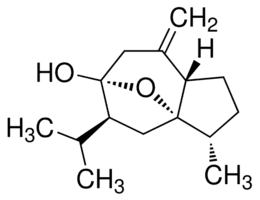
(−)-Curcumol
C15H24O2
Cell Biology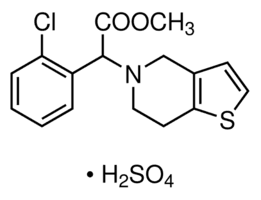
(±) Clopidogrel hydrogensulfate
Cell Biology
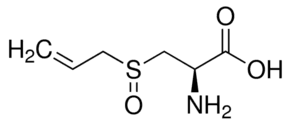
(±)-L-Alliin
C6H11NO3S
Cell Biology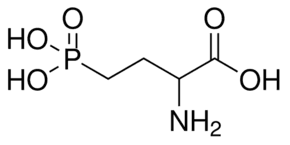
(±)-2-Amino-4-phosphonobutyric acid
C4H10NO5P
Cell Biology
(±)-2-Methylarachidonoyl-2′-fluoroethylamide
C23H38NOF
Cell Biology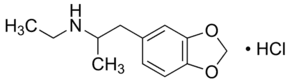
(±)-3,4-Methylenedioxy-N-ethylamphetamine hydrochloride
Cell Biology
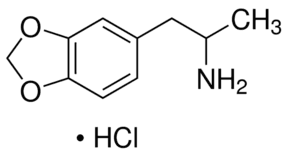
(±)-3,4-Methylenedioxyamphetamine hydrochloride
Cell Biology
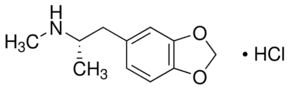
(±)-3,4-Methylenedioxymethamphetamine hydrochloride
Cell Biology