
Lactobionic acid
Lactobionic acid (CAS: 96-82-2), with the molecular formula C12H22O12 and a molecular weight of 358.30 g/mol, is a disaccharide acid derived from lactose. It presents as a white crystalline solid. This compound is primarily utilised in chemical synthesis and research applications, contributing to advancements in carbohydrate chemistry and chemical biology. Its specific properties make it valuable in various specialised laboratory settings.
- IUPAC
- 4-O-β-D-Galactopyranosyl-D-gluconic acid
- Synonyms
- 4-O-beta-D-Galactopyranosyl-D-gluconic acid

Chemical Synthesis Intermediate
Lactobionic acid serves as a valuable building block in organic synthesis, particularly for the creation of complex carbohydrate derivatives and related compounds. Its structure facilitates specific chemical transformations for research and development.
Research in Carbohydrate Chemistry
This compound is employed in academic and industrial research laboratories to study carbohydrate structure-activity relationships and develop new glycosidic linkages. Its role in chemical biology research is significant for understanding biological processes.
Analytical Standards
Due to its defined purity and properties, lactobionic acid can be used as an analytical standard in chromatographic and spectroscopic analyses within chemical laboratories. This aids in the accurate identification and quantification of related substances.
| Molecular weight | 358.30 |
|---|---|
| Empirical formula | C12H22O12 |
| Grade | purum |
| Optical activity | [α]20/D +26±3°, 24 hr, c = 10% in H2O |
| Loss on drying | ≤5% loss on drying |
| Melting point | 113-118 °C(lit.) |
| Protective equipment | Eyeshields, Gloves, type N95 (US), type P1 (EN143) respirator filter |
|---|---|
| Water hazard class (WGK, DE) | 1 |
| Ignition residue | ≤0.1% |
Hazard information is provided for guidance. Always consult the product Safety Data Sheet (SDS), available on request, before handling.
Documentation
Every batch ships with a Certificate of Analysis covering assay, identity and purity; the grade is confirmed against your enquiry. Safety Data Sheets and technical data sheets are available on request.
Supply & logistics
Samples for technical evaluation; bulk MOQ by grade and packaging. In-stock material ships in 7–10 working days, worldwide, with full export documentation.
What is Lactobionic acid used for?
+
Lactobionic acid is used as an intermediate in chemical synthesis, particularly in carbohydrate chemistry and chemical biology research. It also finds application as an analytical standard in laboratories.
What is the CAS number and chemical formula for Lactobionic acid?
+
The CAS number for Lactobionic acid is 96-82-2, and its chemical formula is C12H22O12.
What grade and purity does Tech Serve Solutions supply?
+
Tech Serve Solutions supplies Lactobionic acid in 'purum' grade, with a specified loss on drying of ≤5% and ignition residue of ≤0.1%. We do not represent this product as USP, BP, or EP grade.
How should Lactobionic acid be handled safely?
+
When handling Lactobionic acid, it is essential to wear eyeshields and gloves. A type N95 (US) or type P1 (EN143) respirator filter is recommended. Avoid dust formation and ensure adequate ventilation. The compound has a WGK rating of 1 in Germany.
Is Lactobionic acid a controlled substance?
+
The provided data does not indicate that Lactobionic acid is a controlled substance.
How is Lactobionic acid packed, shipped, and exported?
+
Lactobionic acid is carefully packed to ensure integrity during transit. As a global supplier, Tech Serve Solutions exports chemicals worldwide, adhering to international shipping regulations for chemical products.
How can I request a sample or quote for Lactobionic acid?
+
To request a sample or quote for Lactobionic acid, please contact our sales team through the website or by phone, providing your specific requirements and shipping details.
▶ Related products
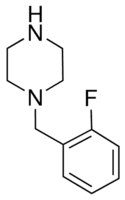
1-(2-Fluorobenzyl)piperazine
C11H15FN2
Chemical Synthesis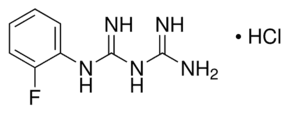
1-(2-Fluorophenyl)biguanide hydrochloride
Chemical Synthesis
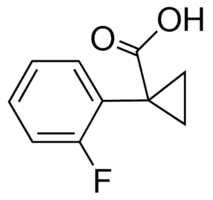
1-(2-Fluorophenyl)cyclopropanecarboxylic acid
C10H9FO2
Chemical Synthesis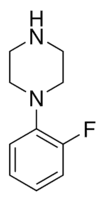
1-(2-Fluorophenyl)piperazine
C10H13FN2
Chemical Synthesis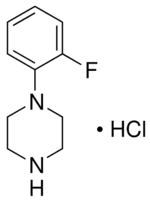
1-(2-Fluorophenyl)piperazine monohydrochloride
C10H13FN2 · HCl
Chemical Synthesis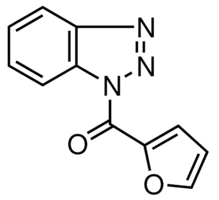
1-(2-Furoyl)-1H-benzotriazole
C11H7N3O2
Chemical Synthesis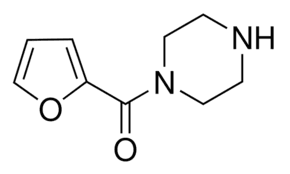
1-(2-Furoyl)piperazine
C9H12N2O2
Chemical Synthesis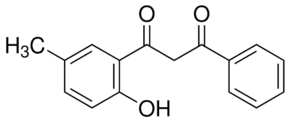
1-(2-Hydroxy-5-methylphenyl)-3-phenyl-1,3-propanedione
Chemical Synthesis
▶ Explore more

Bis(cyclopentadienyl)cobalt(III) hexafluorophosphate
C10H10CoF6P
Catalysis & Inorganic
1-(4-Chlorophenyl)biguanide hydrochloride
ClC6H4NHC(NH)NHC(NH)NH2 · HCl
Chemical Synthesis
Bis(cyclopentadienyl)dimethylzirconium(IV)
Catalysis & Inorganic

1-(4-Chlorophenyl)ethanol
ClC6H4CH(CH3)OH
Chemical Synthesis