
L-Proline
L-Proline (CAS: 147-85-3, Formula: C5H9NO2, MW: 115.13) is a naturally occurring, non-essential amino acid vital in protein structure and found in collagen. It serves as a crucial building block in asymmetric synthesis and is widely employed as a chiral organocatalyst for various chemical transformations. Tech Serve Solutions supplies L-Proline in reagent grade, assaying ≥99.0%, for research and synthesis applications.
- IUPAC
- (S)-Pyrrolidine-2-carboxylic acid
- Synonyms
- (S)-Pyrrolidine-2-carboxylic acid

Asymmetric Synthesis
L-Proline is a fundamental chiral building block and organocatalyst widely utilised in enantioselective synthesis. It enables the creation of chiral molecules with high stereochemical control, critical for pharmaceutical and fine chemical development.
Chemical Synthesis
As a versatile amino acid derivative, L-Proline participates in numerous organic reactions. Its pyrrolidine ring structure and carboxylic acid functionality make it a useful reagent in constructing complex organic molecules.
Chiral Catalysis
The inherent chirality of L-Proline makes it an effective catalyst and ligand precursor for stereoselective reactions. It is instrumental in developing efficient catalytic systems for producing enantiomerically pure compounds.
Proline-Based Organocatalysts
L-Proline is the foundational structure for a diverse range of highly effective proline-based organocatalysts. These catalysts are employed in reactions such as aldol additions, Michael additions, and Mannich reactions, often under mild conditions.
| Molecular weight | 115.13 |
|---|---|
| Empirical formula | C5H9NO2 |
| Assay | ≥99.0% |
| Grade | Vetec™ reagent grade |
| Solubility | H2O: soluble1 M at 20 °C, clear, colorless |
| pH | 6.0-7.0 (25 °C, 1 M in H2O) |
| Optical activity | [α]20/D −85.0±1.0°, c = 5% in H2O |
| Melting point | 228 °C (dec.)(lit.) |
| Loss on drying | ≤0.1% loss on drying, 20 °C (HV) |
| Impurities tested | insoluble matter, passes filter test≤0.3% foreign amino acids |
| Water hazard class (WGK, DE) | 1 |
|---|---|
| Anion traces | chloride (Cl-): ≤100 mg/kgsulfate (SO42-): ≤100 mg/kg |
| Ignition residue | ≤0.1% |
Hazard information is provided for guidance. Always consult the product Safety Data Sheet (SDS), available on request, before handling.
| Uv Absorption | λ: 260 nm Amax: 0.05λ: 280 nm Amax: 0.05 |
|---|
Documentation
Every batch ships with a Certificate of Analysis covering assay, identity and purity; the grade is confirmed against your enquiry. Safety Data Sheets and technical data sheets are available on request.
Supply & logistics
Samples for technical evaluation; bulk MOQ by grade and packaging. In-stock material ships in 7–10 working days, worldwide, with full export documentation.
What is L-Proline used for?
+
L-Proline is primarily used in asymmetric synthesis and as a chiral organocatalyst for various chemical transformations. It is also a fundamental component in developing proline-based organocatalysts and serves as a building block in chemical synthesis.
What are the CAS number and formula for L-Proline?
+
The CAS number for L-Proline is 147-85-3, and its empirical formula is C5H9NO2.
What grade and purity does Tech Serve Solutions supply for L-Proline?
+
Tech Serve Solutions supplies L-Proline in Vetec™ reagent grade with an assay of ≥99.0%.
What are the main safety considerations when handling L-Proline?
+
L-Proline is classified as WGK 1 (Germany), indicating low hazard. However, standard laboratory practices, including avoiding dust formation and ensuring adequate ventilation, should be followed. Consult the Safety Data Sheet for full details.
How is L-Proline packed and exported by Tech Serve Solutions?
+
L-Proline is carefully packed to ensure product integrity during transit and is available for global export. Specific packaging details can be provided upon request.
How can I request a sample or quote for L-Proline?
+
To request a sample or a quote for L-Proline, please contact the Tech Serve Solutions sales team through our website or by phone.
▶ Related products
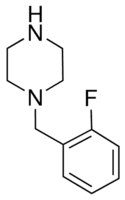
1-(2-Fluorobenzyl)piperazine
C11H15FN2
Chemical Synthesis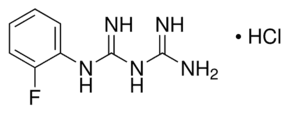
1-(2-Fluorophenyl)biguanide hydrochloride
Chemical Synthesis
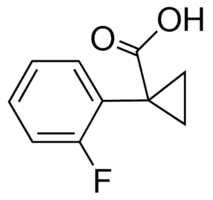
1-(2-Fluorophenyl)cyclopropanecarboxylic acid
C10H9FO2
Chemical Synthesis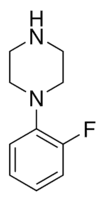
1-(2-Fluorophenyl)piperazine
C10H13FN2
Chemical Synthesis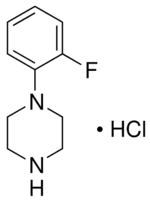
1-(2-Fluorophenyl)piperazine monohydrochloride
C10H13FN2 · HCl
Chemical Synthesis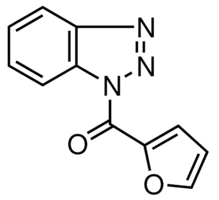
1-(2-Furoyl)-1H-benzotriazole
C11H7N3O2
Chemical Synthesis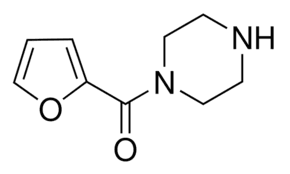
1-(2-Furoyl)piperazine
C9H12N2O2
Chemical Synthesis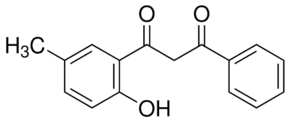
1-(2-Hydroxy-5-methylphenyl)-3-phenyl-1,3-propanedione
Chemical Synthesis
▶ Explore more

Bis(cyclopentadienyl)cobalt(III) hexafluorophosphate
C10H10CoF6P
Catalysis & Inorganic
1-(4-Chlorophenyl)biguanide hydrochloride
ClC6H4NHC(NH)NHC(NH)NH2 · HCl
Chemical Synthesis
Bis(cyclopentadienyl)dimethylzirconium(IV)
Catalysis & Inorganic

1-(4-Chlorophenyl)ethanol
ClC6H4CH(CH3)OH
Chemical Synthesis