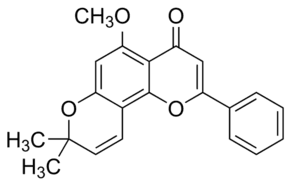
Isopongaflavone
Isopongaflavone (CAS: 64125-33-3) is a natural compound with the molecular formula C21H18O4 and a molecular weight of 334.37 g/mol. As a member of the flavonoid family, it is primarily investigated for its biological activities. This substance is of interest in cell biology and nutrition research, serving as a valuable phytochemical for scientific exploration and the study of plant-derived compounds.
Cell Biology Research
Isopongaflavone is utilised in cell biology studies to investigate cellular mechanisms and responses. Its properties as a flavonoid make it a subject of interest for understanding biological pathways at the cellular level.
Phytochemical Analysis
This compound serves as a reference standard or subject of study within the broader field of phytochemicals. Researchers use it to analyse and understand the complex chemistry of plant-derived substances.
Nutrition Research
Within nutrition research, Isopongaflavone is explored for its potential biological effects and its occurrence in natural sources. It aids in the study of dietary components and their impact on health.
| Molecular weight | 334.37 |
|---|---|
| Empirical formula | C21H18O4 |
| Assay | ≥95% (LC/MS-ELSD) |
| Storage temperature | −20°C |

Hazard statements
- H410Very toxic to aquatic life with long-lasting effects
Precautionary statements
- P273Avoid release to the environment
- P501Dispose of contents and container per local regulations
| Transport (UN / ADR) | UN 3077 9 / PGIII |
|---|---|
| Water hazard class (WGK, DE) | 3 |
| Hazard codes (EU) | N |
| Risk statements (R) | 50 |
| Safety statements (S) | 61 |
Hazard information is provided for guidance. Always consult the product Safety Data Sheet (SDS), available on request, before handling.
Documentation
Every batch ships with a Certificate of Analysis covering assay, identity and purity; the grade is confirmed against your enquiry. Safety Data Sheets and technical data sheets are available on request.
Supply & logistics
Samples for technical evaluation; bulk MOQ by grade and packaging. In-stock material ships in 7–10 working days, worldwide, with full export documentation.
What is Isopongaflavone used for?
+
Isopongaflavone is primarily used in cell biology, nutrition research, and as a phytochemical for scientific study. Its exact applications are within the scope of research and analysis.
What are the CAS number and molecular formula for Isopongaflavone?
+
The CAS number for Isopongaflavone is 64125-33-3, and its molecular formula is C21H18O4.
What grade and purity does Tech Serve Solutions supply for Isopongaflavone?
+
Tech Serve Solutions supplies Isopongaflavone with a purity of ≥95% (LC/MS-ELSD). This product is intended for research purposes and is not represented as USP, BP, EP, or any other pharmacopoeia grade.
How should Isopongaflavone be handled and stored?
+
Isopongaflavone is classified under GHS09 with a signal word of Warning, carrying the hazard statement H410 (Very toxic to aquatic life with long lasting effects). It should be stored at -20°C. Handle with appropriate personal protective equipment and avoid release into the environment (P273, P501).
Does TSS export Isopongaflavone?
+
Yes, Tech Serve Solutions is a specialist global supplier and exporter of fine chemicals, including Isopongaflavone.
How can I request a sample or quote for Isopongaflavone?
+
To request a sample or quote for Isopongaflavone, please contact our sales team through the website or by phone.
▶ Related products
(−)-Curcumol
C15H24O2
Cell Biology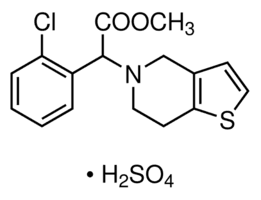
(±) Clopidogrel hydrogensulfate
Cell Biology
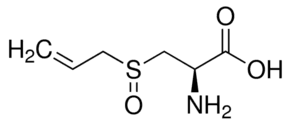
(±)-L-Alliin
C6H11NO3S
Cell Biology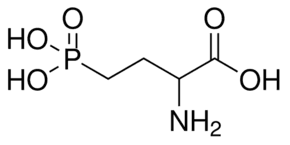
(±)-2-Amino-4-phosphonobutyric acid
C4H10NO5P
Cell Biology
(±)-2-Methylarachidonoyl-2′-fluoroethylamide
C23H38NOF
Cell Biology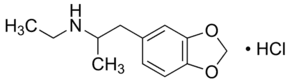
(±)-3,4-Methylenedioxy-N-ethylamphetamine hydrochloride
Cell Biology
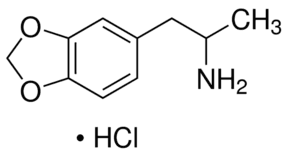
(±)-3,4-Methylenedioxyamphetamine hydrochloride
Cell Biology
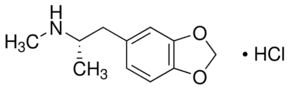
(±)-3,4-Methylenedioxymethamphetamine hydrochloride
Cell Biology