
Indium(III) phthalocyanine chloride
Indium(III) phthalocyanine chloride (CAS 19631-19-7), with the empirical formula C32H16ClInN8 and a molecular weight of 662.79 g/mol, is a phthalocyanine dye. This compound is primarily utilised as a sensitiser in electrophotography. Its unique optical properties make it a subject of interest in materials science and organic electronics research.
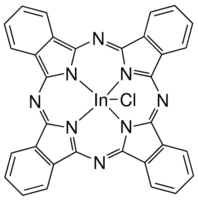
Electrophotography Sensitiser
Indium(III) phthalocyanine chloride serves as an effective sensitiser in electrophotographic processes. It absorbs light and facilitates charge generation, which is crucial for image reproduction in photocopiers and laser printers.
Materials Science Research
This compound is employed in materials science for developing novel electronic and optical devices. Its properties are investigated for applications in areas such as organic semiconductors and photonic materials.
Organic and Printed Electronics
As a component in organic and printed electronics, Indium(III) phthalocyanine chloride contributes to the development of advanced materials for flexible displays, solar cells, and sensors due to its semiconducting characteristics.
| Molecular weight | 662.79 |
|---|---|
| Empirical formula | C32H16ClInN8 |
| Application | Sensitizer for electrophotography |
| Melting point | >300 °C(lit.) |

Hazard statements
- H315Causes skin irritation
- H319Causes serious eye irritation
- H335May cause respiratory irritation
Precautionary statements
- P261Avoid breathing dust, fume, gas or vapours
- P305IF IN EYES
| Protective equipment | dust mask type N95 (US), Eyeshields, Gloves |
|---|---|
| Water hazard class (WGK, DE) | 3 |
| Hazard codes (EU) | Xi |
| Risk statements (R) | 36/37/38 |
| Safety statements (S) | 26-36 |
Hazard information is provided for guidance. Always consult the product Safety Data Sheet (SDS), available on request, before handling.
| Absorption | λmax 686 nm in DMSOλmax 697 nm in chloronaphthalene |
|---|
Documentation
Every batch ships with a Certificate of Analysis covering assay, identity and purity; the grade is confirmed against your enquiry. Safety Data Sheets and technical data sheets are available on request.
Supply & logistics
Samples for technical evaluation; bulk MOQ by grade and packaging. In-stock material ships in 7–10 working days, worldwide, with full export documentation.
What is Indium(III) phthalocyanine chloride used for?
+
Indium(III) phthalocyanine chloride is used as a sensitiser for electrophotography and in materials science research, particularly in organic and printed electronics and photonic materials.
What are the CAS number and formula for Indium(III) phthalocyanine chloride?
+
The CAS number is 19631-19-7 and the empirical formula (Hill notation) is C32H16ClInN8.
What grade and purity does Tech Serve Solutions supply?
+
Tech Serve Solutions supplies Indium(III) phthalocyanine chloride. Please contact us for specific purity and grade information as we do not represent it as USP, BP, or EP grade.
What are the safety precautions for handling Indium(III) phthalocyanine chloride?
+
Indium(III) phthalocyanine chloride is a warning substance (GHS07) and may cause skin irritation (H315), eye irritation (H319), and respiratory irritation (H335). Use a dust mask type N95, wear eyeshields and gloves. Ensure good ventilation.
How is Indium(III) phthalocyanine chloride packed and shipped?
+
Indium(III) phthalocyanine chloride is carefully packed according to international shipping regulations. TSS is a global supplier and exporter, experienced in handling and shipping chemical reagents worldwide.
How can I request a sample or quote for Indium(III) phthalocyanine chloride?
+
To request a sample or a quote for Indium(III) phthalocyanine chloride, please visit the product page on our website or contact our sales team directly.
▶ Related products
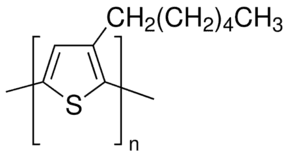
Poly(3-hexylthiophene-2,5-diyl)
Organic & Printed Electronics
![[6,6]-Phenyl C71 butyric acid methyl ester, mixture of isomers — chemical structure, CAS 609771-63-3; Organic & Printed Electronics, fine chemical supplied by Tech Serve Solutions](/_next/image?url=https%3A%2F%2Fpub-f4d920c906024441a773a96f7098e551.r2.dev%2Fimages%2Fproducts%2F609771-63-3.png&w=3840&q=75)
[6,6]-Phenyl C71 butyric acid methyl ester, mixture of isomers
Organic & Printed Electronics
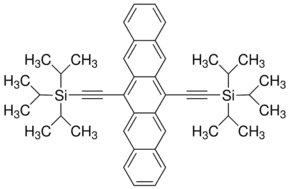
6,13-Bis(triisopropylsilylethynyl)pentacene
Organic & Printed Electronics
![[6,6]-Phenyl C61 butyric acid methyl ester — chemical structure, CAS 160848-22-6; Organic & Printed Electronics, fine chemical supplied by Tech Serve Solutions](/_next/image?url=https%3A%2F%2Fpub-f4d920c906024441a773a96f7098e551.r2.dev%2Fimages%2Fproducts%2F160848-22-6.png&w=3840&q=75)
[6,6]-Phenyl C61 butyric acid methyl ester
Organic & Printed Electronics
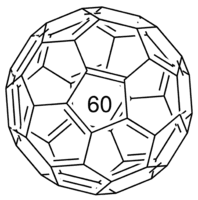
Fullerene-C60
C60
Organic & Printed Electronics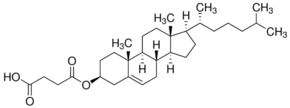
Cholesteryl hemisuccinate
C31H50O4
Organic & Printed Electronics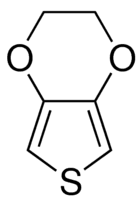
3,4-Ethylenedioxythiophene
Organic & Printed Electronics
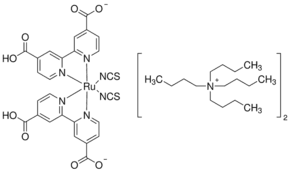
Di-tetrabutylammonium cis-bis(isothiocyanato)bis(2,2′-bipyridyl-4,4′-dicarboxylato)ruthenium(II)
Organic & Printed Electronics
▶ Explore more

Bis(cyclopentadienyl)cobalt(III) hexafluorophosphate
C10H10CoF6P
Catalysis & Inorganic
1-(4-Chlorophenyl)biguanide hydrochloride
ClC6H4NHC(NH)NHC(NH)NH2 · HCl
Chemical Synthesis
Bis(cyclopentadienyl)dimethylzirconium(IV)
Catalysis & Inorganic

1-(4-Chlorophenyl)ethanol
ClC6H4CH(CH3)OH
Chemical Synthesis