
Hexadecyltrimethylammonium bromide
Hexadecyltrimethylammonium bromide (CAS: 57-09-0), with the molecular formula CH3(CH2)15N(Br)(CH3)3 and a molecular weight of 364.45 g/mol, is a quaternary ammonium compound. It functions as a cationic surfactant and is primarily employed as a phase transfer catalyst and a detergent in various laboratory and chemical synthesis applications. Tech Serve Solutions offers this reagent grade compound for research and development purposes.
- IUPAC
- CTAB,Cetrimonium bromide,Cetyltrimethylammonium bromide,Palmityltrimethylammonium bromide
- Synonyms
- CTABCetrimonium bromideCetyltrimethylammonium bromidePalmityltrimethylammonium bromide
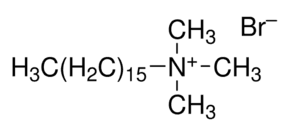
Phase Transfer Catalyst
Hexadecyltrimethylammonium bromide serves as an effective phase transfer catalyst, facilitating reactions between reactants in immiscible phases. Its amphiphilic nature allows it to transport ionic species across phase boundaries, increasing reaction rates and yields in organic synthesis.
Detergent and Surfactant
As a cationic surfactant, this compound exhibits excellent detergency. It is used in biochemical applications for cell lysis and protein solubilisation. Its ability to reduce surface tension makes it valuable in formulating cleaning and emulsifying agents.
Electrophoresis and Molecular Biology
This chemical is utilised in certain electrophoresis buffer systems and as a component in solutions for isolating nucleic acids. It can aid in the denaturation of proteins and the solubilisation of cellular components.
Chemical Synthesis
Beyond its role as a phase transfer catalyst, Hexadecyltrimethylammonium bromide can be incorporated into synthetic routes requiring a quaternary ammonium salt structure. It is used in the preparation of various organic molecules and materials.
| Molecular weight | 364.45 |
|---|---|
| Linear formula | CH3(CH2)15N(Br)(CH3)3 |
| Assay | 96% |
| Grade | Vetec™ reagent grade |
| Solubility | H2O: soluble50 mg/mL |
| pH | 5.0-7.0 (25 °C, 0.1 M in H2O) |
| Loss on drying | ≤0.5% loss on drying |
| Melting point | 248-251 °C(lit.) |
| Impurities tested | DNases, none detectedRNases, none detectedinsoluble matter, passes filter testphosphatases, none detectedproteases, none detected |
| Suitability | corresponds to standard for filter test |


Hazard statements
- H302Harmful if swallowed
- H315Causes skin irritation
- H318Causes serious eye damage
- H335May cause respiratory irritation
- H410Very toxic to aquatic life with long-lasting effects
Precautionary statements
- P261Avoid breathing dust, fume, gas or vapours
- P273Avoid release to the environment
- P280Wear protective gloves, clothing and eye/face protection
- P305IF IN EYES
- P501Dispose of contents and container per local regulations
| Flash point | 244 °C / 471.2 °F |
|---|---|
| Transport (UN / ADR) | UN 3077 9 / PGIII |
| Water hazard class (WGK, DE) | 3 |
| Hazard codes (EU) | Xn,N |
| Risk statements (R) | 22-37/38-41-50/53 |
| Safety statements (S) | 26-39-60-61 |
| Anion traces | sulfate (SO42-): ≤50 mg/kg |
| Ignition residue | ≤0.2% |
Hazard information is provided for guidance. Always consult the product Safety Data Sheet (SDS), available on request, before handling.
| Uv Absorption | λ: 260 nm Amax: 0.06λ: 280 nm Amax: 0.05 |
|---|---|
| Aggregation Number | 170 |
| Cmc | 0.92 mM(20-25°C) |
| Hlb | 10 |
Documentation
Every batch ships with a Certificate of Analysis covering assay, identity and purity; the grade is confirmed against your enquiry. Safety Data Sheets and technical data sheets are available on request.
Supply & logistics
Samples for technical evaluation; bulk MOQ by grade and packaging. In-stock material ships in 7–10 working days, worldwide, with full export documentation.
What is Hexadecyltrimethylammonium bromide used for?
+
Hexadecyltrimethylammonium bromide is primarily used as a phase transfer catalyst and a detergent in chemical synthesis and biochemical applications, including cell lysis and protein solubilisation.
What are the CAS number and formula for Hexadecyltrimethylammonium bromide?
+
The CAS number for Hexadecyltrimethylammonium bromide is 57-09-0, and its chemical formula is CH3(CH2)15N(Br)(CH3)3.
What grade and purity does Tech Serve Solutions supply?
+
Tech Serve Solutions supplies Hexadecyltrimethylammonium bromide in Vetec™ reagent grade with an assay of 96%. TSS does not represent this product as USP, BP, or EP grade.
How should Hexadecyltrimethylammonium bromide be handled safely?
+
Hexadecyltrimethylammonium bromide is classified as Danger. It can cause severe skin burns and eye damage, is harmful if swallowed, and may cause respiratory irritation. Wear protective gloves, eye protection, and face protection. Avoid breathing dust. Ensure adequate ventilation. Dispose of contents and container in accordance with local regulations.
How is Hexadecyltrimethylammonium bromide packed, shipped, and exported?
+
Hexadecyltrimethylammonium bromide is carefully packed to ensure safe transit and is available for global export by Tech Serve Solutions, adhering to all relevant shipping and customs regulations.
How can I request a sample or quote for Hexadecyltrimethylammonium bromide?
+
To request a sample or a quote for Hexadecyltrimethylammonium bromide, please visit the product page on our website or contact our sales team directly via email or phone.
▶ Related products
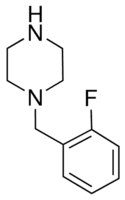
1-(2-Fluorobenzyl)piperazine
C11H15FN2
Chemical Synthesis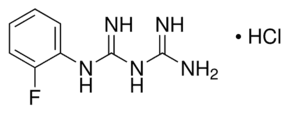
1-(2-Fluorophenyl)biguanide hydrochloride
Chemical Synthesis
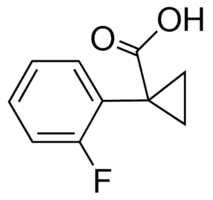
1-(2-Fluorophenyl)cyclopropanecarboxylic acid
C10H9FO2
Chemical Synthesis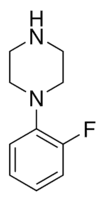
1-(2-Fluorophenyl)piperazine
C10H13FN2
Chemical Synthesis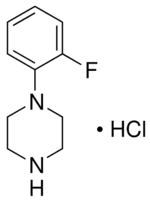
1-(2-Fluorophenyl)piperazine monohydrochloride
C10H13FN2 · HCl
Chemical Synthesis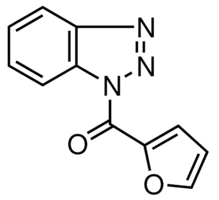
1-(2-Furoyl)-1H-benzotriazole
C11H7N3O2
Chemical Synthesis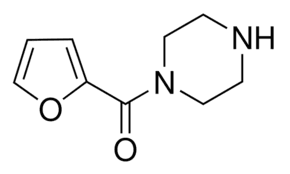
1-(2-Furoyl)piperazine
C9H12N2O2
Chemical Synthesis
1-(2-Hydroxy-5-methylphenyl)-3-phenyl-1,3-propanedione
Chemical Synthesis
▶ Explore more

Bis(cyclopentadienyl)cobalt(III) hexafluorophosphate
C10H10CoF6P
Catalysis & Inorganic
1-(4-Chlorophenyl)biguanide hydrochloride
ClC6H4NHC(NH)NHC(NH)NH2 · HCl
Chemical Synthesis
Bis(cyclopentadienyl)dimethylzirconium(IV)
Catalysis & Inorganic

1-(4-Chlorophenyl)ethanol
ClC6H4CH(CH3)OH
Chemical Synthesis