
Geranyl pyrophosphate lithium salt
Geranyl pyrophosphate lithium salt (CAS: 21141-43-5) is a vital isoprenoid compound with the molecular formula C10H20O7P2 · xLi+ (molecular weight 314.21 on a free acid basis). This substance plays a fundamental role in terpenoid metabolism and serves as a key intermediate in the biosynthesis of various isoprenoids. It is commonly utilised in biochemical research, particularly within cell biology and metabolomics studies, to investigate metabolic pathways.
- IUPAC
- (E)-3,7-Dimethyl-2,6-octadien-1-ol trihydrogen pyrophosphate lithium salt,(E)-3,7-Dimethyl-2,6-octadien-1-yl pyrophosphate lithium salt
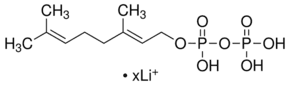
Biochemical Research
Geranyl pyrophosphate lithium salt is used in laboratory settings to study enzymatic reactions involved in terpenoid biosynthesis and metabolism. Its role as an isoprenoid precursor makes it valuable for investigating complex metabolic pathways in cell biology and metabolomics.
Metabolic Pathway Analysis
Researchers utilise this compound to elucidate the mechanisms of terpenoid synthesis. It aids in understanding how cells produce and utilize isoprenoids, contributing to fundamental knowledge in metabolic pathways.
Terpenoid Synthesis Studies
As a direct precursor in the formation of various terpenoids, Geranyl pyrophosphate lithium salt is essential for in vitro studies examining the enzymes and substrates involved in terpenoid production.
| Molecular weight | 314.21 (free acid basis) |
|---|---|
| Empirical formula | C10H20O7P2 · xLi+ |
| Assay | ≥95.0% (TLC) |
| Storage temperature | −20°C |
Documentation
Every batch ships with a Certificate of Analysis covering assay, identity and purity; the grade is confirmed against your enquiry. Safety Data Sheets and technical data sheets are available on request.
Supply & logistics
Samples for technical evaluation; bulk MOQ by grade and packaging. In-stock material ships in 7–10 working days, worldwide, with full export documentation.
What is Geranyl pyrophosphate lithium salt primarily used for?
+
Geranyl pyrophosphate lithium salt is primarily used in biochemical research for studying cell biology, metabolic pathways, metabolomics, and terpenoid metabolism.
What is the CAS number and molecular formula for Geranyl pyrophosphate lithium salt?
+
The CAS number for Geranyl pyrophosphate lithium salt is 21141-43-5, and its empirical formula is C10H20O7P2 · xLi+.
What grade and purity does Tech Serve Solutions supply?
+
Tech Serve Solutions supplies Geranyl pyrophosphate lithium salt with a minimum purity of 95.0% as determined by TLC. This product is supplied for research and laboratory use, and TSS does not represent it as USP, BP, EP, or other pharmacopoeia grades.
What are the safety and handling considerations for Geranyl pyrophosphate lithium salt?
+
Geranyl pyrophosphate lithium salt is classified with a WGK Germany rating of 3, indicating it is hazardous to water. Appropriate safety precautions should be taken during handling and storage to prevent environmental contamination. Consult the Safety Data Sheet (SDS) for detailed information.
How is Geranyl pyrophosphate lithium salt packed and shipped?
+
Geranyl pyrophosphate lithium salt is typically stored at -20°C. Packaging and shipping procedures adhere to all relevant regulations for chemical transport to ensure safe delivery globally.
How can I request a sample or quote for Geranyl pyrophosphate lithium salt?
+
To request a sample or obtain a quote for Geranyl pyrophosphate lithium salt, please contact our sales department through the TSS website or by calling our customer service line.
▶ Related products
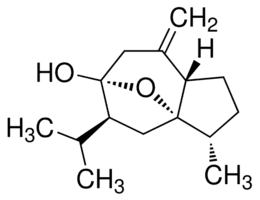
(−)-Curcumol
C15H24O2
Cell Biology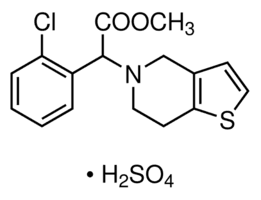
(±) Clopidogrel hydrogensulfate
Cell Biology
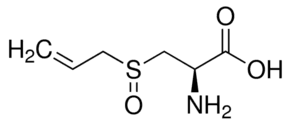
(±)-L-Alliin
C6H11NO3S
Cell Biology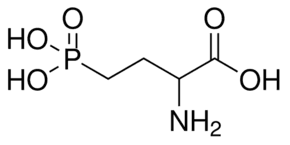
(±)-2-Amino-4-phosphonobutyric acid
C4H10NO5P
Cell Biology
(±)-2-Methylarachidonoyl-2′-fluoroethylamide
C23H38NOF
Cell Biology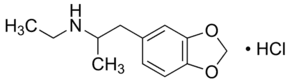
(±)-3,4-Methylenedioxy-N-ethylamphetamine hydrochloride
Cell Biology
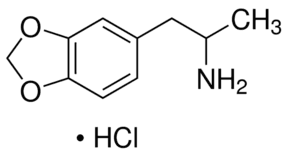
(±)-3,4-Methylenedioxyamphetamine hydrochloride
Cell Biology
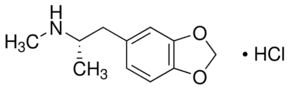
(±)-3,4-Methylenedioxymethamphetamine hydrochloride
Cell Biology
▶ Explore more

Bis(cyclopentadienyl)cobalt(III) hexafluorophosphate
C10H10CoF6P
Catalysis & Inorganic
1-(4-Chlorophenyl)biguanide hydrochloride
ClC6H4NHC(NH)NHC(NH)NH2 · HCl
Chemical Synthesis
Bis(cyclopentadienyl)dimethylzirconium(IV)
Catalysis & Inorganic

1-(4-Chlorophenyl)ethanol
ClC6H4CH(CH3)OH
Chemical Synthesis