
Ethyl acrylate
Ethyl acrylate (CAS 140-88-5), a clear, colourless liquid with the molecular formula C5H8O2 and a molecular weight of 100.12 g/mol, is a significant acrylic monomer. It is primarily used as a building block in polymer synthesis. Its reactive double bond readily undergoes polymerisation, forming versatile polymers and copolymers with applications across various industries, including coatings, adhesives, and textiles. Tech Serve Solutions supplies this essential ester for research and industrial applications.
- IUPAC
- Acrylic acid ethyl ester
- Synonyms
- Acrylic acid ethyl esterEthyl propenoate

Polymer Production
Ethyl acrylate is a key monomer for producing homopolymers and copolymers, such as polyethyl acrylate. These polymers are used extensively in the manufacture of paints, lacquers, and coatings due to their flexibility and weather resistance.
Adhesives and Sealants
The compound serves as a vital component in the formulation of various adhesives and sealants. Its polymerised forms contribute to good adhesion properties on diverse substrates.
Textile and Leather Finishing
Ethyl acrylate polymers find application in textile finishing agents and in leather treatment, providing durability and desirable surface characteristics.
Chemical Synthesis Intermediate
As an organic building block, ethyl acrylate is used in various chemical synthesis pathways to create more complex molecules for research and development purposes.
| Molecular weight | 100.12 |
|---|---|
| Linear formula | CH2=CHCOOC2H5 |
| Assay | ≥99.0% |
| Boiling point | 99 °C(lit.) |
| Density | 0.918 g/mL at 25 °C(lit.) |
| Refractive index | n20/D 1.406(lit.) |
| Vapour pressure | 31 mmHg (20 °C) |
| Melting point | −71 °C(lit.) |
| Vapour density | 3.5 (vs air) |
| Autoignition temp | 721 °F |
| Storage temperature | 2-8°C |
| Contains / stabiliser | 10-20 ppm MEHQ as inhibitor |


Hazard statements
- H225Highly flammable liquid and vapour
- H302Harmful if swallowed
- H312Harmful in contact with skin
- H315Causes skin irritation
- H317May cause an allergic skin reaction
- H319Causes serious eye irritation
- H332Harmful if inhaled
- H335May cause respiratory irritation
Precautionary statements
- P210Keep away from heat, sparks and open flames. No smoking
- P261Avoid breathing dust, fume, gas or vapours
- P280Wear protective gloves, clothing and eye/face protection
- P305IF IN EYES
| Protective equipment | Eyeshields, Faceshields, full-face respirator (US), Gloves, multi-purpose combination respirator cartridge (US), type ABEK (EN14387) respirator filter |
|---|---|
| Flash point | 8 °C / 46.4 °F |
| Transport (UN / ADR) | UN 1917 3 / PGII |
| Water hazard class (WGK, DE) | 2 |
| Hazard codes (EU) | F,Xn |
| Risk statements (R) | 11-20/21/22-36/37/38-43 |
| Safety statements (S) | 9-16-33-36/37 |
Hazard information is provided for guidance. Always consult the product Safety Data Sheet (SDS), available on request, before handling.
| Expl Lim | 12.1 % |
|---|
Documentation
Every batch ships with a Certificate of Analysis covering assay, identity and purity; the grade is confirmed against your enquiry. Safety Data Sheets and technical data sheets are available on request.
Supply & logistics
Samples for technical evaluation; bulk MOQ by grade and packaging. In-stock material ships in 7–10 working days, worldwide, with full export documentation.
What is Ethyl Acrylate used for?
+
Ethyl acrylate is primarily used as a monomer in the production of polymers and copolymers, which are found in paints, coatings, adhesives, sealants, textiles, and leather products. It also serves as an intermediate in chemical synthesis.
What is the CAS number and formula for Ethyl Acrylate?
+
The CAS number for Ethyl Acrylate is 140-88-5, and its linear formula is CH2=CHCOOC2H5.
What grade and purity does Tech Serve Solutions supply for Ethyl Acrylate?
+
Tech Serve Solutions supplies Ethyl Acrylate with an assay of ≥99.0%. We do not represent this product as USP, BP, or EP grade.
What are the primary safety hazards associated with Ethyl Acrylate?
+
Ethyl Acrylate is highly flammable (H225) and is harmful if swallowed, in contact with skin, or if inhaled (H302, H312, H332). It can cause skin irritation (H315), serious eye irritation (H319), and may cause an allergic skin reaction (H317) and respiratory irritation (H335).
How is Ethyl Acrylate packed, shipped, and exported by Tech Serve Solutions?
+
Ethyl Acrylate is shipped under UN 1917, Hazard Class 3, Packing Group II, reflecting its flammable nature. Tech Serve Solutions handles its export in compliance with all relevant international regulations.
How can I request a sample or quote for Ethyl Acrylate?
+
To request a sample or a quote for Ethyl Acrylate, please contact our sales team through the website or by phone, providing your specific requirements.
▶ Related products
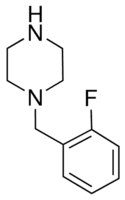
1-(2-Fluorobenzyl)piperazine
C11H15FN2
Chemical Synthesis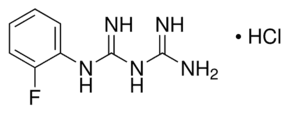
1-(2-Fluorophenyl)biguanide hydrochloride
Chemical Synthesis
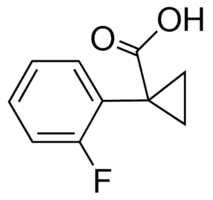
1-(2-Fluorophenyl)cyclopropanecarboxylic acid
C10H9FO2
Chemical Synthesis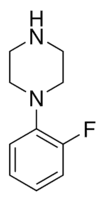
1-(2-Fluorophenyl)piperazine
C10H13FN2
Chemical Synthesis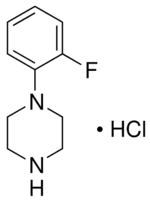
1-(2-Fluorophenyl)piperazine monohydrochloride
C10H13FN2 · HCl
Chemical Synthesis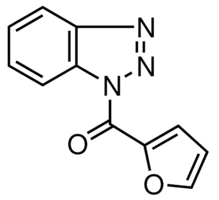
1-(2-Furoyl)-1H-benzotriazole
C11H7N3O2
Chemical Synthesis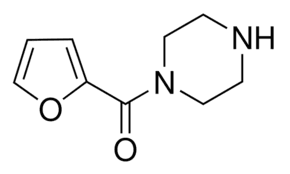
1-(2-Furoyl)piperazine
C9H12N2O2
Chemical Synthesis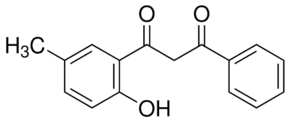
1-(2-Hydroxy-5-methylphenyl)-3-phenyl-1,3-propanedione
Chemical Synthesis
▶ Explore more

Bis(cyclopentadienyl)cobalt(III) hexafluorophosphate
C10H10CoF6P
Catalysis & Inorganic
1-(4-Chlorophenyl)biguanide hydrochloride
ClC6H4NHC(NH)NHC(NH)NH2 · HCl
Chemical Synthesis
Bis(cyclopentadienyl)dimethylzirconium(IV)
Catalysis & Inorganic

1-(4-Chlorophenyl)ethanol
ClC6H4CH(CH3)OH
Chemical Synthesis