
Ethyl 4-methyl-2-cyclohexanone-1-carboxylate
Ethyl 4-methyl-2-cyclohexanone-1-carboxylate (CAS: 13537-82-1) is a versatile organic compound with the molecular formula C<sub>9</sub>H<sub>14</sub>O<sub>3</sub> and a molecular weight of 184.23 g/mol. This ester serves as a key building block in complex organic syntheses, participating in various cyclization and functionalisation reactions. It is particularly noted for its role as a reactant in hydroxylation, oxidative chlorination, and palladium-catalyzed isomerisation processes, contributing to the creation of diverse chemical structures.
- IUPAC
- 4-Methyl-2-oxocyclohexanecarboxylic acid ethyl ester,Ethyl 4-methyl-2-oxo-1-cyclohexanecarboxylate,NSC 84213
- Synonyms
- 4-Methyl-2-oxocyclohexanecarboxylic acid ethyl esterEthyl 4-methyl-2-oxo-1-cyclohexanecarboxylateNSC 84213
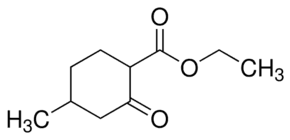
Organic Synthesis Intermediate
This compound is a valuable intermediate for constructing more complex organic molecules. Its structure allows for participation in a range of synthetic transformations, including cyclization and addition reactions.
Hydroxylation and Oxidative Chlorination
It acts as a reactant in hydroxylation and oxidative chlorination reactions when treated with hydrogen peroxide. These processes are crucial for introducing oxygen and chlorine functionalities into organic frameworks.
Heterocyclization and Cyclization Reactions
The molecule is employed in heterocyclization and cyclization reactions, often involving the formation of cyclic structures. These transformations are fundamental in the synthesis of various heterocyclic compounds.
Palladium-Catalyzed Isomerisation
It participates in palladium-catalyzed isomerisation reactions, which are important for rearranging molecular structures and creating novel isomeric compounds.
Vinylogous Michael Reactions
The compound can be utilised in vinylogous Michael reactions, expanding its utility in carbon-carbon bond formation and the synthesis of functionalised cyclohexanone derivatives.
| Molecular weight | 184.23 |
|---|---|
| Linear formula | CH3C6H8(=O)CO2C2H5 |
| Boiling point | 128-132 °C/32 mmHg(lit.) |
| Density | 1.045 g/mL at 25 °C(lit.) |
| Refractive index | n20/D 1.473(lit.) |
| Impurities tested | 10% methyl ester |
| Application | Reactant involved in:• Hydroxylation / oxidative chlorination with hydrogen peroxide1• Heterocyclization2• Cyclization of generated dianions followed by dehydrogenation3• Palladium-catalyzed isomerization4• Regioselective cyclizations5• Vinylogous Michael reactions6 |
| Protective equipment | Eyeshields, Gloves |
|---|---|
| Flash point | >113 °C / >235.4 °F |
| Water hazard class (WGK, DE) | 3 |
Hazard information is provided for guidance. Always consult the product Safety Data Sheet (SDS), available on request, before handling.
Documentation
Every batch ships with a Certificate of Analysis covering assay, identity and purity; the grade is confirmed against your enquiry. Safety Data Sheets and technical data sheets are available on request.
Supply & logistics
Samples for technical evaluation; bulk MOQ by grade and packaging. In-stock material ships in 7–10 working days, worldwide, with full export documentation.
What are the primary applications of Ethyl 4-methyl-2-cyclohexanone-1-carboxylate?
+
Ethyl 4-methyl-2-cyclohexanone-1-carboxylate is primarily used as a versatile building block in organic synthesis. It participates in reactions such as hydroxylation, oxidative chlorination, heterocyclization, cyclization, palladium-catalyzed isomerisation, and vinylogous Michael reactions.
What is the CAS number and molecular formula for Ethyl 4-methyl-2-cyclohexanone-1-carboxylate?
+
The CAS number is 13537-82-1, and the molecular formula is C<sub>9</sub>H<sub>14</sub>O<sub>3</sub>.
What grade and purity does Tech Serve Solutions supply for Ethyl 4-methyl-2-cyclohexanone-1-carboxylate?
+
Tech Serve Solutions supplies this compound as a technical or research grade chemical. We do not represent it as meeting USP, BP, EP, or other pharmacopoeia standards unless explicitly stated in the product specifications. Please refer to the Certificate of Analysis for precise purity details.
How should Ethyl 4-methyl-2-cyclohexanone-1-carboxylate be handled?
+
Handling requires appropriate personal protective equipment, including eyeshields and gloves, to prevent contact. It has a flash point above 113 °C (235.4 °F), indicating it is combustible but not highly flammable under normal conditions. Refer to the Safety Data Sheet for comprehensive handling and safety information.
Is Ethyl 4-methyl-2-cyclohexanone-1-carboxylate a controlled substance?
+
Based on the provided data, there is no indication that Ethyl 4-methyl-2-cyclohexanone-1-carboxylate is a controlled substance. However, users should always verify regulatory status in their specific jurisdiction.
How is Ethyl 4-methyl-2-cyclohexanone-1-carboxylate packed and shipped?
+
As a specialist global supplier, Tech Serve Solutions ensures appropriate packaging for safe handling, storage, and international export of chemicals like Ethyl 4-methyl-2-cyclohexanone-1-carboxylate.
How can I request a sample or quote for Ethyl 4-methyl-2-cyclohexanone-1-carboxylate?
+
To request a sample or a quote, please contact our sales team via the website or email, providing the product name, CAS number (13537-82-1), and your specific requirements.
▶ Related products
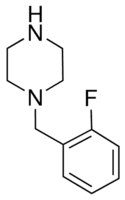
1-(2-Fluorobenzyl)piperazine
C11H15FN2
Chemical Synthesis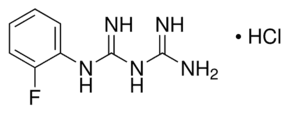
1-(2-Fluorophenyl)biguanide hydrochloride
Chemical Synthesis
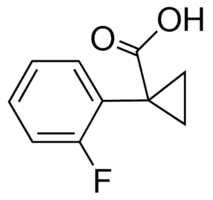
1-(2-Fluorophenyl)cyclopropanecarboxylic acid
C10H9FO2
Chemical Synthesis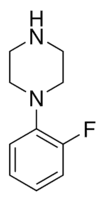
1-(2-Fluorophenyl)piperazine
C10H13FN2
Chemical Synthesis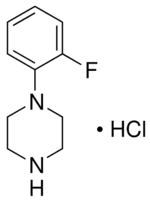
1-(2-Fluorophenyl)piperazine monohydrochloride
C10H13FN2 · HCl
Chemical Synthesis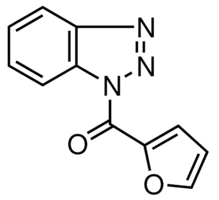
1-(2-Furoyl)-1H-benzotriazole
C11H7N3O2
Chemical Synthesis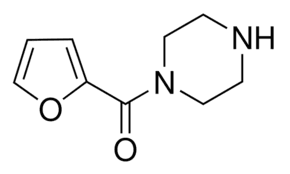
1-(2-Furoyl)piperazine
C9H12N2O2
Chemical Synthesis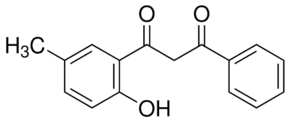
1-(2-Hydroxy-5-methylphenyl)-3-phenyl-1,3-propanedione
Chemical Synthesis
▶ Explore more

Bis(cyclopentadienyl)cobalt(III) hexafluorophosphate
C10H10CoF6P
Catalysis & Inorganic
1-(4-Chlorophenyl)biguanide hydrochloride
ClC6H4NHC(NH)NHC(NH)NH2 · HCl
Chemical Synthesis
Bis(cyclopentadienyl)dimethylzirconium(IV)
Catalysis & Inorganic

1-(4-Chlorophenyl)ethanol
ClC6H4CH(CH3)OH
Chemical Synthesis