
Dinonylnaphthalenedisulfonic acid solution
Dinonylnaphthalenedisulfonic acid solution (CAS: 60223-95-2) is a specialized chemical compound with the linear formula (C9H19)2C10H4(SO3H)2 and a molecular weight of 540.78 g/mol. Supplied as a 55 wt.% solution in isobutanol, this hydrophobic acid functions as a dopant for conducting polymers and a catalyst for amino cross-linked coatings. Its solubility profile in various organic solvents makes it suitable for diverse material science applications, particularly in electronics.
- IUPAC
- DNNDSA

Dopant for Conducting Polymers
This dinonylnaphthalenedisulfonic acid solution is effectively used as a dopant for conductive polymers. It enhances the electrical properties of these materials, crucial for applications in organic electronics and advanced material science.
Hydrophobic Acid Catalyst
The compound serves as a hydrophobic acid catalyst in various chemical processes, including the curing of amino cross-linked coatings. Its structure facilitates efficient catalysis in non-aqueous systems.
Electronic Chemicals
Utilised within the field of electronic chemicals, this substance plays a role in the formulation and manufacturing of components for micro/nanoelectronics. Its properties are beneficial for organic and printed electronics.
Materials for Buffer Layers
It is employed as a material for buffer layers in advanced electronic devices, contributing to performance and stability. This is particularly relevant in organic photovoltaic (OPV) materials development.
| Molecular weight | 540.78 |
|---|---|
| Linear formula | (C9H19)2C10H4(SO3H)2 |
| Boiling point | 101 °C |
| Density | 0.98 g/mL at 25 °C |
| Refractive index | n20/D 1.476 |
| Solubility | H2O: insolublealcohols, glycol ethers, glycols, esters, ketones, aromatic and aliphatic hydrocarbons: soluble |
| Concentration | 55 wt. % in isobutanol |
| Storage temperature | 2-8°C |
| Application | Dopant for conducting polymers hydrophobic acid catalyst for amino cross-linked coatings |


Hazard statements
- H226Flammable liquid and vapour
- H315Causes skin irritation
- H318Causes serious eye damage
- H335May cause respiratory irritation
Precautionary statements
- P261Avoid breathing dust, fume, gas or vapours
- P280Wear protective gloves, clothing and eye/face protection
- P305IF IN EYES
| Flash point | 46 °C / 114.8 °F |
|---|---|
| Transport (UN / ADR) | UN 2924 8(3) / PGIII |
| Water hazard class (WGK, DE) | 3 |
| Hazard codes (EU) | Xi |
| Risk statements (R) | 10-37/38-41-67 |
| Safety statements (S) | 26-39 |
Hazard information is provided for guidance. Always consult the product Safety Data Sheet (SDS), available on request, before handling.
Documentation
Every batch ships with a Certificate of Analysis covering assay, identity and purity; the grade is confirmed against your enquiry. Safety Data Sheets and technical data sheets are available on request.
Supply & logistics
Samples for technical evaluation; bulk MOQ by grade and packaging. In-stock material ships in 7–10 working days, worldwide, with full export documentation.
What is Dinonylnaphthalenedisulfonic acid solution used for?
+
Dinonylnaphthalenedisulfonic acid solution (CAS: 60223-95-2) is primarily used as a dopant for conducting polymers and as a hydrophobic acid catalyst for amino cross-linked coatings. It also finds applications in electronic chemicals and as a material for buffer layers.
What are the CAS number and chemical formula?
+
The CAS number for Dinonylnaphthalenedisulfonic acid solution is 60223-95-2. The linear formula is (C9H19)2C10H4(SO3H)2.
What grade and purity does Tech Serve Solutions supply?
+
Tech Serve Solutions supplies Dinonylnaphthalenedisulfonic acid solution at a concentration of 55 wt.% in isobutanol. While suitable for research and industrial applications, TSS does not represent this product as USP, BP, or EP grade.
What are the safety and handling precautions?
+
This product carries significant hazards, indicated by GHS symbols for flammability, corrosion, and irritation. It is a Danger signal word substance, with hazard statements including H226 (flammable liquid and vapour), H315 (causes skin irritation), H318 (causes serious eye damage), and H335/H336 (may cause respiratory irritation, may cause drowsiness or dizziness). Handle with appropriate personal protective equipment (gloves, eye protection) in a well-ventilated area. Store at 2-8°C.
How is Dinonylnaphthalenedisulfonic acid solution shipped and exported?
+
Dinonylnaphthalenedisulfonic acid solution is classified under UN 2924, Hazard Class 8(3), Packing Group III, indicating it is a corrosive and flammable liquid. TSS ensures compliant packaging and documentation for safe domestic and international export.
How can I request a sample or quote?
+
To request a sample or a quotation for Dinonylnaphthalenedisulfonic acid solution, please contact the Tech Serve Solutions sales team via our website or designated contact channels, providing your specific requirements.
▶ Related products
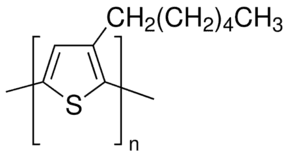
Poly(3-hexylthiophene-2,5-diyl)
Organic & Printed Electronics
![[6,6]-Phenyl C71 butyric acid methyl ester, mixture of isomers — chemical structure, CAS 609771-63-3; Organic & Printed Electronics, fine chemical supplied by Tech Serve Solutions](/_next/image?url=https%3A%2F%2Fpub-f4d920c906024441a773a96f7098e551.r2.dev%2Fimages%2Fproducts%2F609771-63-3.png&w=3840&q=75)
[6,6]-Phenyl C71 butyric acid methyl ester, mixture of isomers
Organic & Printed Electronics
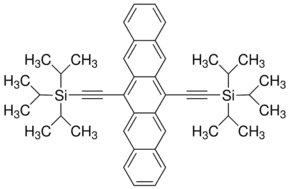
6,13-Bis(triisopropylsilylethynyl)pentacene
Organic & Printed Electronics
![[6,6]-Phenyl C61 butyric acid methyl ester — chemical structure, CAS 160848-22-6; Organic & Printed Electronics, fine chemical supplied by Tech Serve Solutions](/_next/image?url=https%3A%2F%2Fpub-f4d920c906024441a773a96f7098e551.r2.dev%2Fimages%2Fproducts%2F160848-22-6.png&w=3840&q=75)
[6,6]-Phenyl C61 butyric acid methyl ester
Organic & Printed Electronics
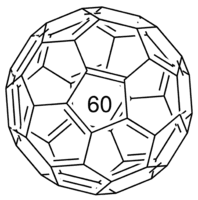
Fullerene-C60
C60
Organic & Printed Electronics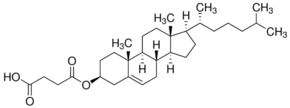
Cholesteryl hemisuccinate
C31H50O4
Organic & Printed Electronics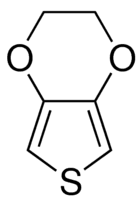
3,4-Ethylenedioxythiophene
Organic & Printed Electronics
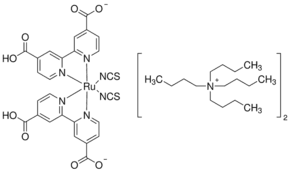
Di-tetrabutylammonium cis-bis(isothiocyanato)bis(2,2′-bipyridyl-4,4′-dicarboxylato)ruthenium(II)
Organic & Printed Electronics
▶ Explore more

Bis(cyclopentadienyl)cobalt(III) hexafluorophosphate
C10H10CoF6P
Catalysis & Inorganic
1-(4-Chlorophenyl)biguanide hydrochloride
ClC6H4NHC(NH)NHC(NH)NH2 · HCl
Chemical Synthesis
Bis(cyclopentadienyl)dimethylzirconium(IV)
Catalysis & Inorganic

1-(4-Chlorophenyl)ethanol
ClC6H4CH(CH3)OH
Chemical Synthesis