Dimethyloctadecyl[3-(trimethoxysilyl)propyl]ammonium chloride
Dimethyloctadecyl[3-(trimethoxysilyl)propyl]ammonium chloride (CAS: 27668-52-6), with formula [(CH3O)3Si(CH2)3N(CH3)2(CH2)17CH3]Cl and a molecular weight of 496.28 g/mol, is a quaternary ammonium silane. This compound functions as a surface modifier and coupling agent. It finds applications in materials science, chemical synthesis, and in the preparation of self-assembly materials, contributing to advancements in micro/nanoelectronics and contact printing technologies.
- IUPAC
- DMOAP
![Dimethyloctadecyl[3-(trimethoxysilyl)propyl]ammonium chloride ([(CH3O)3Si(CH2)3N(CH3)2(CH2)17CH3]Cl) — chemical structure, CAS 27668-52-6; Chemistry, fine chemical supplied by Tech Serve Solutions](/_next/image?url=https%3A%2F%2Fpub-f4d920c906024441a773a96f7098e551.r2.dev%2Fimages%2Fproducts%2F27668-52-6.png&w=3840&q=75)
Surface Modification
This silane is utilised to modify the surface properties of various substrates, introducing positive charges and facilitating the formation of self-assembled monolayers. This is crucial for controlling adhesion and interfacial properties in microelectronic devices.
Chemical Synthesis
As a synthetic reagent, it can be incorporated into more complex molecules or polymers. Its dual functionality, with both silane and quaternary ammonium groups, allows for versatile chemical transformations and the creation of novel materials.
Materials Science
Its ability to form ordered structures makes it valuable in developing advanced materials, including those used in nanotechnology and for specific surface functionalities. The compound aids in creating materials with tailored performance characteristics.
Phase Transfer Catalysis
The quaternary ammonium moiety suggests potential utility as a phase transfer catalyst, enabling reactions between reactants in different immiscible phases. This can enhance reaction rates and yields in organic synthesis.
| Molecular weight | 496.28 |
|---|---|
| Linear formula | [(CH3O)3Si(CH2)3N(CH3)2(CH2)17CH3]Cl |
| Assay | ~50% (AT) |
| Density | 0.89 g/mL at 20 °C(lit.) |
| Refractive index | n20/D 1.3889 |
| Concentration | 42 wt. % in methanol |
| Impurities tested | 8 wt. % (3-chloropropyl)trimethoxysilane |


Hazard statements
- H226Flammable liquid and vapour
- H302Harmful if swallowed
- H311Toxic in contact with skin
- H314Causes severe skin burns and eye damage
- H370Causes damage to organs
Precautionary statements
- P210Keep away from heat, sparks and open flames. No smoking
- P260Do not breathe dust, fume, gas, mist, vapours or spray
- P280Wear protective gloves, clothing and eye/face protection
- P301IF SWALLOWED
- P305IF IN EYES
- P311Call a POISON CENTER or doctor
| Protective equipment | Faceshields, full-face respirator (US), Gloves, Goggles, multi-purpose combination respirator cartridge (US), type ABEK (EN14387) respirator filter |
|---|---|
| Flash point | 33 °C / 91.4 °F |
| Transport (UN / ADR) | UN 1993C 3 / PGIII |
| Water hazard class (WGK, DE) | 3 |
| Hazard codes (EU) | T |
| Risk statements (R) | 10-23/24/25-36/38-39/23/24/25 |
| Safety statements (S) | 26-36/37-45 |
Hazard information is provided for guidance. Always consult the product Safety Data Sheet (SDS), available on request, before handling.
Documentation
Every batch ships with a Certificate of Analysis covering assay, identity and purity; the grade is confirmed against your enquiry. Safety Data Sheets and technical data sheets are available on request.
Supply & logistics
Samples for technical evaluation; bulk MOQ by grade and packaging. In-stock material ships in 7–10 working days, worldwide, with full export documentation.
What is Dimethyloctadecyl[3-(trimethoxysilyl)propyl]ammonium chloride used for?
+
This compound is primarily used for surface modification, in chemical synthesis, and in materials science, particularly for creating self-assembled monolayers and in micro/nanoelectronics applications.
What are the CAS number and formula for this chemical?
+
The CAS number is 27668-52-6, and its chemical formula is [(CH3O)3Si(CH2)3N(CH3)2(CH2)17CH3]Cl.
What grade and purity does Tech Serve Solutions supply?
+
Tech Serve Solutions supplies this chemical with an assay of approximately 50% (AT) in methanol, containing approximately 8 wt. % of (3-chloropropyl)trimethoxysilane as an impurity. We do not represent this product as USP, BP, or EP grade.
How should Dimethyloctadecyl[3-(trimethoxysilyl)propyl]ammonium chloride be handled?
+
This compound is classified as Danger due to flammability and toxicity. It is harmful if swallowed, toxic in contact with skin and if inhaled, and causes severe skin burns and eye damage. Appropriate personal protective equipment, including gloves, eye protection, and respiratory protection, must be used. Handle in a well-ventilated area, away from ignition sources.
How is this chemical packed, shipped, and exported?
+
Tech Serve Solutions adheres to strict international shipping regulations for hazardous materials. The product is shipped according to UN 1993C 3 / PGIII classification, ensuring safe and compliant transport globally.
How can I request a sample or quote for this product?
+
To request a sample or a quotation, please contact our sales team through the website or by phone. Provide the product name and CAS number (27668-52-6) for prompt service.
▶ Related products
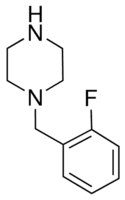
1-(2-Fluorobenzyl)piperazine
C11H15FN2
Chemical Synthesis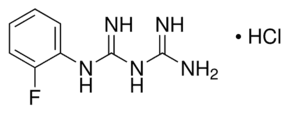
1-(2-Fluorophenyl)biguanide hydrochloride
Chemical Synthesis
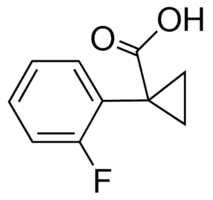
1-(2-Fluorophenyl)cyclopropanecarboxylic acid
C10H9FO2
Chemical Synthesis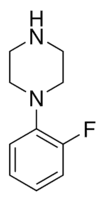
1-(2-Fluorophenyl)piperazine
C10H13FN2
Chemical Synthesis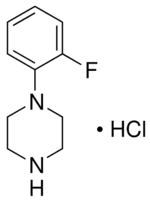
1-(2-Fluorophenyl)piperazine monohydrochloride
C10H13FN2 · HCl
Chemical Synthesis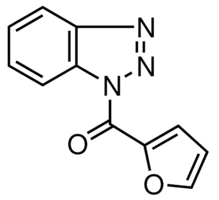
1-(2-Furoyl)-1H-benzotriazole
C11H7N3O2
Chemical Synthesis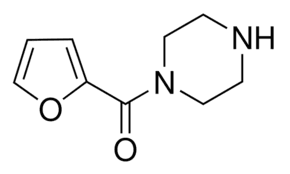
1-(2-Furoyl)piperazine
C9H12N2O2
Chemical Synthesis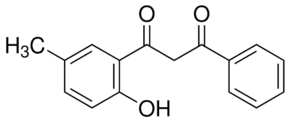
1-(2-Hydroxy-5-methylphenyl)-3-phenyl-1,3-propanedione
Chemical Synthesis