Dimethyl 3,3′-dithiopropionimidate dihydrochloride
Dimethyl 3,3′-dithiopropionimidate dihydrochloride (CAS 38285-78-8; C8H16N2O2S2 · 2HCl; molar mass 309.28 g/mol) is a homobifunctional, amine-reactive crosslinking reagent supplied by Tech Serve Solutions as a white powder of ≥95.0% (AT) assay. Also known as DTBP or Wang/Richards' reagent, it bears two imidoester groups separated by a cleavable disulphide bond, enabling thiol-reversible protein crosslinking. It is used in proteomics, protein structural analysis and gene-delivery polymer chemistry.
- IUPAC
- DTBP,Dimethyl 3,3′-dithio-bis(propionimidate) dihydrochloride,Wang/Richards’ reagent
- Synonyms
- Dimethyl 3,3′-dithiopropionimidate dihydrochlorideDTBPDimethyl 3,3′-dithio-bis(propionimidate) dihydrochlorideWang/Richards' reagentCAS 38285-78-8

Homobifunctional protein crosslinking
As a homobifunctional imidoester reagent, it reacts with primary amine groups of proteins to form stable amidine linkages. The two reactive termini allow intramolecular and intermolecular crosslinking for protein structural analysis and proteomics.
Cleavable, thiol-reversible linker
Its central disulphide bond can be cleaved under reducing conditions, so crosslinks can be reversed with thiol reagents. This makes it useful where conjugates need to be separated or selectively released after analysis.
Gene-delivery polymer synthesis
It serves as a reactant in preparing glutathione-sensitive cross-linked polyethylenimine gene vectors and cyclodextrin-containing polymers designed for gene delivery, where the reducible disulphide bond enables intracellular release.
Receptor and subunit crosslinking studies
The reagent has been applied to crosslinking of protein receptor subunits, for example chick oviduct progesterone-receptor subunits, supporting the study of protein assembly and quaternary structure.
| Molecular weight | 309.28 |
|---|---|
| Empirical formula | C8H16N2O2S2 · 2HCl |
| Assay | ≥95.0% (AT) |
| Form | powder |
| Storage temperature | 2-8°C |
| Application | Reactant for:• Synthesis of glutathione-sensitive cross-linked polyethylenimine gene vector1• Preparation of cyclodextrin-containing polymers designed for gene delivery2• Crosslinking of chick oviduct progesterone-receptor subunits3 |

Hazard statements
- H315Causes skin irritation
| Protective equipment | dust mask type N95 (US), Eyeshields, Gloves |
|---|---|
| Water hazard class (WGK, DE) | 3 |
| Hazard codes (EU) | Xi |
| Risk statements (R) | 38 |
| Safety statements (S) | 36 |
Hazard information is provided for guidance. Always consult the product Safety Data Sheet (SDS), available on request, before handling.
Documentation
Every batch ships with a Certificate of Analysis covering assay, identity and purity; the grade is confirmed against your enquiry. Safety Data Sheets and technical data sheets are available on request.
Supply & logistics
Samples for technical evaluation; bulk MOQ by grade and packaging. In-stock material ships in 7–10 working days, worldwide, with full export documentation.
What is Dimethyl 3,3′-dithiopropionimidate dihydrochloride used for?
+
It is a homobifunctional, amine-reactive crosslinking reagent. It is used to crosslink proteins via their primary amine groups for proteomics and protein structural analysis, and as a reactant in synthesising glutathione-sensitive polyethylenimine and cyclodextrin-containing polymers for gene delivery. Its cleavable disulphide bond allows crosslinks to be reversed under reducing conditions.
What is the CAS number and molecular formula of Dimethyl 3,3′-dithiopropionimidate dihydrochloride?
+
The CAS number is 38285-78-8 and the empirical formula is C8H16N2O2S2 · 2HCl (Hill notation), with a molecular weight of 309.28 g/mol. The MDL number is MFCD00043245 and the PubChem Substance ID is 24893682. It is also known as DTBP and Wang/Richards' reagent.
What grade and purity does Tech Serve Solutions supply?
+
Tech Serve Solutions supplies this material as a powder with an assay of ≥95.0% (AT), suitable as a reagent for research and crosslinking applications. Detailed batch specifications are confirmed on the certificate of analysis provided with each consignment.
What are the safety and handling requirements?
+
It is classified under GHS07 with the signal word Warning and hazard statement H315 (causes skin irritation). Avoid generating or inhaling dust and avoid skin and eye contact; wear suitable gloves, eye protection and an N95-type dust mask, and handle in a well-ventilated area. The product is rated WGK 3 (highly hazardous to water), so prevent release to drains and watercourses. Always consult the Safety Data Sheet before use.
How should Dimethyl 3,3′-dithiopropionimidate dihydrochloride be stored?
+
Store the powder refrigerated at 2-8°C in a tightly closed container, protected from moisture. As a reactive imidoester it is moisture-sensitive, so keep it dry to preserve assay and reactivity.
How is it packed, shipped and exported?
+
Tech Serve Solutions packs the material in sealed, moisture-protected containers with sizing to suit laboratory and bulk requirements, labelled and documented to GHS standards. As a globally active supplier and exporter since 1998, we arrange compliant international shipment with the required transport documentation and a certificate of analysis.
How do I request a sample or quote?
+
Contact Tech Serve Solutions with your required quantity, grade and destination, quoting CAS 38285-78-8, and our team will respond with availability, lead time, documentation and a quotation. Sample requests for evaluation can be accommodated on request.
▶ Related products
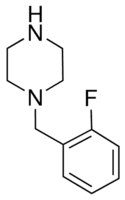
1-(2-Fluorobenzyl)piperazine
C11H15FN2
Chemical Synthesis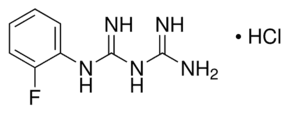
1-(2-Fluorophenyl)biguanide hydrochloride
Chemical Synthesis
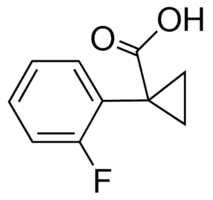
1-(2-Fluorophenyl)cyclopropanecarboxylic acid
C10H9FO2
Chemical Synthesis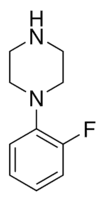
1-(2-Fluorophenyl)piperazine
C10H13FN2
Chemical Synthesis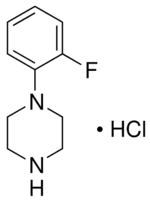
1-(2-Fluorophenyl)piperazine monohydrochloride
C10H13FN2 · HCl
Chemical Synthesis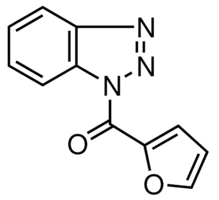
1-(2-Furoyl)-1H-benzotriazole
C11H7N3O2
Chemical Synthesis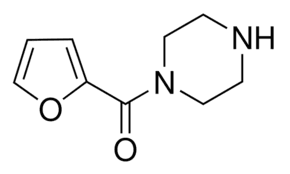
1-(2-Furoyl)piperazine
C9H12N2O2
Chemical Synthesis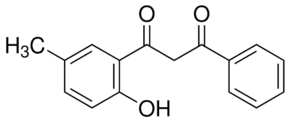
1-(2-Hydroxy-5-methylphenyl)-3-phenyl-1,3-propanedione
Chemical Synthesis